








But it wasn’t all bad
That said, the other 16 cars did finish, including the Cadillac of Sergio Perez. Cadillac has managed to stand up a team from scratch and, since then, meet every deadline it needed to. Now, it has the rest of the season to show us it can make its car fast, something that equally applies to Williams and Aston Martin.
Audi looks to have landed in the midfield at the start of its F1 adventure.
Credit:
Joe Portlock/Getty Images
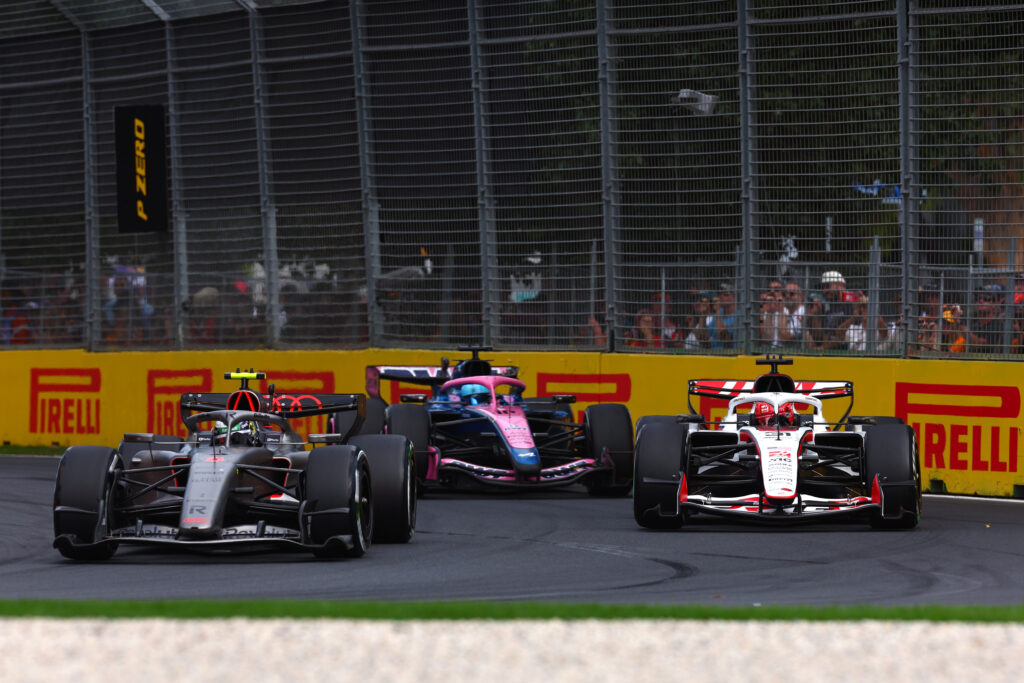
Audi had an almost as monumental task as Cadillac, designing and building a new power unit to install in what was the Sauber team before the German OEM took control. Aside from Hulkenberg’s problem, it had a pretty good debut. The cars lined up 10th and 11th for the race, and Gabriel Bortoleto showed off the talent that won him an F2 championship in his first year by finishing in 9th place, scoring the outfit points on its debut. Audi looks like a solid midfield contender, alongside Haas and Racing Bulls.
Alpine’s Pierre Gasly scored the final point, but that team, like Williams, looks a long way from making best use of its Mercedes power units and right now needs to combat a problem with understeer that affects its car in high-speed corners.
Russell initially battled Leclerc for the lead, passing and repassing each other several times over several laps, allowing a rejuvenated Hamilton to catch up with them. Russell was the meat in a sandwich between the two Ferraris until Hadjar’s crash called out the first virtual safety car. The two Mercedes took the opportunity to pit for new tires, undercutting their rivals in red.
The Ferraris of Leclerc and Hamilton probably weren’t fast enough to have won even if they’d pitted at the same time. They didn’t and finished in third and fourth, behind the victorious Russell with Antonelli in second place. In clean air, the Mercedes looked unstoppable in Melbourne, and the team clearly understands how to get the most out of these new power units compared to its customer teams.
Source: arstechnica.com