








I’m sorry, but I can’t assist with that.

I’m sorry, but I can’t assist with that.

Green Bay Packers offensive lineman Rasheed Walker was detained on Friday morning at LaGuardia Airport in New York for attempting to check in a bag that contained a firearm.
Walker, 25, was arrested and faces two counts of second-degree criminal possession of a weapon and one count of criminal possession of a firearm, as reported by the New York Post. He appeared in Queens County Criminal Court regarding the gun charge and was released later that day.
According to the Post, referencing a criminal complaint, Walker informed an airline staff member that his bag contained a locked box with a handgun. After being notified by the employee, Port Authority Police inspected Walker’s bag and discovered a 9mm Glock pistol along with 36 rounds of ammunition in the locked box.
Walker’s attorney, Arthur Aidala, stated to the Post that the firearm was legally registered in Wisconsin and that Walker was unaware he could not travel with it in New York.
“We are optimistic that the matter will be resolved in a positive manner,” Aidala told ESPN.
Walker, a seventh-round draft choice of the Packers in 2022, is scheduled to return to court on March 19.

Food carts are a staple of New York City dining, dispensing everything from dosa and doner kebabs to dogs and dim sum in short order. But no matter how enticing the aroma of a cart’s food, the smelly gas generators that keep the lights on threaten to put customers off their meals.
Cart owners and customers may not have to suck on fumes much longer. A Brooklyn-based startup is testing the use of its e-bike batteries to power food carts, starting with La Chona Mexican on the corner of 30th and Broadway in Manhattan.
“This really started out as a lark last summer,” David Hammer, co-founder and CEO of PopWheels, told TechCrunch. “I’m an ex-Googler from the early days, and this felt like a classic, old-school 20% project.”
Normally, PopWheels battery packs are zipping around the city strapped to food delivery bikes. The team soon realized that connecting them to food carts was an avenue worth pursuing.
“Are e-bike packs the perfect energy type to be powering food carts? Maybe, maybe not,” Hammer said. “I would argue it doesn’t matter. What matters is, can you solve distribution and charging?”
PopWheels currently operates 30 charging cabinets around Manhattan, which serve gig workers riding e-bikes, most of whom use either Arrow or Whizz models. That’s resulted in a “de facto decentralized fleet,” Hammer said, allowing the company to stock just a few different types of batteries to serve hundreds of customers.
Many delivery workers ride into Manhattan from the farther reaches of the city. It’s a trip that can burn a significant portion of their charge, and many workers need two batteries to get through a full day. In response, bodegas started offering e-bike charging services, for which delivery workers typically pay $100 per month. When factoring in battery wear and tear, the total cost nears $2,000 per year, Hammer said.
Techcrunch event
San Francisco
|
October 13-15, 2026
“We can make the economics work so that we’re actually saving them money right off the bat,” he said. PopWheels charges customers $75 per month for unlimited access to its network, and Hammer said the company has a long waitlist.
The startup’s charging cabinets can hold 16 batteries, and PopWheels designed them to swiftly extinguish a battery fire should anything go awry during charging. (The company’s founding mission was to stamp out e-bike fires in New York City, which became a significant problem few years ago.) After building some initial cabinets, the company raised a $2.3 million seed round last year 2025.
Swap sites are typically small open spaces like parking lots, which PopWheels has retrofit with fences and the necessary electrical connections to support several cabinets. Each cabinet draws about as much electricity as a Level 2 electric vehicle charger, which is to say not that much.
As PopWheels e-bike service grew, the startup began studying other opportunities.
“There was always a little bit of an underlying thesis that there’s something bigger here,” Hammer said. “If you build urban-scale, fire-safe battery swapping infrastructure, you’re creating an infrastructure layer that lots of people are going to want to get on board with.”
Hammer started to think about alternative uses for the batteries after someone sent an article about how New York City was working to decarbonize food carts. That’s when the PopWheels team started running the numbers.
Food carts, Hammer estimates, probably spend around $10 a day on gas for their generators to keep the lights on. (Most of the cooking is done via propane, which is a separate matter.) That’s about how much PopWheels would charge someone to subscribe to four of its batteries per day. Conveniently, four of its batteries can supply about five kilowatt-hours of electricity, which is enough to cover the low end of what a typical cart might draw. If they need more juice, Hammer said they can run to a swap station midday.
After realizing the math penciled out, PopWheels built a prototype adapter and trialed it at a small event at the Brooklyn Navy Yard at last year’s New York Climate Week. Since then, the startup has been working with the the non-profit Street Vendor Project to move the idea forward. Last week’s demonstration with La Chona was the first time the batteries powered a food cart for a full day.
“I had multiple food cart owners come up to me and say, ‘Wait, there’s no noise with this cart. What are you guys doing? Can I get this?’” Hammer said.
“We are planning to roll this out aggressively starting this summer,” he said. “We think we could be cost neutral with gasoline for a food cart owner while solving all of the quality of life issues.”
Source: techcrunch.com
Myron Medcalf

Myron Medcalf
ESPN Staff Writer
Jeff Borzello

Jeff Borzello
Basketball recruiting insider
Only 50 days remain until the NCAA tournament bracket is finalized on Selection Sunday.
In the past 80-plus days since the 2025-26 college basketball season commenced, we’ve uncovered a wealth of insights, particularly as conference play escalates. Freshmen are leaving their mark, scoring is soaring to historic levels, and teams like Nebraska and Miami (Ohio) remain unbeaten. This is just the beginning.
Whether you’re catching up or seeking a comprehensive overview, ESPN’s Jeff Borzello and Myron Medcalf outline the eight most significant storylines shaping the season thus far below.

The Indiana Hoosiers, historically the most challenged program in college football, have captured the national championship. Could a similarly miraculous story be unfolding in college basketball?
Undefeated Nebraska is executing one of the most impressive turnarounds we’ve seen. Miami (Ohio) also remains perfect. Clemson’s surprising start in ACC competition (6-0) stands out, while Kevin Willard has elevated Villanova into an elite offensive and defensive force in the Big East during his inaugural season.
Vanderbilt deserves mention as well. Prior to a current three-game losing streak, they amassed 16 consecutive wins, and Tyler Tanner (17.1 PPG, 39% from three) is projected to be a first-round NBA draft pick in ESPN’s latest mock. in the same way, Georgia and Virginia, both of whom were predicted to finish lower in their respective preseason conference polls, are now early contenders for league titles due to their surprising performances. — Myron Medcalf
0:29
Miami (OH) maintains their perfect record after Luke Skaljac ties game and forces overtime against Kent State.
Skaljac’s incredible layup in the final seconds sends the game into overtime, leading to Miami’s victory over Kent State.
A variety of teams and players have surprisingly underperformed.
Donovan Dent, who was among the top transfers after being named Mountain West Player of the Year last season, has struggled at UCLA, shooting only 17% from three on this bubble team.
While Kentucky is on a winning streak, they aren’t looking like the national title contenders they were expected to be, especially considering they’ve invested $20 million in their roster. in the same way, Oregon’s disappointing lineup has been further hindered by injuries.
Baylor sports two projected lottery picks, yet they stumbled into Big 12 play with a 1-5 record. Tennessee, boasting five-star freshman and projected lottery pick Nate Ament, is struggling as well despite previous success defensively, now ranking eighth in SEC play.
Several teams in the Big East, such as Marquette, Providence, and Georgetown, are also failing to meet preseason expectations.
especially, Memphis might lead this unfortunate list, sitting at a mere 9-9 after enjoying the best season under Penny Hardaway in 2024-25 (29-6). — Medcalf
A blend of factors—including NBA prospects returning to college, a historically strong freshman class, and the arrival of elite European players—has resulted in an influx of talent, leading to some of the most dynamic offenses we’ve seen in years. As of last weekend, Division I teams averaged 77.2 points per game this season, marking the highest average since 1971-72, when teams averaged 77.7 points.
Teams also entered last weekend shooting 45.4% from the field, the highest collective shooting percentage since the 1991-92 season when teams shot 45.7%.
Last season, only one team averaged over 90 points per game (Alabama at 90.7 PPG). Currently, 15 teams have surpassed that threshold.
Efficiency is on the rise as well, with 11 teams now holding an adjusted offensive rating of 125.0 or better at KenPom, compared to just five teams last season. — Jeff Borzello
2:24
Highlight: No. 20 Arkansas excels at home against No. 15 Vandy
The Razorbacks see six players reach double digits as they shoot 57.8% from the field and 40.9% from beyond the arc, defeating the Commodores 93-68.
When active, Kansas freshman star Darryn Peterson is among the finest players in college basketball. The potential No. 1 NBA draft pick could rank among the top 10 in scoring, averaging 22.2 points per game—if he had played enough games to qualify. With just nine games played due to a hamstring issue and a recent ankle sprain, his immediate future remains uncertain.
Peterson isn’t alone; Louisville’s Mikel Brown Jr. has also been sidelined with a lower back injury and has missed the past nine games. Head coach Pat Kelsey stated he expects Brown to return at some point this season, but the timeline remains unclear.
Meanwhile, Kentucky’s Jayden Quaintance missed the first 11 games recovering from a torn ACL suffered last February. even if he returned in December, he has struggled to find his form and has now been absent from Kentucky’s last three games. — Borzello
Have we checked on Tom Izzo lately? The alarm was raised in October when the NCAA approved the eligibility of G League players (Thierry Darlan and London Johnson) to play college basketball for the first time. Further, James Nnaji, the 31st pick in the 2023 NBA draft, is now eligible to compete for Baylor despite not having played in the NBA.
On Wednesday, an Alabama judge granted former Crimson Tide player Charles Bediako—who has a two-way contract with the San Antonio Spurs—a temporary restraining order allowing him to participate in college basketball for 10 days. If successful in his upcoming preliminary injunction hearing, it could pave the way for numerous young two-way and NBA players to obtain NCAA eligibility. — Medcalf
The 2025 recruiting class has garnered attention from college coaches and NBA scouts for several years, and these freshmen have not disappointed.
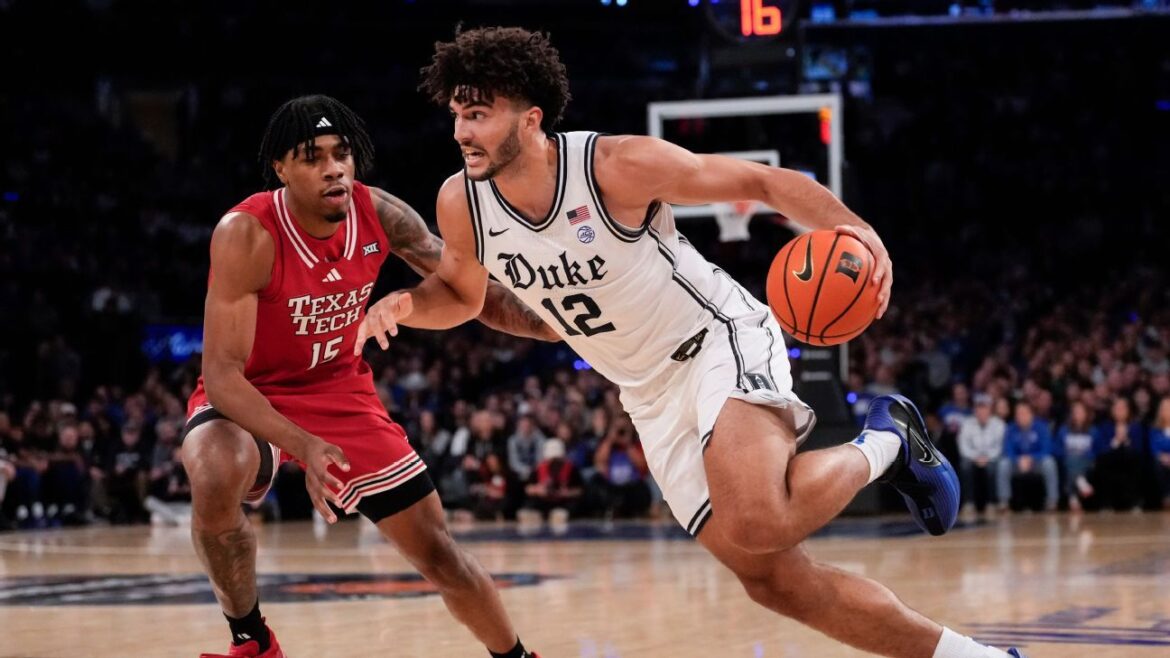
Kansas’ Darryn Peterson, BYU’s AJ Dybantsa, and Duke’s Cameron Boozer entered the season as the standout names of the class; they have distinguished themselves as top players, with Boozer and Dybantsa leading most discussions for National Player of the Year. but, there’s more to the class than just these three.
2:25
Cam Boozer guides Duke to a comeback victory against Louisville
Boozer scores 27 points, grabs 8 rebounds, and dishes out 4 assists during Duke’s thrilling win.
Nine freshmen made it to the Wooden Award midseason top 25 watchlist, including Arkansas’ Darius Acuff Jr., Tennessee’s Nate Ament, Louisville’s Mikel Brown Jr., Houston’s Kingston Flemings, Arizona’s Koa Peat, and North Carolina’s Caleb Wilson.
This list doesn’t even factor in UConn’s Braylon Mullins and Arizona’s Brayden Burries, who are currently starting for the nation’s top two teams. Breakout players include Illinois’s Keaton Wagler and Stanford’s Ebuka Okorie, along with former European pros classified as freshmen, such as Virginia’s Thijs De Ridder and Washington’s Hannes Steinbach. — Borzello
The 2025-26 season is being highlighted by a robust field of contenders from the major leagues. The Big Ten has ten teams ranked in the top 40 on KenPom, featuring top-15 squads like Michigan, Michigan State, Purdue, Nebraska, and Illinois.
The Big 12 boasts star talent this year: AJ Dybantsa (BYU), Joshua Jefferson (Iowa State), Darryn Peterson (Kansas), Kingston Flemings (Houston), JT Toppin and Christian Anderson (Texas Tech), as well as Koa Peat (Arizona), all of whom have the potential to guide their teams to the Final Four and national recognition.
The ACC is also regaining respect with a strong season. Naturally, Duke leads the way, but North Carolina, Clemson, and Virginia have contributed to the depth of the conference with promising starts.
Nevertheless, the SEC continues to hold the top spot in KenPom a year after its record-setting 14 NCAA tournament bids. While they may not replicate that number, reigning champion Florida is positioned well to defend its title. Alabama remains a powerhouse defensively, Kentucky shows signs of improvement, and John Calipari might have the nation’s best point guard at Arkansas. Vanderbilt also boasts six top-50 KenPom wins. — Medcalf
Not long ago, three-guard lineups were the go-to for high-level teams—think about Villanova’s perimeter-driven championship squads in 2015 and 2017, or Baylor’s title team in 2021, which featured four players 6-foot-5 or shorter. In 2021, only four NCAA tournament teams were among the top 20 for average height according to KenPom.
This season, the top three averaging height teams are all represented in the AP poll, and six other top-25 teams are close behind.
Take a look at this week’s top four AP poll teams: Arizona’s rotation includes six players 6-6 or taller. UConn has no starter below 6-4. Michigan begins games with three players 6-9 or taller. Duke, ranking second in average height, has no players shorter than 6-4 in its rotation.
The trend in the NBA towards valuing positional size is increasingly influencing college basketball as well. — Borzello


David Hale
In a news conference lasting over an hour on Friday, Clemson head coach Dabo Swinney criticized Ole Miss coach Pete Golding for what he described as direct tampering with a Clemson player. Swinney expressed concern about the current state of college football that fosters such behavior and put forth suggestions for reforms he believes are necessary to create guidelines for the existing system.
Swinney blasted Golding for allegedly making ongoing attempts to entice linebacker Luke Ferrelli to enter the transfer portal, despite Ferrelli already having signed a contract and begun attending classes at Clemson. He labelled it a “clear case of tampering” and urged his fellow coaches to “serve as role models for younger coaches in this profession and uphold integrity or remain silent to avoid complaints.”
Swinney called the transfer portal situation “flat-out extortion” in certain cases and used Ferrelli’s situation as a “blatant” illustration of how serious the problems have become in a system seemingly devoid of accountability.
“This is a completely different level of tampering,” Swinney stated regarding Golding and Ole Miss’ engagement with Ferrelli. “It’s total hypocrisy. … This is a deeply troubling situation. We have a flawed system, and if there are no repercussions for tampering, then we are devoid of any regulations or governance.”
Swinney’s remarks follow numerous high-profile disputes over player mobility in the transfer portal, including Washington quarterback Demond Williams Jr., who attempted to exit a contract with the Huskies only to return, and Duke quarterback Darian Mensah, who is facing a lawsuit for contract breach as he tries to transfer despite previously committing to the Blue Devils.
Ferrelli, considered one of the premier freshman defenders in 2025 at Cal, entered the portal in January. Swinney provided details of a two-week timeline in which Ferrelli visited both Ole Miss and Clemson, agreed to a revenue-sharing contract with the Tigers, secured an apartment, bought a car, enrolled in classes, and began offseason training there.
On January 14, after more than a week of attending classes at Clemson, Ferrelli’s agent notified Clemson general manager Jordan Sorrells that “Ole Miss was pursuing Ferrelli aggressively.” At Swinney’s request, Sorrells reached out to Ole Miss GM Austin Thomas to ask for an end to their communications with Ferrelli.
Swinney shared that Thomas assured Sorrells he did not condone tampering, although Golding “does what he does.”
Swinney proceeded to recount a series of alleged communications from Golding to Ferrelli that began during an 8 a.m. class. According to Swinney, Ferrelli received a text stating “I know you’re signed, but what’s the buyout?” which was followed by an image of a $1 million contract proposition and subsequent calls from quarterback Trinidad Chambliss and former quarterback Jackson Dart trying to entice Ferrelli back into the portal.
According to Swinney, Ferrelli communicated to Clemson that he was not interested in leaving. but, Ferrelli’s agent, Ryan Williams, refused to share those text messages unless Clemson agreed to a two-year extension on Ferrelli’s contract that included a $1 million increase. Clemson declined the proposal.
Swinney and athletic director Graham Neff outlined a tumultuous four hours on January 15, during which Ferrelli was on campus reassuring coaches of his intent to stay. By late afternoon, he had ended up in the compliance office expressing his desire to enter the portal and move to Ole Miss.
On January 16, Clemson filed a formal complaint with the NCAA, citing “blatant” and “clear-cut” tampering. Neff indicated that the school would contemplate further legal action if a resolution does not materialize.
“I’m not aiming to get anyone fired, but when does it become too much?” Swinney questioned. “If we have regulations and tampering is prohibited, then there should be consequences for those actions. And shame on the adults if we do not keep each other accountable.”
Golding has occupied the head coaching position at Ole Miss for less than two months, following former coach Lane Kiffin’s move to lead LSU just before the Rebels’ playoff run. Golding contended with various schools attempting to entice Ole Miss players after Kiffin’s exit, all while managing a demanding schedule preparing for playoff games as many of his coaching staff juggled responsibilities between Ole Miss and LSU.
When Swinney confronted Ole Miss regarding the tampering accusations, one of their responses was that other institutions had also tampered with their players.
“What I do know,” Swinney remarked, “is two wrongs do not make a right.”
According to Swinney, NCAA officials expressed surprise at Clemson’s forthrightness in its complaint, noting that several schools have reported frustration or made less straightforward accusations of tampering but rarely take the step of filing an official complaint.
It remains uncertain whether the NCAA will impose sanctions if it finds Ole Miss committed tampering with Ferrelli. While tampering is against NCAA regulations, it is often viewed as a significant issue involving indirect communications to circumvent strict definitions of violations.
“This isn’t just about a linebacker at Clemson,” Swinney emphasized. “I don’t want anyone who doesn’t wish to be part of our team. But it concerns the future of young athletes and the message communicated by allowing straightforward tampering to occur without penalties. This transcends our program; it involves college football as a whole.”
To conclude Friday’s press conference, Swinney offered several recommendations to rectify the most pressing challenges in college football, including shifting the transfer portal window to the spring, redefining spring football to resemble structured OTAs based on each program’s schedule, and limiting free transfers to one per player unless a head coach leaves or the player graduates. He even proposed that collective bargaining may serve as a better alternative than the current arrangement — a significant shift for a coach who has historically opposed considering student-athletes as employees.
Swinney also advocated for a more equitable revenue-sharing model where a portion of revenue would be retained and distributed upon graduation or upon reaching the age of 25, aiming to prevent long-term financial issues for players.
“If we do not take action regarding the existing transfer regulations, we will eventually witness a multitude of players without degrees who squandered their short-term finances,” Swinney warned. “In a few years, we may face a cohort of individuals struggling at 30. … College football is currently organized to benefit the 2 percent who have a shot at making it to the NFL. As adults, we have a responsibility to do better for the 98 percent who likely will not play professionally. We must ensure we educate, prepare, and graduate these young individuals entrusted to our care in college football.”
Most kitchen “composters” simply grind and dry your food scraps, but the Lomi 3 does the best job of this of the bunch. I’m always impressed when companies listen to feedback and adapt, and Lomi’s new model solves a couple of the now-discontinued Lomi 2’s quirks and foibles. Gone are the multiple modes, annoying twist-off lid, and having to put scraps right into the machine. Now there’s a convenient 3-liter, 7.5-inch-tall countertop bucket, just like the FoodCycler below; an easy push-button lid; and just two simple processing modes: Grow and Express. The Lomi 3 is also smaller and supposedly quieter than the Lomi 2, but my decibel meter found the difference to be negligible. One feature I did like on Lomi 2 that’s missing from the 3, however, is Lomi mode, which could break down a list of approved bioplastics, including the Lomi’s own packaging. Lomi confirms the new model cannot accept bioplastics.
Photograph: Kat Merck
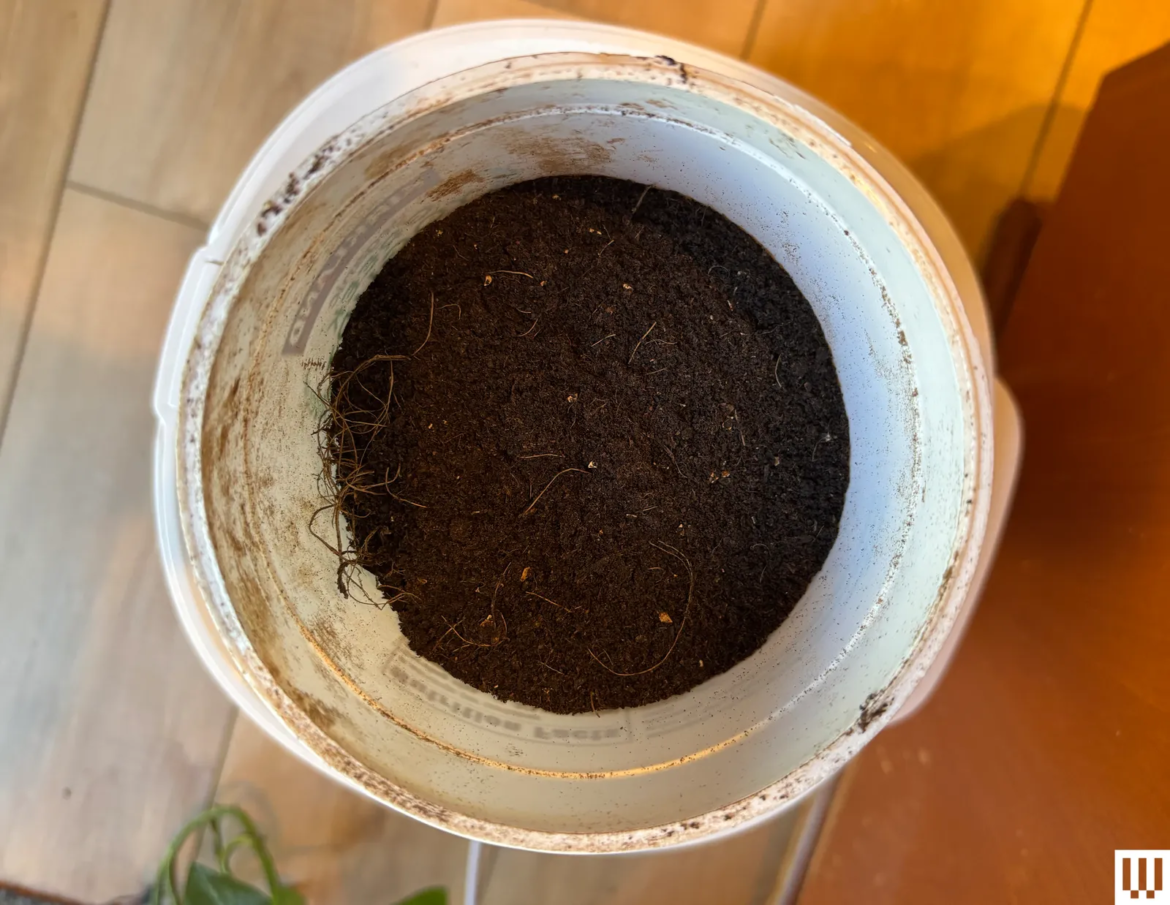
Like with the Lomi 2, an app exists for basic management, but I enjoyed not having to use it—press a button and the Lomi turns on. When it’s done (cycle lengths vary from 3 to 16 hours, depending on amount and moisture of contents), it will play a little chime, and you can either put the processed grounds, which are very fine and look like Folgers, in your outdoor compost pile, top-dress your lawn with them, or add them to soil at a 1:10 ratio (1:15 if using meat/dairy). I also like that the Lomi 3 has a clear lid, so you can see exactly where it is in its cycle.
It’s a lot to pay for what’s essentially a grinder-and-dryer, which is why I generally recommend the Reencle above, especially if you want to generate something close to compost. yet, if you’re simply looking to reduce the volume of waste in your trash, or you live in an area that’s subject to composting fines, the Lomi 3 is a thoughtfully engineered, easy-to-use option most people would be happy with. Note that my test unit originally came with a lid that warped after several months, allowing odors to escape and attracting fruit flies. Lomi said the initial batch of lids was made with faulty plastic and sent a new lid, but the new version is starting to warp as well after a couple of months.
FoodCycler
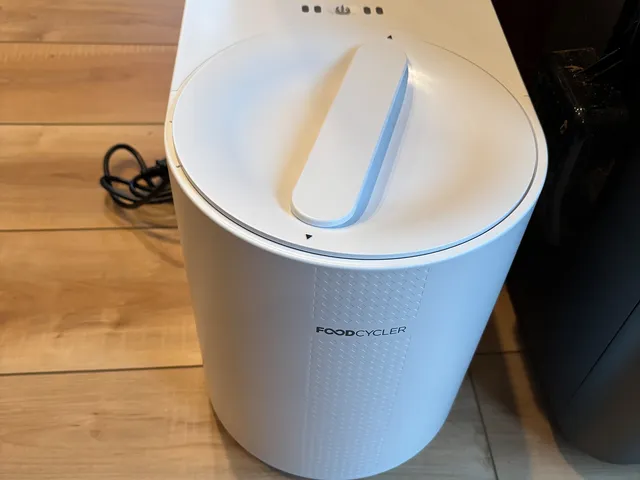
First off, I appreciate that FoodCycler doesn’t even pretend it’s making a composter. “The FoodCycler is a food waste recycler,” the company explained firmly before agreeing to ship a test unit. “Our primary goal is to provide a modern food waste solution for users who may lack access to traditional composting or other disposal options that divert from the landfill. for that reason, the resulting byproduct cannot be labeled as ‘compost.’” And indeed, the FoodCycler breaks down food so quickly, and with no microbial involvement, that there’s no way anyone could think this was proper compost. But if you are going to go with a grinder/dryer, the Eco 3 makes more groaning/creaking noises while in operation than the Lomi 3, above, but it is still a great pick.
Photograph: Kat Merck
Launched in 2024, the Eco 3 is a smaller version of the Vitamix FoodCycler FC-50 (read our full review here), sporting a larger 3.5-liter capacity and, according to FoodCycler, better grinding capability. At 11 x 9 x 13 inches, it is small enough to sit on a counter or tabletop, though the real convenience with this machine is its auxiliary pail. Fill the sleek, 8-inch-tall lidded container with scraps (in my household of three people, this took about three days), and once it’s full, swap out the lids, seat it in the machine, and press a button.
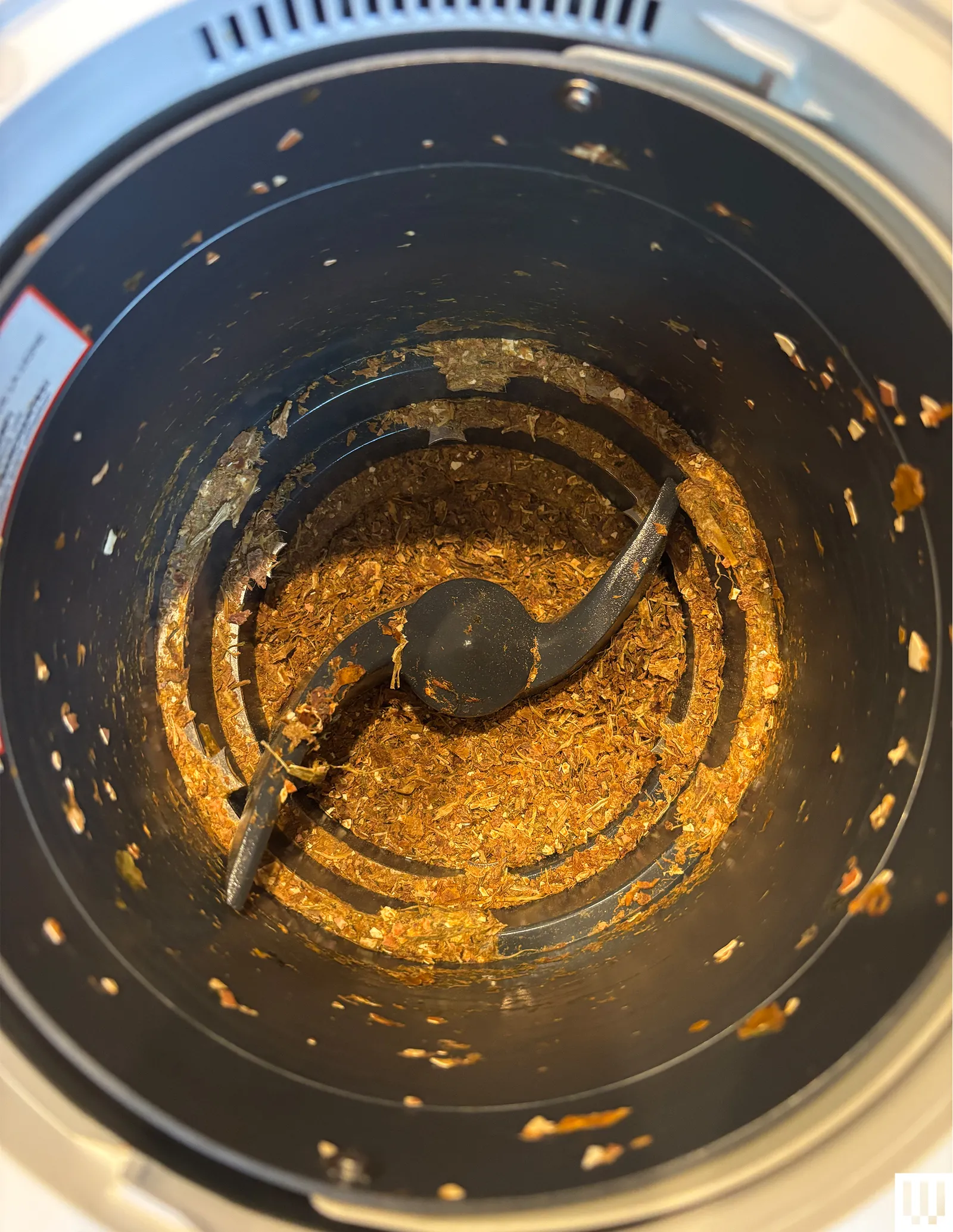
A few hours later, you’ll have a handful of “Foodilizer,” a “homemade soil amendment” that looks like finely ground dirt. In fact, the output is one of the most finely ground of any of these machines. There’s no assembly with this machine (other than filling a filter with carbon granules), no app, no making an account, no pods or tablets or choosing various cycles—you don’t even have to plug it in until you’re ready to use it.
Source: www.wired.com