








-

Brian Windhorst
Multiple Authors
THE NUMBERS IN the cylinder were 3, 5, and 2. All were low. Typically, the teams with the worst records—and thus the highest odds in the annual NBA draft lottery—are assigned these low combinations.
Just one more number to reveal.
Justin Zanik, general manager of the Utah Jazz, leaned on his elbows, scrutinizing his flip card filled with the numbers assigned to his team.
Will Dawkins, general manager of the Washington Wizards, sat quietly with his hands folded below the table.
Rick Schnall, co-owner of the Hornets, adjusted his glasses and noted the numbers he needed with a pencil.
They all remained side by side, stoic—as decorum required—but this moment had the potential to alter the trajectory of billion-dollar businesses. The three teams with the best odds, none of which had experienced any luck in the first three drawings that night last May.
This was their last chance to advance. Matt Doria, an NBA vice president, removed the next number from the machine.
11.
“Charlotte Hornets.”
Schnall removed his glasses and leaned back, a weight lifted from his shoulders. Dawkins extended a handshake. Zanik turned to offer a flat smile. Schnall replied with a sympathetic shrug.
And just like that, it can mean the difference between selecting a player like Kon Knueppel, whom the Hornets drafted at No. 4 with this lottery result and who is a frontrunner for Rookie of the Year, and not securing such talent.
It also marks the line between immediate reward and engaging in the NBA’s emerging tanking strategy: the flip.
KNUEPPEL IS HAVING one of the finest rookie shooting seasons in league history, hitting 42% on eight 3-point attempts per game (for reference, Steph Curry shot 43% on five attempts as a rookie).
even if the Hornets have been building this roster over several years—having had four top-six picks in the last six drafts—Knueppel’s arrival has accelerated a turnaround, propelling them to their longest winning streak (nine games) in over two decades.
At the trade deadline, Charlotte also made a bold move for guard Coby White, aiming for a legitimate playoff push.
Meanwhile, the Jazz selected Ace Bailey at No. 5 and the Wizards drafted Tre Johnson at No. 6. Both franchises are optimistic about their futures, and a season or two from now, they could be vying with Knueppel regarding their influence on the game. but, neither team has allowed for such a shift just yet.
Instead, the Wizards and Jazz are at the forefront of a new hybrid strategy: actively tanking while also making moves to acquire stars during a disappointing season, all to set up a swift resurgence next year. The flip.
“How can you fault them?” remarked one Eastern Conference general manager. “The stakes for securing a top-four pick last year were monumental. This year, everyone recognizes that being in the top four or missing it is substantial.”
The Wizards traded for multiple-time All-Stars Trae Young and Anthony Davis, two players expected to help them reach the playoffs for the first time in five years…next season.
Young returned from a quad injury to play five out of six games for the Atlanta Hawks in December. but, after being traded to Washington, he hasn’t played in six weeks, and there’s currently no estimated timeline for his return.
Following a hand injury last month, the Dallas Mavericks announced that Davis would likely miss six weeks. After acquiring him last week, Dawkins informed reporters in Washington that Davis would be returning to Dallas for rehab, with a potential return timeframe now closer to ten weeks.
All of this positions the Wizards to secure the highest draft pick this year (noting that their pick would convert to the New York Knicks if it falls outside the top eight), but they plan to make a move toward contention next year when both Davis and Young should, theoretically, be healthy.
“You might think your fans are the toughest to answer to during a rebuild,” stated a seasoned league executive. “But the real challenge comes from your owner. Owners want a clear timeframe for when a rebuild will conclude, and it’s evident that some of these teams are under pressure.”
The Jazz, too, find themselves in a similar position, as they aim to execute their own flip—from tanking to the playoffs as swiftly as feasible.
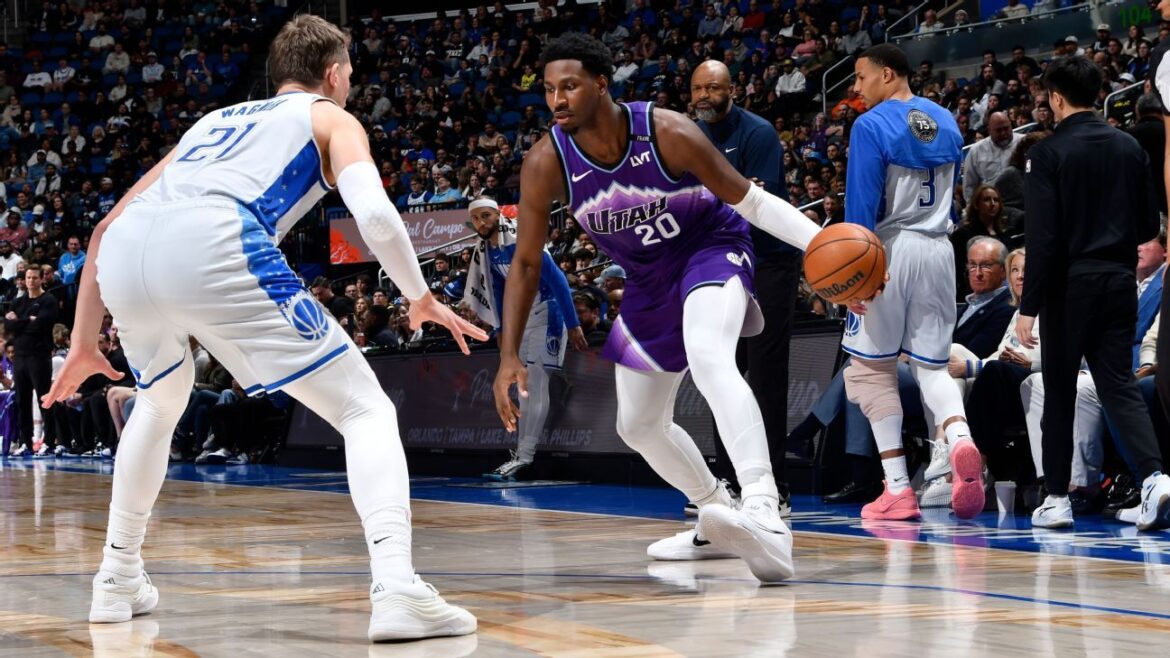
Utah’s pick is also top-eight protected, and the Jazz are a living example of what a few lottery positions can entail. The team’s coaches and front office praise Bailey’s potential, but he was not invited to participate in the league’s Rising Stars Game during All-Star Weekend, while former Duke teammates and top-four picks Cooper Flagg and Knueppel take center stage.
The Jazz, moving like the Wizards, made a significant move at the trade deadline, surprising the league by trading for Jaren Jackson Jr. in a deal heavy on draft picks with the Memphis Grizzlies.
In his inaugural game with the team on Saturday, Jackson scored 22 points in just 25 minutes, only to be benched during the fourth quarter of a narrow three-point loss against Orlando.
His new teammate, Lauri Markkanen, recently missed seven consecutive games due to illness and has frequently been removed from the lineup during close contests. Markkanen finished with 27 points in 27 minutes against the Magic and sat alongside Jackson during the fourth—a situation likely to recur as the season progresses.
“Trae and AD, plus a top-five pick in this draft, or Jaren and Markkanen alongside another top-five pick, and you’ve got something special,” an Eastern Conference coach remarked. “Without a standout from this draft, teams at the bottom may just find themselves stuck in mediocrity.”
Actions taken by other teams suggest they are planning similar strategies, including the Brooklyn Nets and Indiana Pacers.
THE NETS DID something unprecedented this season by acquiring and utilizing five first-round picks and routinely fielding the youngest lineups in the league (the Wizards fielded a lineup with an average age of 20.6 years at one point).
Without control over their first-round picks for the foreseeable future, the Nets have strong motivation to secure the highest possible pick and subsequently leap back into relevance. This explains why they held on to forward Michael Porter Jr., who is having a career season and is in high demand, during the trade deadline.
He is crucial for the flip, which the Nets hope to achieve by actively utilizing their nearly $50 million in cap space this summer. The Pacers are looking for a similar turnaround, albeit a few years down the line: a swift rebound next season upon the return of star point guard Tyrese Haliburton from a torn Achilles.
Indiana took a significant step toward that goal by acquiring new franchise center Ivica Zubac from the LA Clippers at the deadline.
After playing 15 out of 16 possible games before the trade, Pacers coach Rick Carlisle announced that Zubac would miss several upcoming games due to a sore ankle that hadn’t been previously reported. He also recently became a father.
Others teams, such as the Milwaukee Bucks with Giannis Antetokounmpo and the Dallas Mavericks with Kyrie Irving, could also benefit from short-term losses as key players deal with uncertain injuries.
“Isn’t it ironic?” asked one Western Conference executive. “Charlotte trades for White hoping to utilize him immediately and finds out he’s injured. Meanwhile, Utah, Indy, and Washington acquire players and find ways to keep them sidelined.”
When the Hornets conducted a physical on White last week, they discovered a previously undiagnosed calf injury, necessitating an adjustment to the trade, with Charlotte removing a second-round pick from the deal with the Bulls.
Inevitably, some irritation exists within the league, despite the flip strategy having some logical foundation. This topic surrounding these long-range, non-competitive tactics was raised at a recent NBA competition committee meeting, according to sources.
but, any significant rules changes to address this trend won’t have an immediate impact this season.
The trend of tanking may only become more pronounced and possibly more widespread.
This raises some philosophical questions regarding the league’s overall direction.
“You know the story of Icarus and what happens when you fly too close to the sun,” stated one team president. “I think some teams risk flying too dangerously close to the ground.”





 Arsenal vs. OH Leuven: Revitalized Arsenal pose a new challenge
 Paris FC vs. Real Madrid: Spanish side’s chance for an El Clasico knockout
 Wolfsburg vs. Juventus: German side’s struggle to maintain leads offers Juve an opportunity
 Atletico Madrid vs. Manchester United: Is Atletico rising?