








It seems you want to rewrite content while retaining the HTML tags. yet, I don’t see any content provided. Please share the specific text you would like rewritten, and I’ll be happy to assist!

It seems you want to rewrite content while retaining the HTML tags. yet, I don’t see any content provided. Please share the specific text you would like rewritten, and I’ll be happy to assist!
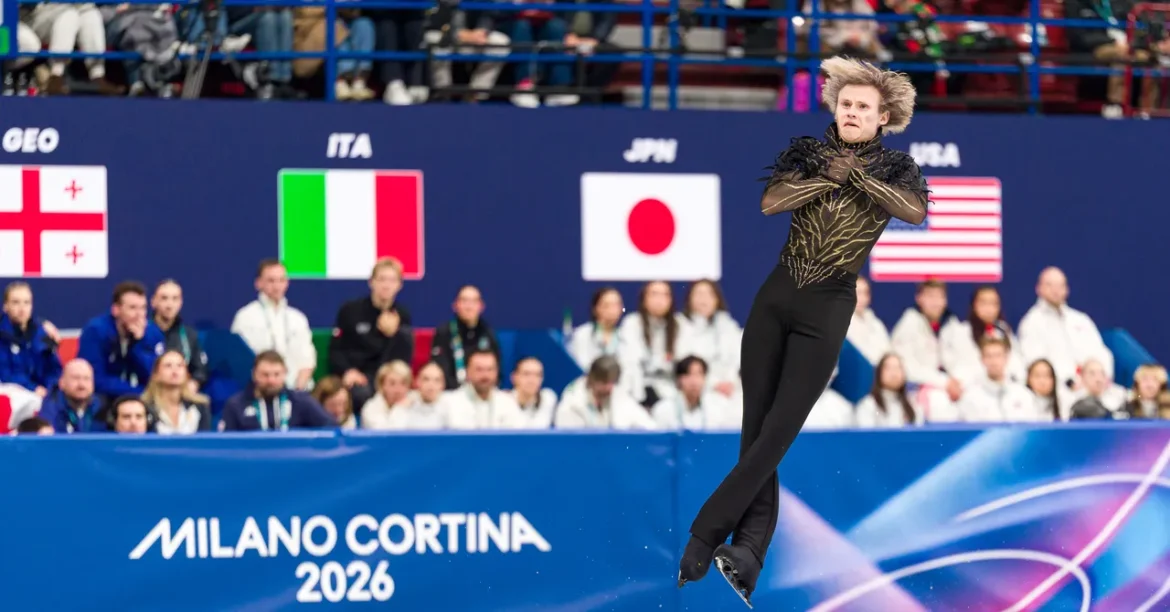
In figure skating, the quadruple axel is generally considered the most difficult jump. Until 2022, when US skater Ilia Malinin—currently riding high as the “Quad God” at the 2026 Winter Olympics—started doing them, they seemed impossible. Landing one, naturally, can give an athlete a higher score. But for skaters who aren’t generational talents like Malinin, grasping exactly how to pull off a quadruple axel can be tricky. But physics can offer some clues.
In 2024, the journal Sports Biomechanics published a study by Toin University researcher Seiji Hirosawa that brought science a little closer to understanding how quad axels work. One of the biggest factors? Getting high. Like 20 inches off the ground high.
In the current scoring system of figure skating competitions, the jury, which in the case of the Milano Cortina Games consists of two technical specialists and a technical controller, assigns a score to each technical element, namely jumps, spins, and steps. yet, the scores for the more difficult jumps, such as triple or quadruple jumps, are higher than those for the other technical elements, so skaters must perform them correctly in order to win competitions.
Generally speaking the axel is the most technically complex of the jumps. There are three main types, each distinguished by their takeoffs: toe, blade, or edge. Most are named after the first person to do them; the axel is named after Norwegian skater Axel Paulsen. It is also the only one that involves a forward start, which leads the athlete to perform a half-turn more than other jumps. A simple axel, therefore, requires one and a half rotations to complete, while a quadruple axel requires four and a half rotations in the air.
To shed light on the specific kinematic strategies used by athletes to perform the quadruple axel jump, Hirosawa’s study focused on footage of two skaters who attempted this jump in competition. Using data from what’s known as the Ice Scope tracking system, researchers analyzed several parameters: vertical height, horizontal distance, and skating speed before takeoff and after landing.
Contrary to previous biomechanical studies, which suggested that jump height does not change significantly, Hirosawa’s study found that increasing jump height is crucial to successfully performing a quadruple axel jump. Both skaters, in fact, aimed to achieve significantly greater vertical heights in their attempts to perform this jump than in the triple axel.
“This suggests a strategic shift toward increasing vertical height to master 4A [quadruple axel] jumps, in contrast to previous biomechanical research that did not emphasize vertical height,” the study concluded.
Increased jump height, Hirosawa adds, provides increased flight time by allowing a large number of rotations around the longitudinal axis of the body. Short version: jump higher, turn more. “The results of this study provide valuable insights into the biomechanics of quadruple and triple axel jumps, update existing theories of figure skating research, and provide insights into training strategies for managing complex jumps,” the study concludes.
Easier said than done—unless you’re Ilia Malinin.
Source: www.wired.com

There’s been a lot of pushback on electronic door handles lately, as multiple carmakers — especially Tesla — have been accused of making manual door releases too hard to find and access during an emergency. Rivian is one of the companies that reportedly decided to change this on its upcoming R2 SUV, and a spate of first-look videos released Tuesday finally give us a look at what the company has changed.
First off, the front doors open from the inside in the same way as in the existing R1 vehicles. There is an electronic button that opens the door, and there’s a manual door-release latch tucked into the front part of the interior handle.
The rear doors also have an electronic button, as well as a change to the rear manual release.
On R1 vehicles, passengers have to first pull a panel off the door to access a “release cord” that operates the manual latch. On the new R2 SUV, Rivian moved this release cord to that same front-of-the-handle position as the front seat manual releases — though it’s still tucked behind a piece of plastic that must be popped out, making it slightly harder to access than the front door manual releases.
The R2 SUV isn’t set to go into production for another few months, so the company has not put out proper instructions on how to access this release. But here’s an image from a new video published by JerryRigEverything’s Zack Nelson:
He doesn’t pull out the actual cord, but it’s the best illustration I’ve seen so far of what passengers will need to do if they are in an R2 that has lost power for whatever reason, limiting the vehicle’s electronic door release.
The manual release is still behind a piece of plastic, and it’s not the most obvious or accessible way to open a door from the inside. But it’s at least in a more logical spot than just being hidden behind a panel.
Techcrunch event
Boston, MA
|
June 23, 2026
These kinds of situations don’t happen often. But when they do, it’s typically during a major crash. That means every moment can mean the difference between life and death.
Rivian is not alone in reworking how hard it is to access the manual releases. The most high-profile example is Tesla. Bloomberg News found at least 15 deaths in crashes where there is evidence that occupants (or rescuers) were unable to open the doors. The company has said it will change how it designs its handles in order to address the problem.
And electronic door latches can present other issues. Last year, Ford had to issue a recall to fix a power-delivery problem for the electronic door latches on the Mustang Mach-E.
Source: techcrunch.com

Greg Wyshynski
Multiple Authors
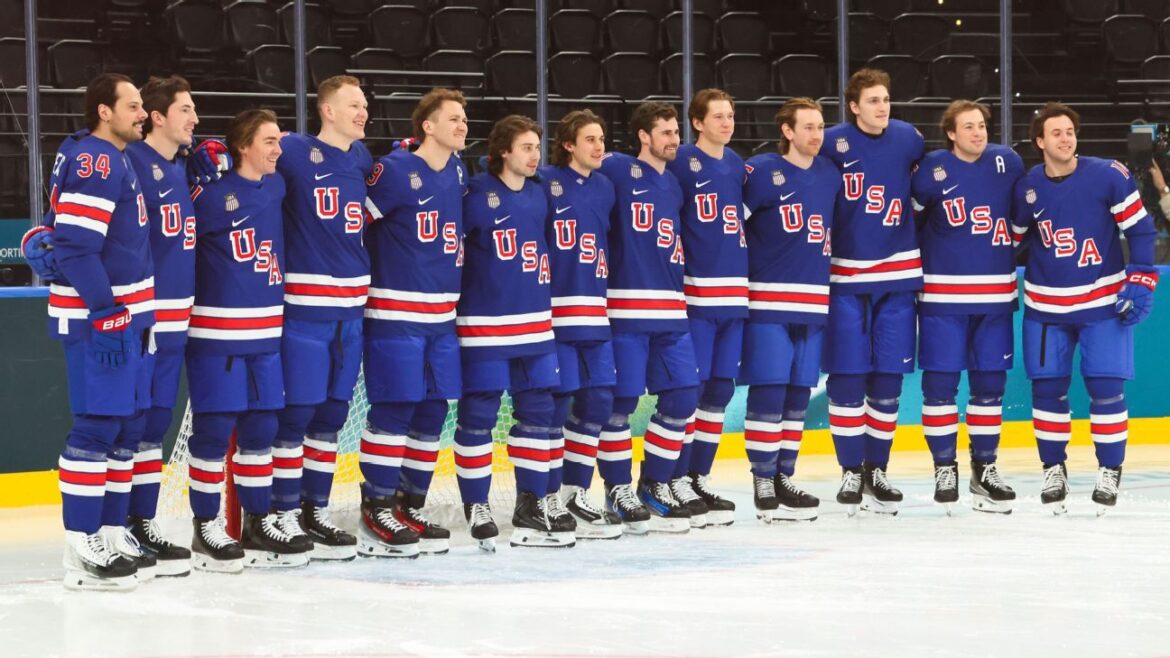
The men’s ice hockey tournament for the 2026 Milan Cortina Olympics kicks off on Wednesday with the round-robin stage, marking the NHL players’ return to the Winter Games for the first time since 2014.
This guide is for hardcore hockey fans and those Olympic followers wondering, “Who is Tkachuk?”
The NHL started sending players to the Winter Olympics in 1998, coincidentally aligning with Canada securing three gold medals since then, a feat they hadn’t achieved at all since 1952. Their last gold was earned during the Sochi Games in 2014, the same year NHL players last participated in the Olympics.
For years, the NHL and its players have clashed over Olympic involvement. Players are eager to represent their nations in this historic global sporting event, inspired by past moments like the “Miracle on Ice” in 1980. yet, NHL owners are hesitant about pausing their regular season and lending their players to an IOC that doesn’t share revenues or provide any financial incentives to the league. still, to promote the sport’s growth, the NHL has agreed to participate, albeit with certain exceptions.
The league opted out of the 2018 Olympics in Pyeongchang due to new terms with the IOC and the strong opposition from “the overwhelming majority of our clubs” to disrupting the regular season, according to commissioner Gary Bettman, who was also looking for concessions from the NHL Players Association. NHL owners were against halting the season for South Korea, a market they didn’t see as crucial for global expansion.
Disheartened by this choice, the NHLPA included a provision in their 2020 collective bargaining agreement, ensuring player participation in the 2022 and 2026 Olympics. The condition for the 2022 Beijing Games hinged on whether the previous NHL season was significantly disrupted by COVID-19. Eventually, after numerous postponements, the NHL and NHLPA decided to hold players back from the Beijing Games.
Luc Tardif, president of the International Ice Hockey Federation, supported the league’s decision, stating, “We understand the NHL’s decision is in the best interest of the health and safety of its players.” In 2023, when Marty Walsh, former U.S. Secretary of Labor, took the role of NHLPA executive director, his priority became securing a return to the Olympics. After lengthy negotiations, the NHL declared in February 2024 its intent to send players to the Milan Cortina Games. Bettman noted that crucial issues for players, such as insurance and travel costs, needed addressing before reaching an agreement.
With that, preparations ramped up for Italy and players across numerous nations.
Since the invasion of Ukraine in February 2022, both Russia and Belarus have been barred from IIHF events, including the 2026 Olympics, due to “security conditions.”
This absence leads some to label the 2026 tournament as “best-on-most-of-the-best.” importantly, top scorers like Nikita Kucherov (Tampa Bay Lightning) and Kirill Kaprizov (Minnesota Wild) won’t be participating, nor will stars such as Artemi Panarin (Los Angeles Kings), Evgeni Malkin (Pittsburgh Penguins), and Alex Ovechkin (Washington Capitals), who became the NHL’s all-time leader in goals scored last season.
This could be the last Olympic hockey tournament with such restrictions. While the IIHF has maintained its ban for the 2026-27 season, there is a possibility of reevaluating the status of Russian and Belarusian under-18 teams for 2027-28. Other organizations, such as FIFA, have also suggested they may lift restrictions on Russia.
The absence of Russian teams from international tournaments has hampered the NHL and NHLPA’s ability to host another World Cup of Hockey since 2016, pushing them to innovate instead. This resulted in the successful 4 Nations Face-Off in February, held in Montreal and Boston, which established the U.S. and Canada as the current hockey powerhouses and intensified their rivalry.
1:13
P.K. Subban’s biggest question for Team USA heading into the Olympics
P.K. Subban’s biggest question for Team USA heading into the Olympics
Like giant forces of nature preparing for a showdown, the U.S. and Canada possess the two most formidable teams in the men’s tournament. They are unrivaled in depth across all positions, particularly as injuries have impacted other traditional hockey powerhouses. Both teams also feature championship-winning coaches: Jon Cooper of Canada (Lightning) and Mike Sullivan of Team USA (Rangers).
Team Canada’s offensive lineup features:
A historic trio of centers. Connor McDavid from the Edmonton Oilers is participating in his first Olympics and boasts four MVP awards (three regular season, one postseason) along with five scoring titles in 11 NHL seasons. Nathan MacKinnon from the Colorado Avalanche, also in his Olympic debut, has achieved 40 goals in 55 games this season. Sidney Crosby, a two-time Olympic champion and two-time Stanley Cup winner with the Pittsburgh Penguins, still maintains a point-per-game rate at 38 years old, often hailed as the NHL’s best all-around player of the century.
A dynamic group of wingers, including Mitch Marner and Mark Stone (Vegas Golden Knights), Nick Suzuki (Montreal Canadiens), Brandon Hagel (Tampa Bay Lightning), and Sam Reinhart (Florida Panthers), all known for their scoring and defensive skills.
Canada’s great rival in Brad Marchand, nicknamed the “Rat King,” and Tom Wilson from the Washington Capitals, a controversial enforcer, who also contribute offensively.
Macklin Celebrini, the 18-year-old sensation from the San Jose Sharks, earned his spot on the Olympic roster.
Cale Makar from the Avalanche, recognized as one of the all-time greats among defensemen for points per game (1.08).
This is the first time in the NHL’s Olympic history that Team USA has assembled a roster capable of matching Canada’s depth while surpassing it in specific areas. Even with some high-caliber offensive talents like Montreal’s Cole Caufield and Dallas Stars’ Jason Robertson omitted from the lineup, the Americans may have their strongest array of scoring players in Olympic history.
GM Bill Guerin, who constructed the 4 Nations team that narrowly lost to Canada in overtime in the championship, has retained much of that roster for the Olympics. Key highlights of Team USA include:
The eagerness among fans for these Olympics is palpable. A U.S. vs. Canada matchup could become legendary, whether for a medal or earlier in the knockout stage.
The men’s hockey tournament is divided into three groups for the qualifying round. While the initial draw provides an opening-round clash between Finland and Sweden, Canada and the U.S. are placed in different groups:
Group A: Canada, Switzerland, Czechia, France
Group B: Finland, Sweden, Slovakia, Italy
Group C: United States, Germany, Latvia, Denmark
The seeding for the elimination rounds is determined by (in order) record, points, goal differential, total goals scored, and then IIHF world ranking. The top four teams receive a bye into the qualification round, and it would be surprising if Canada and the U.S. were not among them. Team USA has arguably the easiest group, while Canada is expected to outperform Switzerland and Czechia — although neither is a guaranteed win.
keep in mind that this is not a fixed bracket. According to IIHF regulations, the semifinal round will see the highest-seeded team face the lowest-seeded team after the quarterfinals, while the second and third-seeded teams will compete against each other. If Canada and the U.S. finish first and second after round-robin play and then continue to win their matches, they could face each other in the gold-medal game.
yet, an unexpected twist arises from Group B. In the 2014 Sochi Games, the U.S. and Canada were placed in different groups, finishing with two regulation wins and one overtime/shootout victory each. Sweden, in another group, had three regulation wins and topped the round-robin standings, leading to a U.S.-Canada semifinal clash, where Canada won 1-0. The melancholy follow-up meant that the U.S. failed to even secure a bronze medal.
For Canada, the most notable concern lies in its goaltending.
Jordan Binnington from the St. Louis Blues was outstanding in Canada’s victory over the U.S. in the 4 Nations overtime matchup, yet he has struggled this season, statistically ranking as one of the two weakest goalies in the NHL. Canada has since swapped out its other 4 Nations goaltenders (Adin Hill of Vegas and Samuel Montembeault of Montreal) for stronger options: Darcy Kuemper from the Kings, a Stanley Cup champion with Colorado in 2022; and Logan Thompson from the Capitals, who ranks sixth in save percentage over the last two NHL seasons. although the upgrades, their goaltending doesn’t measure up to the U.S.’s standard.
For the Americans, the issues lie in scoring capability and experience. Will GM Guerin regret excluding prolific scorers, such as Montreal’s Lane Hutson and the Rangers’ Adam Fox, in favor of players with more defensive skills? How effective can star Jack Hughes of the New Jersey Devils be, hampered by injuries and playing out of position, along with New York Rangers’ J.T. Miller, currently experiencing a tough season? And will Auston Matthews, who had no goals during the 4 Nations, find his shooting touch?
Team USA features several Stanley Cup champions like Jack Eichel, Matthew Tkachuk, and Jake Guentzel (Tampa Bay Lightning), but Canada holds more championship titles within their ranks. Canada’s captain, Sidney Crosby, brings unparalleled experience and leadership — a factor that may shine through when pressure mounts, such as in a third-period deficit during elimination rounds, while the U.S. may have players feeling the heat.
One of Guerin’s strategic decisions regarding this roster is to emphasize experience gained from the IIHF World Championship. The Americans secured the title in 2025, marking their first on-ice triumph in the tournament in 92 years. Olympic forwards Tage Thompson (Buffalo Sabres) and Clayton Keller (Utah Mammoth), defensemen Jackson LaCombe (Anaheim Ducks, replacing injured Florida blueliner Seth Jones), and Werenski, along with goalie Swayman, have all participated in that championship. Many players have faced elite competition, but Olympic elimination games present an unparalleled level of challenge.
Sweden is widely recognized as the third-strongest team in the tournament, and overlooking them would be unwise.
They possess a formidable defense lineup, featuring stars like Rasmus Dahlin from the Buffalo Sabres and Gustav Forsling from the Panthers; Victor Hedman, captain of the Tampa Bay Lightning; and Rasmus Andersson from the Golden Knights, alongside Erik Karlsson, the 35-year-old Penguins defenseman still known for his offensive contributions.
Their forward lineup includes talented scorers like William Nylander (Maple Leafs), Adrian Kempe (Kings), Filip Forsberg (Nashville Predators), and Lucas Raymond (Detroit Red Wings), but they fall short in quality centers, especially after losing Anaheim’s Leo Carlsson (44 points in 44 games) to injury. That said, Mika Zibanejad’s resurgence with the New York Rangers (23 goals) has somewhat alleviated concerns.
To challenge either Canada or the U.S., elite goaltending is essential. Sweden may have that in Filip Gustavsson from Minnesota, one of the NHL’s top goalies seeking redemption after a poor performance against Finland in the 4 Nations Face-Off when illness forced him off the ice early. He is expected to lead over inconsistent Jacob Markstrom (Devils) and rookie sensation Jesper Wallstedt, who has better statistics this season than Gustavsson.
Finland, the reigning gold medalist from Beijing, won with a non-NHL roster. Unfortunately, they faced a significant injury setback when superstar Aleksander Barkov required surgery on his torn ACL and MCL right before the tournament. He was crucial to the Panthers’ success in back-to-back Stanley Cup wins and would have provided valuable depth alongside talents like Sebastian Aho (Hurricanes), Roope Hintz (Stars), and Anton Lundell (Panthers).
although challenges, Finland should not be underestimated. Winger Mikko Rantanen (Stars) demonstrated his ability to carry a team offensively during the previous Stanley Cup playoffs, and Miro Heiskanen is among the top defensemen in the tournament. If Juuse Saros (Predators) can elevate his performance beyond an average regular season, Finland could be very competitive. At the very least, they will not be easy opponents.
Switzerland presents an intriguing squad featuring NHL talents such as Nico Hischier and Timo Meier (Devils), Kevin Fiala (Kings), and Nino Niederreiter (Jets), in addition to defensemen Roman Josi (Predators) and J.J. Moser (Lightning). yet, their goaltending situation lacks a standout, with NHL goalie Akira Schmid (Golden Knights) alongside Swiss league players Reto Berra (a veteran) and Leonardo Genoni, who has performed well in World Championships. The absence of a prominent goaltender like Jonas Hiller is notable.
Germany boasts one of the elite players in Leon Draisaitl from the Oilers, plus one of the best defensemen, Moritz Seider from the Red Wings. They’re also armed with accomplished scorers like JJ Peterka (Utah) and Tim Stutzle (Ottawa). The rest of their roster mostly comprises DEHL players, some with NHL backgrounds. An effective spoiler could be Seattle Kraken goalie Philipp Grubauer, one of the season’s best netminders and a frontrunner for comeback player of the year.
Czechia’s forward lineup features familiar NHL names, including David Pastrnak (Boston), Martin Necas (Colorado), and Tomas Hertl (Vegas), each having scored 22 goals this season. Their hopes hinge on a strong goaltending trio: Lukas Dostal (Anaheim), Karel Vejmelka (Utah), and Dan Vladar (Philadelphia), noted for their NHL performances.
Slovakia made history by winning its first men’s hockey medal in Beijing. Montreal’s Juraj Slafkovsky, the MVP from that tournament, returns as one of Slovakia’s few notable NHL players. They boast some NHL talent in defense, including Erik Cernak (Lightning), Martin Fehervary (Capitals), and Simon Nemec (Devils), but face challenges in goal, as none of their three goalies have NHL experience. One of them, Adam Gajan, is currently in his second NCAA season with the University of Minnesota-Duluth.
Denmark fields recognizable forwards such as Nikolaj Ehlers (Hurricanes), Oliver Bjorkstrand (Lightning), and Lars Eller (Senators), along with longtime netminder Frederik Andersen (Hurricanes), who was once a game-changer on the international stage but has struggled with consistency this season.
Latvia’s squad features several players with North American experience, yet only three currently play in the NHL: Forwards Teddy Blueger (Vancouver), Zemgus Girgensons (Tampa Bay), and Uvis Balinskis (Florida). still, Latvian goalies Elvis Merzlikins (Blue Jackets) and Arturs Silovs (Penguins) bring intrigue to the squad.
France qualified for the 2026 Olympics following Russia’s disqualification, while Italy gained entry as the host nation. Winning a game in group play would be considered a minor miracle for either team, though they may find advantages on the smaller ice.
The most prominent controversy focused on whether the hockey tournament would occur amid construction complications. As of November, construction delays led to test events being relocated, and Olympic organizers indicated there was no contingency plan. Even as late as January 25, a layer of mud lined the Zamboni tunnel leading to the ice at Milano Santagiulia Ice Hockey Arena.
By the time the Olympics began, the venues, while still incomplete, were functional. The players noted that the ice felt soft but manageable.
Another controversy revolved around the size of the Olympic ice. Several months prior, Team Canada’s GM Doug Armstrong and assistant coach Peter DeBoer stated in passing that the Olympic rink would be smaller than an NHL surface. The IIHF later released a statement confirming dimensions of 196.85 feet by 85.3 feet, smaller than the NHL’s standard of 200 feet by 85 feet.
While NHL teams often adapt to varying ice dimensions internationally, the announcement about the smaller Olympic rink surprised many observers. Will this reduced ice size lead to a more physical game, prompting Canada to include Wilson on their roster? Or does it serve merely as a counter to Tkachuk?
The excitement kicks off on Wednesday with round-robin games in Group B. Team USA, vying for its first gold medal since 1980, begins play against Latvia on Thursday, while Canada faces Czechia.
The men’s qualification round playoffs commence on Feb. 17, followed by quarterfinals on Feb. 18. Semifinals are set for Feb. 20, with the bronze medal game following on Feb. 21, while the winners will compete for gold on Feb. 22.
Will we witness yet another chapter in hockey’s greatest rivalry during these games? The time has finally come to find out.

Academy Award winners Brendan Fraser and Rachel Weisz are officially returning for a fourth installment of the blockbuster franchise, “The Mummy.”
Universal Pictures has dated the movie for a wide theatrical release on May 19, 2028.
Fraser and Weisz, whose involvement was first reported last fall, have closed deals to reprise their roles as adventurer Rick O’Connell and Egyptologist Evelyn O’Connell in the movie, plot details for which are being kept — not unironically — under wraps.
The actors’ legend begins with the 1999 reboot of “The Mummy,” which follows a treasure hunter who accidentally awakens a cursed Egyptian priest with supernatural powers. The movie and its 2001 sequel “The Mummy Returns” were major box office hits, reviving the classic monster movie IP and establishing Fraser as a bankable action star. Weisz, however, did not appear in the 2008 threequel “The Mummy: Tomb of the Dragon Emperor,” so her return to the franchise is particularly thrilling for fans.
The new “Mummy” movie is directed by Radio Silence’s Matt Bettinelli-Olpin and Tyler Gillett (“Ready or Not” and sequel “Ready or Not 2: Here I Come”) from a screenplay by David Coggeshall (“The Family Plan,” “Orphan: First Kill”).
Sean Daniel — who has produced each installment of the $1.8 billion-grossing franchise at the studio since 1999’s “The Mummy,” including “The Mummy Returns,” “The Scorpion King,” “The Mummy: Tomb of the Dragon Emperor” and the 2017 Dark Universe project “The Mummy” — also returns for the film.
William Sherak, James Vanderbilt and Paul Neinstein also produce through Project X Entertainment. In addition to starring in the movie, Fraser will serve as an executive producer alongside Hivemind’s Jason F. Brown and Denis Stewart.
Executive VP of production development Jay Polidoro and director of production development Jacqueline Garell will oversee the project for the studio.
Fraser and Weisz are represented by CAA and Linden Entertainment. Fraser is also repped by Felker Tozcek Suddleson Abramson, and Weisz by Independent Talent and Hirsch Wallerstein Hayum Matlof + Fishman.
CAA also represents Radio Silence alongside Brillstein Entertainment Partners and Johnson Shapiro Slewett & Kole. Coggeshall is represented by WME, Writ Large and McKuin Frankel Whitehead.
Source: variety.com

If you’ve been thinking about documenting your life, whether it’s the exciting or mundane stuff, this might just be your moment. This GoPro Hero 13 Black bundle includes a variety of useful accessories, as well as a full suite of interchangeable lenses. It’s currently marked down to just $550 on Amazon, a $200 discount from its usual price.
The biggest change to this generation of GoPro action cameras is the interchangeable lens system, and this kit comes loaded with basically every lens an aspiring filmmaker could ask for. That includes the ultrawide lens mod, which boosts the field of view to 177 degrees, an anamorphic lens and filters, and a macro lens for beautiful close-up shots. While it doesn’t come with a ton of attachments, it does have a case for carrying everything, and basic adhesives to get you started.
The downside here is that GoPro is still using the same sensor and processor as previous models, for better or worse. It’s one of the highest resolution and frame rate offerings you can get, with its 27-megapixel sensor producing up to 5.3K video, and up to 120 fps, although only for five seconds at a time at the highest resolution. Unfortunately, this GoPro, like others before it, still struggles in dim lighting. That said, there are some improvements to the HDR that our reviewer Scott Gilbertson said made a big difference when it came time to start editing.
Even with an upgraded battery, the stamina can be lackluster, lasting just one or two hours depending on how warm the camera gets. Thankfully, a new pass-through charging port allows you to hook up a power bank and keep filming for much longer. There are some other quality-of-life upgrades too, like a magnetic mounting system that makes swapping from surf to sand even easier.
The Hero 13 Black is our favorite GoPro, but there’s a whole world of action cameras for your next adventure, so make sure to check out our full guide if you’re curious about other options. Otherwise, this big bundle includes everything you need to get out and start shooting for just $550.
Source: www.wired.com