








Elon Musk’s reported merging of SpaceX, xAI, and Tesla harkens back to the heyday of General Electric — or maybe the robber barons of the Gilded Age.
Source: techcrunch.com

Elon Musk’s reported merging of SpaceX, xAI, and Tesla harkens back to the heyday of General Electric — or maybe the robber barons of the Gilded Age.
Source: techcrunch.com

D’Marco Farr, DT “I recall entering the Ritz Carlton [to get the rings]… Robert Wuhl, known for Arli$$ on HBO, was our emcee, and while he was delivering his speech, I was somewhat attentive but also distracted, as we were tipsy and getting increasingly inebriated throughout the evening. In fact, one of my teammates, whom I won’t mention, went from sitting up straight to leaning over, and eventually ended up on the floor before Robert Wuhl wrapped up his entire speech — then he threw up on my shoe. So we received the rings, which was amazing. When we opened them, it felt like ‘Wow, here it is.’ You achieved this; it’s official, it’s tangible, and no one can take it away. We concluded that ceremony around 9 p.m., and by midnight, it was the only thing I was wearing.”

As images of ICE raids and reactionary protests dominate global headlines, Felipe Bustos Sierra’s documentary “Everybody to Kenmure Street” acts as a vital contextualization of Scottish history and of recent community action in the face of uniformed overreach. Chronicling an impromptu demonstration in 2021 in a sleepy Glasgow enclave, the film wields its combination of archival footage, re-enactments, social media clips and contemporary interviews to highlight the fabric of a neighborhood coming together to protect two of its own, while tensions build between the people and state.
Five minutes can be an eternity in montage time, but the movie’s lengthy introduction is a daring announcement of historical scope. Its opening frames — of old photographs of suffragettes, sketched maps of slave routes and TV footage of ’70s union rallies against the Thatcher government — help couch its modern (and distinctly ordinary) citizenry within the kind of extraordinary political traditions and sordid histories we all secretly possess. By the time the central premise fades into view, and a U.K. Immigration Enforcement van sits outside an unassuming brownstone, Bustos Sierra and editor Colin Monie have already invigorated the viewer.
The Pollokshields area in Glasgow, home to a heavily Muslim community, falls victim to one of the U.K. Home Office’s “dawn raids” on the morning of Eid al-Fitr, a holy day in the Islamic calendar. The incursion feels pointed, but before two Sikh immigrants can be whisked away — men who have lived there a decade or longer — a slight commotion begins. Interviews of residents present that morning are accompanied by cellphone clips from curious onlookers (on the street and up above) as rumors and hearsay are soon clarified, revealing that an anonymous man has taken it upon himself to crawl under the vehicle to prevent it from leaving with the arrested migrants, at great personal risk. As the day wears on, the interview subjects recall their WhatsApp groups lighting up, until more people from the surrounding buildings add to the sea of residents stopping the van from taking off. Meanwhile, even more neon-vested cops from Scotland Yard arrive to assist their fellow officers.
“Everybody to Kenmure Streets” finds its power in gradually building rhythms. Its assortment of recollections consists, for the most part, of first-hand accounts from residents seated at acute angles from the interview camera against colorful backdrops. Their positioning seems awkward at first, but it frames these average citizens as the subjects of regal portraitures. White and South Asian alike, they speak of taking action to protect their neighbors as though it were the obvious thing to do, which is nothing if not inspiring. yet, some people present that day, glimpsed in COVID masks — such as the man beneath the van and a nurse reaching out to check on him for lengthy periods — don’t show up themselves. Instead, in order to protect their identities, their words are read aloud during re-enactments by powerhouse actresses such as Emma Thompson (who squeezes herself beneath an axle) and Kate Dickie (performing, as the nurse, on all fours on Kenmure Street itself).
From lawyers and politicians to local teachers and Imams, the sea of sit-down interviewees grows as quickly and noticeably as the number of protesters on the day itself. As this in-person crowd increases — along with impassioned chants and provisions of food and refreshment — so too does the tension between the people and police. The situation hurtles ever forward toward the threat of eruption, though not without the movie making deftly timed detours toward historical context.
The citizenry seen in “Everybody to Kenmure Street” isn’t just active and willing, but informed. The interviewees are thus able to articulate not only the contemporary political milieu and Glaswegians’ famous (and early) support for Nelson Mandela, but the dark past of their own city as a hub of the Transatlantic slave trade. Together, the filmmakers and their subjects not only connect these various dots, but express — in rousing, essayistic fashion — the manner in which this history is filtered down into the now, and the ways this modern tug-of-war between the state and proletariat has emerged from both proud traditions and those which remain unconfronted.
finally, “Everybody to Kenmure Street” is a film about power, who currently wields it, and how it can be snatched back by communities in the name of solidarity. though its focus is on one corner of a larger skirmish, its collection of images — of growing dissent among people who simply want to live their lives unbothered by racist policies — becomes incredibly energizing, as Bustos Sierra carefully captures and pays tribute to everyday people coming together to put that power back where it belongs.
Source: variety.com

Mint Mobile is a prepaid service that uses the T-Mobile network (T-Mobile acquired the company in 2024). Plans start at $15 for 5 GB, though they offer an Unlimited tier at $30 (and sometimes that’s on sale for less). Mint’s rates are low, but the company’s plans have quite a few restrictions on service and data, and Mint doesn’t offer smartwatch plans at all. International calling and data are expensive, too.
Cricket Wireless is a prepaid service owned by AT&T. It offers unlimited plans starting at $35 a month, though the entry-level plan does not include hot-spot data (it’s sold as an extra). Line discounts are decent up to five lines, so Cricket can be good for family plans. Cricket Wireless has many stores in the US, which is unusual for a prepaid phone service provider, and makes Cricket a solid pick if you prefer to speak with a customer representative face-to-face.
Metro is owned by T-Mobile. The company’s Unlimited 5G plans, available at $25 per month or $20 per month (when billed on a six-month cycle), are solid, as Metro provides 35 GB of high-speed data along with unlimited talk and text. yet, these plans lack hot-spot support, and even the most basic international support is an add-on service. Metro has a five-year price lock promise, but Boost by T-Mobile has a “forever” price promise. Like other T-Mobile brands, Metro has many retail locations, which might be nice if you want face-to-face service.
Straight Talk is owned by Verizon and is often marketed in Walmart locations. It has unlimited talk, text, and data plans starting at $45 per month. These plans have 10 GB of hot-spot data and unlimited international calling to Mexico and Canada. yet, US Mobile and Verizon-owned Visible offer plans with better value and more features, like bundled smartwatch support, at the same price.
TracFone is a Verizon-owned prepaid cellular service. Like Consumer Cellular, its marketing focuses heavily on older users. And much like Consumer Cellular, the plans aren’t the best value. On a more positive note, many TracFone plans include rollover data, which is unusual. This could be attractive if you mostly don’t require much data, but occasionally use much more than usual.
Ting Mobile is a prepaid cellular service that uses the Verizon network. It used to use T-Mobile, and it’s owned by Boost. Ting offers Unlimited plans, though many of the Unlimited plans have rather low high-speed data limits. Hot-spot data is included in all plans, but International is not included, so you’ll be charged extra for that. Smartwatches are not supported. I personally used this as my primary service five years ago, but switched as its plans became less competitive.
Consumer Cellular is a brand that markets itself towards older individuals with the promise of simple, inexpensive service. yet, the company’s plans tend to be more expensive than competitors’, starting at $20 per month for just 1 GB of data. The company has ranked highly in Consumer Reports user surveys, at least. Consumer Cellular has retail locations and opened its 50th store in July 2025.
MobileX is a prepaid service on the Verizon network that has a range of pay-as-you-go and unlimited plans. The unlimited plans don’t strike me as compelling, given their limits on data and international use.
RedPocket Mobile is a prepaid mobile carrier with access to Verizon, AT&T, and T-Mobile (users choose the network at sign-up). It has a simple plan system with just three tiers, from 3 GB to 50 GB of premium data. Only the premium tier has a hot spot. All plans include some degree of International coverage in 80-ish countries, with 100 minutes/100 texts and a decent chunk of data (1 GB to 10 GB), so they’re a decent pick for people who travel internationally but don’t use enough data to justify the more expensive Google Fi Unlimited Premium plan. I was also frustrated by RedPocket Mobile’s app, which proved buggy and often threw errors claiming that my personal information was incorrect, but did not say what specifically was wrong.
Total Wireless is also owned by Verizon and offers unlimited plans starting at $40 per month. They’re reasonable plans, but once again, the alternatives from US Mobile and Verizon’s own Visible are more compelling overall.
UScellular was, until recently, the oldest independent MVNO in the US, but it was acquired by T-Mobile in 2024, and T-Mobile plans to integrate the company into T-Mobile. So, while you can still technically purchase a plan from the company, it makes more sense to go to T-Mobile.
Source: www.wired.com

As political conflicts grow around the world, major film festivals have rallied around displaced filmmakers. Amidst this movement, the Rotterdam Film Festival stands out as a particularly safe place for such creatives, given the festival’s foundational mission of platforming voices at risk. But how can industry-focused platforms and markets tap into that mission? That’s a key question for Head of IFFR Pro Marten Rabarts and Head of the Hubert Bals Fund, Tamara Tatishvili, as the duo gears up for another edition of the Dutch festival.
Displacement has further strengthened the relationship between the market and the fund, resulting in key initiatives delivered and managed within both. HBF has supported the Cate Blanchett-spearheaded Displacement Film Fund, which has just premiered its first batch of short films, including a new work by “The Seed of the Sacred Fig” director Mohammad Rasoulof. Launched last year, the fund will now move into a second round of grants.
This year also introduces Safe Harbor, IFFR’s new market program to lift up projects in development from emerging displaced filmmakers who face limited access to professional networks, funding pathways and development opportunities. The initiative is delivered in collaboration with the International Emerging Film Talent Fund (IEFTF).
Speaking with Variety ahead of the Pro activities kicking off in Rotterdam, Rabarts recalls how upsetting it was to feel “the world was on fire” while delivering the festival last year. “It became about: How do we support filmmakers? A year has gone by, and things have just gotten worse. It was clear to us in our selection that shining a spotlight on those stories was a strong parameter.”
Safe Harbor came as an answer to that question, with IFFR Pro foregoing a minimum funding request, which usually revolved between 20% and 25%, as the team realized it “was not a possibility for people dealing with displacement. “We decided to drop the barriers and let our displaced filmmakers stand tall with their talent and story. The projects we are supporting in the inaugural edition of Safe Harbor are extremely complementary to the Displacement Film Fund’s ambitions.”
Mohammad Rasoulof (Photo by Mike Coppola/Getty Images)
Getty Images
Tatishvili makes a point of stating that these are all “informed moves,” not just talk around “big objectives.” “We’re experimenting and innovating because you can’t work the same model for 50 years. The mission should be the same, but the tools and partnerships need to evolve.”
Working with filmmakers at risk, however, brings a series of added logistical barriers. In this sense, both Martens and Tatishvili are particularly grateful for the malleability of their programs, and being able to develop and deliver initiatives at speeds that are not standard for major funders and markets elsewhere.
“One of the strengths of a fund like ours and our ecosystem is that we can be more flexible than many other financiers,” says Tatishvili. “In many other roles, where the legal framework is more important, we would not be able to do some of those films. We had to be very agile. With many of these projects, we had to take serious security issues into account.”
Martens mentions how the Pro team has worked closely with the Ministry of Foreign Affairs to ensure a Sudanese filmmaker could attend the festival this year. “We’ve been really pleased to have the support of government agencies. The inner logic of HBF and Pro launching Safe Harbor is not disconnected from Rotterdam being one of the founding members of the International Coalition of Filmmakers at Risk, an important organization that supports filmmakers living and working through conflict.”
Elsewhere in the agenda this year, Martens points out how IFFR Pro has more projects than “possibly ever.” “There are 21 cinema projects, eight projects in the Darkroom, eight in Lightroom, and four in Safe Harbor — 41 projects we’re bringing to the market. There’s something for everyone.” Selected projects include new films by “Samsara” director Lois Patiño (“Adarna”) and “Aisha Can’t Fly Away” helmer Morad Mostafa (“Animals”).
The exec emphasizes a desire to “reboot the market’s connection to the U.S. indie world,” bringing up Cinemart-selected project “The Dispute” by Andrea Ellsworth and Kasey Elise Walker as an example of that effort. “What does it mean for a young African American woman to be making a film in the U.S. right now? We had Cheryl Dunye here last year, a wonderful Black lesbian filmmaker who came to Europe to fund her next feature because, even though she’s been working on all the A-list series, she couldn’t find support for her next project in the U.S.”
The head of Pro also saw a strong return from Southeast Asian projects. “There is a renaissance of co-producing with Asia, particularly the Philippines, Indonesia, Malaysia and Singapore. These countries have started to work together. You see quite a few of them in our selection, looking for those final pieces of the co-production puzzle. It’s an exciting new development that we can play a role in something that is already happening organically in the region.”
A tendency seen in the market over recent years is the increased number of partners required to secure funding for a co-production. Asked how IFFR Pro is adapting to accommodate this changing reality, Martens quips: “We are making bigger tables!”
“I hope we are helping normalize that so it is understood as the new normal, given the circumstances of how films are funded these days,” he adds. “It’s a global phenomenon, and we’re just putting the infrastructure in place for it.”

“The Secret Agent”
Courtesy Everett Collection
Tatishvili adds that “with right-wing governments rising in Europe, funds are not as rich as they used to be.” This has led to new partnerships, including HBF+Brazil: Co-Development Support, delivered in partnership with RioFilme, Spcine and Projeto Paradiso, and dedicated to supporting the early development of projects by second- and third-time filmmakers from Brazil.
The head of the fund also highlights the importance of having high-profile alumni like Kleber Mendonça Filho return to the festival with an Oscar-nominated film like “The Secret Agent.” “They are happy to pass the knowledge forward,” she says. “That’s the best thing, because it’s absolutely not given that HBF will exist forever. I’m very blunt in telling this to filmmakers: if you want to have this type of flexible funding that really listens to your needs, tell the story of our impact. When I go out fundraising, the strength of my pitch is the filmmakers who made a career out of our support.”
Source: variety.com
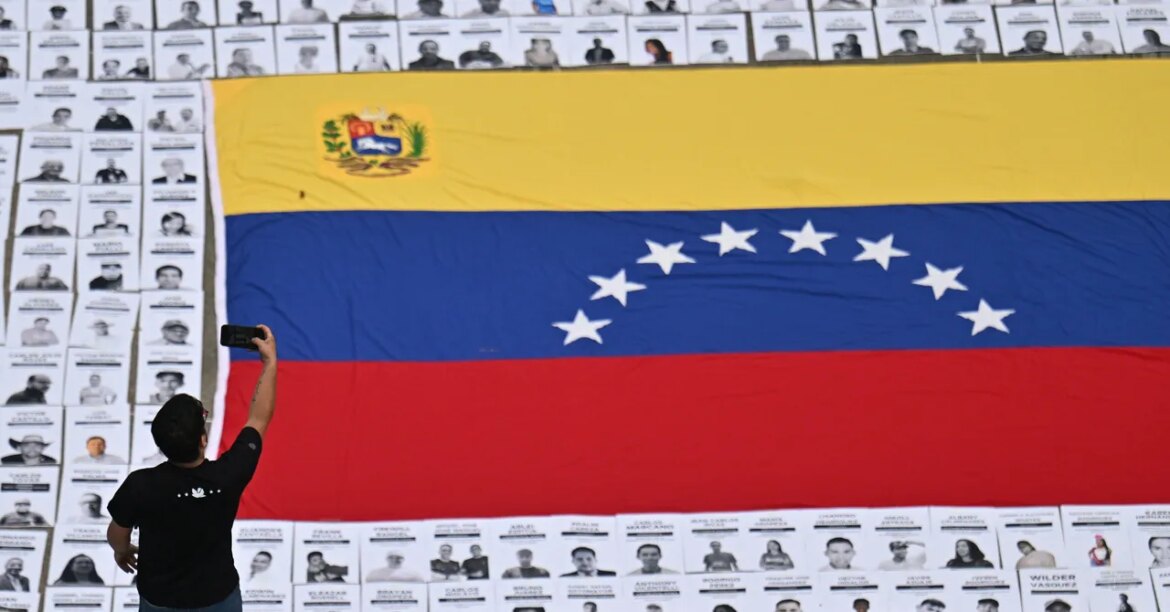
In the early morning hours of Saturday, January 3, the roar of bombs dropping from the sky announced the US military attack on Venezuela, waking the sleeping residents of La Carlota, in Caracas, a neighborhood adjacent to the air base that was a target of Operation Absolute Resolve.
Marina G.’s first thought, as the floors, walls, and windows of her second-story apartment shook, was that it was an earthquake. Her cat scrambled and hid for hours, while the neighbors’ dogs began to bark incessantly. But the persistence of the strange hum of engines (military aircraft flying low over the city, she would later learn), as well as seeing a group of cadets in T-shirts and shorts fleeing the Army headquarters, were signs that this was not an earthquake.
Marina couldn’t rely on the typical media outlets that are easily accessible in most other countries to learn more. She didn’t bother to turn on the television or radio in search of information about the attacks that began simultaneously at 11 military installations in Caracas and three other states. The government-run television station Venezolana de Televisión (VTV) was broadcasting a report on the minister of culture’s visit to Russia as the attack was taking place. Her cell phone, however, still had a signal and she began to receive dozens of messages on WhatsApp: “They’re bombing Caracas!”
During the darkest moments of that confusing morning, there was no team of independent reporters able to go out and record what was happening on the streets. After years of harassment, censorship, and imprisonment of journalists by the government, there were instead only empty newsrooms, decimated resources, and a complete lack of security, which made it impossible to keep the public informed as the crisis was unfolding.
The fears felt by journalists were shared by many Venezuelans: the fears of arbitrary detention, of being imprisoned without cause, tortured, and extorted. These are fears that have led citizens in Venezuela to adopt some digital safeguards in order to survive. They have learned to restrict chats, move sensitive material to hidden folders, and automatically delete any “compromising” messages. Whenever possible, they leave their cell phones at home. If they have to take their phones with them, then before going out, they delete all photos, stickers, and memes that could possibly be interpreted as subversive. This state of collective paranoia has also, however, allowed Venezuelans to stay informed and not succumb to the dictatorship.
It is, largely, ordinary citizens who have created this information network. Soon after the bombs fell on January 3, the first videos began to circulate, recorded by people who had witnessed the explosions from their windows and balconies, or from the beach, where some were still celebrating the New Year. Even hikers camping at the summit of Cerro Ávila, in Waraira Repano National Park, managed to capture panoramic shots of the bombs exploding over the Caracas Valley. Shortly afterwards, international networks confirmed the news.
In the interior of the country, connectivity is even more complicated. In San Rafael de Mucuchíes, a peaceful village in the Andes in the state of Mérida, a group of hikers tried to keep up with the frantic pace of events with intermittent internet access at 10,300 feet above sea level. They learned the news from telephone calls via operators such as Movistar (Telefónica) and Digitel, not from the instant messaging app WhatsApp. They also overcame the challenges of the information desert they were in by using a portable Starlink satellite internet antenna that one of the travelers had in their luggage. During the crisis, the service developed by SpaceX was provided free to Venezuelans.
Source: www.wired.com