









For more than two weeks in northern Italy, Olympic icons like Mikaela Shiffrin, Alysa Liu, Elana Meyers Taylor, and Jordan Stolz captivated audiences, as we collectively became experts in curling ethics and ice dance twizzles.
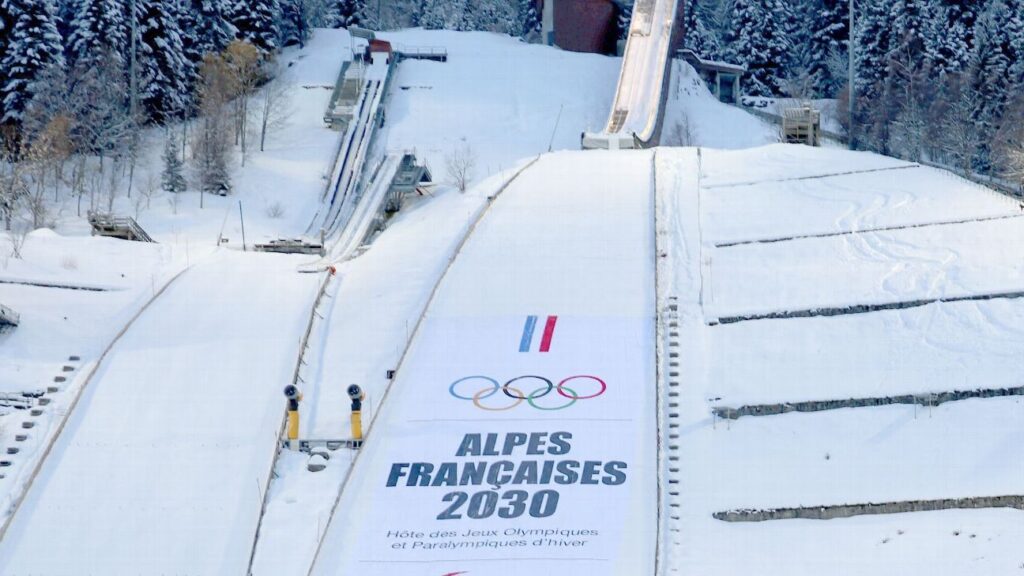
This Sunday, a handover ceremony is scheduled, during which a flag will be transferred to the representatives of French Alps 2030. Similar to the Milan Cortina Games, the 2030 Olympics will take place across the nation, with speedskating possibly held in the Netherlands or Italy.
While it’s still early for predictions, that hasn’t deterred us in the past. Here’s what to anticipate for the 2030 Olympics.
The United States will be the favorites for gold in women’s hockey
The rivalry between USA and Canada has been one of the most thrilling in sports, but the ice appeared to favor the Americans for the first time in these Olympics. While Canada fought valiantly in the gold medal game, resulting in a 2-1 OT win for the U.S., it became evident during the Games that Team USA is on the path to a potential dynasty.
Canada may face some challenges this cycle as it fielded a heavily veteran squad in Milan. Team USA’s standout Olympic stars Caroline Harvey (tournament MVP), Abbey Murphy, and Laila Edwards are all 23 or younger, and would have been the youngest on Team Canada. Aerin Frankel allowed only two goals on 99 shots, setting the Olympic record for the most shutouts (three). She will return as a 31-year-old in France. There’s also Taylor Heise (25), Hannah Bilka (24), and Tessa Janecke (21). This generation of players is just beginning to shine. — Emily Kaplan
… But men’s hockey will have increased parity
Who will mount a challenge against Canada and the U.S. in men’s hockey? We’ve pondered this for years on the women’s side, and the gap seems unclosing. The men’s realm offers many contenders. Sweden and Finland are established world powers, though their 2026 Olympic aspirations suffered from questionable coaching choices. The Czechs didn’t tap into their potential until their elimination match against Canada, and Germany, despite a disappointing Olympics, boasts too much talent to bow out so quietly again. Switzerland is climbing the ranks, while Latvia has built a reputation for tenacity. The standout newcomer is Slovakia, featuring three recent top-10 draft picks (Juraj Slafkovsky, Dalibor Dvorsky, and Simon Nemec) and looks poised for greater achievements. The 2030 landscape promises to be thrilling. — Kaplan
Freeride skiing and snowboarding set for debut
The IOC is expected to announce the French Alps 2030 program in June, with freeride — skiing and snowboarding on natural, ungroomed, steep terrain — likely making its first appearance in four years.
“It is the original ski discipline,” stated Freeride World Tour CEO Nicolas Hale-Woods. “To many skiers and snowboarders, it’s the most complete and inspiring discipline. It’s breathtaking to watch and exhilarating to perform.”
The proposed format aims to include 16 men and 16 women in both skiing and snowboarding, with qualifying reflecting a surfing-style system. American Mia Jones, 20, the daughter of big-mountain snowboard pioneer and Protect Our Winters founder Jeremy Jones, recently clinched the first-ever FIS Freeride World Championship in women’s snowboarding.
also, cross-country running, cyclocross, and ice climbing may also feature in 2030. — Alyssa Roenigk
American men to make a return to the podium in snowboard halfpipe
With eager, young talents like Alessandro Barbieri energizing the veterans and guiding the emerging talent, the outlook is promising.
“I’ll use this as motivation; I won’t let it defeat me,” stated Barbieri after finishing 10th in the halfpipe final in Livigno.
At only 17, Barbieri has already landed two triple corks and had a run that could have put him on the podium, had his landing been clean. “I’ll return stronger and more determined to win,” he declares for 2030. — Roenigk
More crossover athletes are on the horizon
Eileen Gu of China is the sole woman in freeskiing competing in halfpipe, slopestyle, and big air. American freeskier Nick Goepper won three medals in slopestyle before retiring and transitioning to halfpipe for the Milan Cortina Games. Ester Ledecka competes in both parallel giant slalom on a snowboard and giant slalom on alpine skis, having won gold in both.
Young athletes today are accustomed to this flexibility. “Don’t wait till you’re older. Don’t wait for tomorrow. Do it now,” encouraged Gu after earning silver in slopestyle last week. “Do everything now.” — Roenigk
Ilia Malinin will return and aim for gold
Following a tough free skate in the individual event, Malinin expressed his commitment to learning from the experience and better preparing for another shot at the Games. As a two-time reigning world champion with the capability of executing elements like the quadruple axel that no one else can manage, he seems poised for another opportunity in 2030. He is likely to enhance both his mental and physical readiness for the pressures and scrutiny that come with the competition. — D’Arcy Maine
Adjustments are coming for the figure skating team event
With merely one day between the conclusion of the team event and the start of individual ice dance competition, followed by men’s singles starting the next day, it’s evident that the scheduling requires reconsideration. While Malinin didn’t attribute his eighth-place finish to competing four times in six days, it’s hard to dismiss that it could have influenced his performance.
If the ISU and the Olympics wish to ensure the best skaters compete in the team event, they must implement measures for adequate rest and recovery, ensuring this doesn’t impact individual performances. — Maine
Emilea Zingas and Vadym Kolesnik represent the future of American ice dance
The future of Madison Chock and Evan Bates in the sport remains uncertain, but it’s clear that the country is set to have strong representation in the discipline moving forward. Zingas, 23, and Kolesnik, 24, participated in their first Olympics following a breakout season, finishing an impressive fifth place — a remarkable feat for a new team — and ahead of pairs that have competed together for over a decade. While much can happen in four years, Zingas and Kolesnik seem poised to dominate this next quad and could very well land on the podium in 2030. — Maine