








-

Tim MacMahon
Multiple Authors
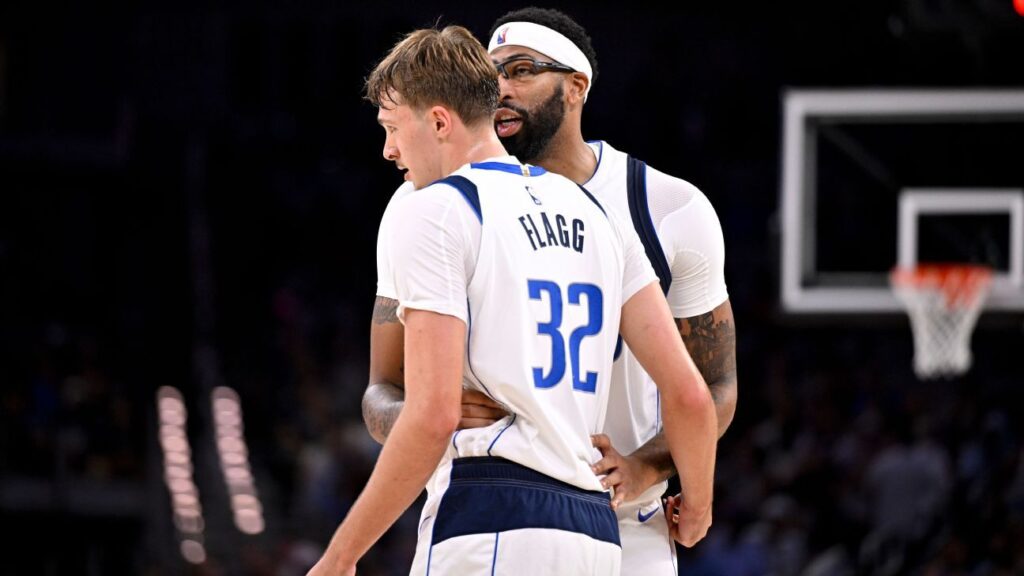
Just moments into his debut with the Dallas Mavericks, Anthony Davis unleashed an electrifying putback dunk, sending a message to a fan base still reeling from one of the most shocking trades in NBA history.
“I’m here!” Davis exclaimed, confidently striding towards the sidelines and gesturing excitedly at the American Airlines Center floor. “I’m here!”
But soon after, he wasn’t. After a commanding first half, overshadowed by a significant protest from disappointed fans outside, Davis suffered an adductor strain halfway through the third quarter. This injury kept the 10-time All-Star off the court for six weeks, setting a troubling precedent for his brief tenure with the Mavs.
Davis was the key player acquired from the monumental deal that sent beloved franchise figure Luka Doncic to the Los Angeles Lakers, just months after Doncic led the Mavs to the NBA Finals. Unfortunately, Davis’s presence on the court was fleeting.
In total, Davis participated in just 29 regular-season games for Dallas, plus a few appearances in the play-in tournament, largely due to ongoing injury concerns. The much-anticipated Davis-Kyrie Irving partnership, which former Dallas GM Nico Harrison envisioned as the foundation for a championship team over “three to four years,” barely saw the court together. Irving’s torn ACL in early March left his return uncertain.
Davis’s time in Dallas concluded quietly at the trade deadline when he was traded to the Washington Wizards in a significant salary dump, shortly after fan backlash had led team governor Patrick Dumont to fire Harrison.
No moves made by Dallas’s front office, led by co-interim GMs Michael Finley and Matt Riccardi, could mitigate the fallout from the Doncic trade; their financially driven decisions were primarily assessed through the lens of acquiring teenage sensation Cooper Flagg.
A silver lining emerged for the Mavs purely by chance. Their underwhelming season led to a 1.8% chance of winning the draft lottery, ultimately landing Flagg and providing the franchise with another opportunity to center its future around a generational talent. Now, the onus is on the team to make prudent choices and seize this opportunity.
“Our intentions are clear: it’s the Cooper Flagg era, no questions asked,” a high-ranking team source stated to ESPN.
THE MAVS’ RETURN from the Davis trade amounted to substantial financial relief and the roster flexibility that comes with it, alongside some moderate draft assets, including Oklahoma City’s first-round pick in the upcoming draft and Golden State’s protected top-20 pick for 2030. The only player Dallas acquired in the trade who isn’t facing an expiring contract is second-year guard AJ Johnson.
Dallas transitioned from having the NBA’s fourth-highest payroll to avoiding the luxury tax this season after trading guards D’Angelo Russell, Jaden Hardy, and Dante Exum. The franchise saw its estimated payroll drop from $326 million, including luxury tax, to around half that amount. They also gained access to a $15.1 million nontaxpayer midlevel exception and a nearly $21 million trade exception, which could be instrumental in constructing a future around Flagg.
“We had to honestly evaluate our situation and outline our goals,” Riccardi remarked following the trade. “At times, the path isn’t straightforward; sometimes you need to take a detour to achieve what you want.”
Upon being drafted, Flagg expected to start his career on a playoff-bound team alongside Davis and eventually Irving, both top draft picks and future Hall of Famers.
Instead, Davis played merely 20 games this season. While Irving remains a vital element of the Mavs’ plans, his availability for the current season remains uncertain. Many rival executives believe it would be prudent for the Mavs to delay Irving’s return until training camp, even if he is cleared to play this season.
“It’s clearly been different from what I envisioned, but I’m doing my best,” said Flagg, the frontrunner for Rookie of the Year, averaging 20.3 points, 6.6 rebounds, and 4.2 assists per game. “At first, the losses were tough to handle. … They still are. I’m competitive, but it’s about learning from these setbacks and pulling out the positives.”
Immediately after Harrison was dismissed in November, the Mavs began exploring trade options for Davis while holding a 3-8 record and Davis was recuperating from a calf strain. His maximum contract — which includes a $62.8 million player option for the 2027-28 season — alongside his desires for a lucrative extension and ongoing durability issues complicated efforts to find fair value.
Rich Paul, Klutch Sports CEO and Davis’s representative, aimed to position his client for another significant payday come summer’s extension eligibility. He attempted to facilitate negotiations between the Mavs and teams like the Atlanta Hawks and Toronto Raptors, but talks with the Hawks stalled after Davis suffered ligament damage in his left hand during a January 8 loss to the Utah Jazz, an injury the Mavs announced would recover by late February. Any deal with the Raptors would require taking back significant salary beyond this season, complicating a potential partnership.
The Mavs negotiated with Washington without the knowledge of either Davis or Paul, who were unaware of the Wizards’ serious interest until after the trade was finalized.
Some sources indicated that Dumont was concerned about how Mavs fans would react to a Davis trade that didn’t involve premium draft picks or players aligning with the franchise’s long-term strategy.
but, Flagg’s emergence and impressive production — he’s on track to join Doncic, Michael Jordan, and Larry Bird as the only rookies to average at least 20 points, six rebounds, and four assists per game since the 1976 ABA-NBA merger — brings hope and some resilience. Most fans appear willing to embrace the idea of building around Flagg. His recent performance included the highest-scoring three-game stretch by a teenager in NBA history when the Davis trade occurred.
“The timeline is extensive,” said Mavs coach Jason Kidd, whose insights on personnel matters are regarded by Dumont. “At 19, he is still developing his NBA understanding, ally physicality. His game is exceptionally impressive; our challenge now is to find compatible pieces.”
IT REMAINS TO be seen exactly who will be responsible for identifying those players to support Flagg.
Dumont is currently evaluating multiple candidates for the role, including both internal and external prospects with proven abilities in managing a basketball operations department, including some who are actively performing these roles for other franchises.
It is expected that Dumont will appoint Harrison’s eventual successor after the conclusion of the ongoing season. The draft process is crucial for the 19-34 Mavs, who likely will find themselves in the middle of the lottery and will also receive Oklahoma City’s pick, probably the last selection in Round 1.
“Looking at our current roster, we have an incredible talent in Cooper Flagg,” Finley remarked last week. “Our responsibility is to assemble the right supporting cast around him. With the draft assets we have, we can pursue the necessary pieces to transform our team — as I continue to emphasize — into a championship contender.”
but, the Mavs cannot opt for a traditional rebuild during Flagg’s initial years; this is the final season during which the team controls its own first-round pick while Flagg is on his rookie deal.
The picks were part of transactions the Mavs executed to build around Doncic: Dallas’s 2027 pick is protected if it falls within the top two but will otherwise be due to the Charlotte Hornets as part of the P.J. Washington deal. Oklahoma City holds swap rights with the Mavs in 2028 due to their role as a facilitator in the Daniel Gafford trade in 2024. The 2029 pick the Mavs sent to the Brooklyn Nets in the Irving transaction is now owned by the Houston Rockets. The San Antonio Spurs possess 2030 swap rights with Dallas, having acquired this through taking on Reggie Bullock Jr.’s expiring contract in a three-way sign-and-trade involving Grant Williams, whose time in Dallas was even shorter than Davis’s.
Coincidentally, the night after the Davis trade, the Mavs witnessed a franchise that has successfully centered its roster around a highly touted No. 1 overall pick.
Thanks to years of strategic planning—including an intentional roster teardown to kickstart their rebuild—the Spurs were positioned with an abundance of first-round picks before Victor Wembanyama’s arrival, affording them options well beyond what Dallas currently has, significantly enhancing their flexibility for trade maneuvers.
Nevertheless, the Mavs can emulate vital moves made by the Spurs that transformed them from a 22-win team in Wembanyama’s rookie season to second place in the West as he enters his third year.
Irving’s return could represent the Mavs’ version of the Spurs’ acquisition of former All-Star point guard De’Aaron Fox.
The Spurs’ prior struggles enabled them to draft Stephon Castle with the No. 4 selection, granting San Antonio a co-star in sync with Wembanyama’s timeline. It’s essential for the Mavs to discover a young talent suitable for complementing Flagg long-term, especially with their upcoming lottery pick set in a draft regarded league-wide as exceptionally rich in top talent.
The most challenging aspect of constructing a competitive team is securing a genuine cornerstone. The Mavs have fortuitously stumbled into that — but now they will need to practice patience.
“You can’t force everything to happen instantly,” Wembanyama noted, snapping his fingers, drawing from his own experiences. “Trust in your organization.”