








-

Buster Olney
Multiple Authors
As spring training sessions begin, it’s the perfect moment to assess the current landscape of baseball. In anticipation of the 2026 MLB season, ESPN’s Buster Olney consulted numerous industry experts to compile his annual positional rankings, highlighting the top 10 players at each position.
Today, we zero in on the elite relievers.
The goal is to spotlight the finest players for the upcoming 2026 season rather than predicting future potential or career longevity. Over the next two weeks, we will unveil one position each day. Upcoming rankings are as follows: starting pitchers (Monday), relief pitchers (Tuesday), catchers (Wednesday), second basemen (Friday), third basemen (Feb. 23), shortstops (Feb. 24), corner outfielders (Feb. 25), center fielders (Feb. 26), and designated hitters (Feb. 27).

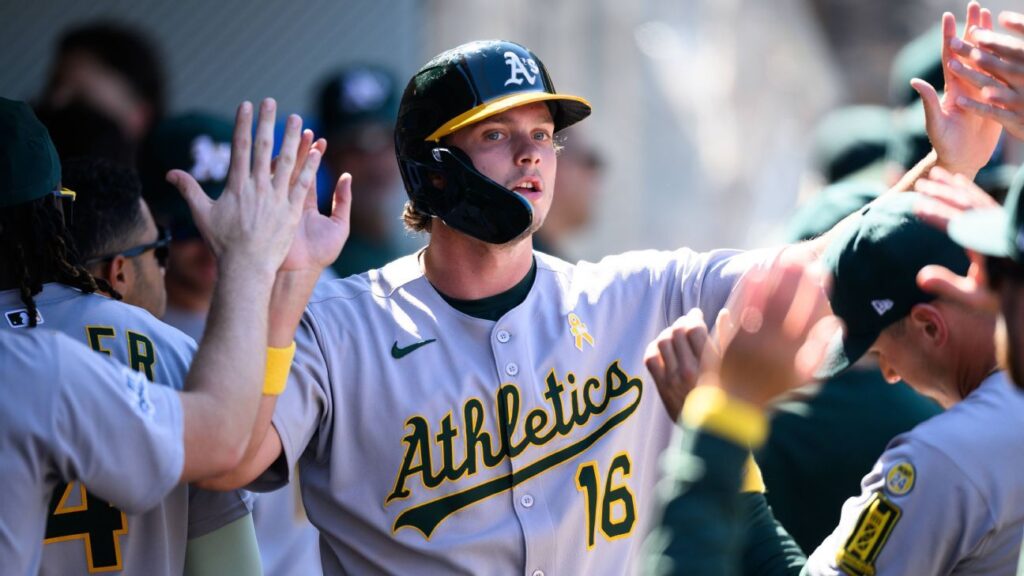
It’s common for even the top college hitters to face a steep adjustment curve when transitioning to the professional level, often necessitating significant modifications, swing adjustments, and countless repetitions. This makes the rookie year of A’s first baseman Nick Kurtz particularly remarkable.
Selected fourth overall in 2024 and beginning the ’25 season in the minors, Kurtz demolished major league pitching, achieving 36 home runs and an OPS+ of 173 in his first 117 games. He effectively started his major league career a month late, debuting on April 23, and only Matt Olson surpassed Kurtz in fWAR among first basemen in 2025.
Recently, David Forst, the head of baseball operations for the A’s, was asked about the adjustments Kurtz made post-draft that enabled such a rapid ascent to the majors.
“He hasn’t had enough time [in professional baseball] to make adjustments yet,” Forst stated. “He’s replicated what he did in college in the major leagues.”
This statement isn’t an exaggeration. In his final season at Wake Forest in 2024, Kurtz recorded a slash line of .306/.531/.763. In the big leagues, his line was .290/.383/.619.
Kurtz will celebrate his 23rd birthday next month. Given his outstanding performance last year and the potential for even more, where does he rank among a distinguished group of first basemen that includes future Hall of Famers like Freddie Freeman and Bryce Harper, alongside star hitters such as Rafael Devers and Josh Naylor, and sluggers like Pete Alonso and Olson?
Scouts are impressed with Kurtz’s abilities.
Top 10 First Basemen
 1. Vladimir Guerrero Jr., Toronto Blue Jays
Last October, Guerrero transitioned from just another star to a contender for the best and most dangerous hitter in the sport with his postseason dominance. By shifting his focus from mechanics to the pitcher, he achieved tremendous success: hitting eight home runs in 18 games, with a batting average of .397 (29-for-73) alongside 14 walks and seven strikeouts. The MVP race for this season, which includes Guerrero, Aaron Judge, Cal Raleigh, Kurtz, Bobby Witt Jr., Jose Ramirez, and Julio Rodriguez, promises to be exciting.
 2. Matt Olson, Atlanta Braves
Olson’s reliable performance is propelling him toward Hall of Fame recognition. He’s just 12 home runs shy of 300 for his career and has hit no fewer than 29 home runs in seven of his 10 seasons. The new Atlanta manager Walt Weiss may opt to rest players more frequently than previous manager Brian Snitker, presenting a unique challenge for Olson, who has played every game for the last three seasons. While no single statistic can encapsulate the complexities of first base play, Olson led all first basemen in defensive runs saved (17) and was second in outs above average (nine).
 3. Nick Kurtz, Athletics
One area where Kurtz may need to improve is against left-handed pitchers, as he will likely see many of them this year as teams strategize to counter his power. Last season, his OPS against righties was an impressive 1.153, compared to just .685 against lefties—an astounding 468-point differential. but, considering his immediate impact and consistent improvements last season, he is expected to enhance his performance against lefties. His promising history also indicates he’ll improve on his walk/strikeout ratios from last year (63 walks to 151 strikeouts); during his college and first professional seasons combined, he boasted an impressive 201 walks versus 120 strikeouts. Kurtz possesses a unique set of skills.
 4. Pete Alonso, Baltimore Orioles
Discussions surrounding Alonso’s defense and baserunning—often exaggerated criticisms—have overshadowed his remarkable consistency with the Mets. “You can expect him to hit 35 homers and drive in 110 RBIs while playing 155 to 160 games,” noted one evaluator. This isn’t an overstatement: Alonso has hit at least 34 home runs every year of his career, except for the shortened 2020 season, and has racked up 463 RBIs in the last four years, averaging around 116 annually. Over his first seven seasons, he’s missed only 24 games. Time will tell if the Mets’ decision to forgo a contract extension was wise, but undoubtedly, he will be missed in key moments during the 2026 season.
 5. Freddie Freeman, Los Angeles Dodgers
If you were to ask opposing managers who they would least want at the plate in a clutch situation, Freeman would likely rank as a top contender, even at age 36. He continues to thrive, boasting a .295/.367/.502 slash line last season, and there’s every reason to believe he could be the next—and possibly the last—hitter to reach 3,000 hits. He is 569 hits away, and due to his keen awareness of opposing pitchers and ability to hit to all field areas, he is well-positioned to age gracefully. With two years remaining on his Dodgers contract, as Shohei Ohtani settles into the DH role permanently, questions may arise next season regarding Freeman’s eventual career conclusion.
 6. Bryce Harper, Philadelphia Phillies
David Dombrowski, Philadelphia’s head of baseball operations, sparked considerable debate about Harper’s production after answering a question on the player’s performance at the end of last season. So, where does Harper genuinely rank? His OPS+ was 129 last year, indicating he performed well above average, and amid a dominant pitching era, his on-base percentage of .357 was the 26th highest among the 154 hitters who qualified for the batting title. In 132 games, Harper scored 72 runs and smashed 27 home runs. As he turns 33 this season, Dombrowski’s insights will significantly shape the narrative surrounding him.
 7. Josh Naylor, Seattle Mariners
After his trade to Seattle, Naylor excelled with an .831 OPS and went 19-for-19 in stolen bases during the final 54 games of the regular season, contributing significantly in the postseason with a .417/.481/.792 performance in the AL Championship Series. Earlier in free agency, the Mariners secured his services with a five-year, $92.5 million contract.
 8. Rafael Devers, San Francisco Giants
Members of San Francisco’s front office believe Devers is on track to develop into a solid first baseman under new infield instructor Ron Washington, with little doubt regarding his hitting capabilities. although a challenging 2025 season, Devers still managed an OPS of 140, consistent with his career averages, and he hit 35 home runs. Observers are keen to see how he adjusts in his first full season at Oracle Park, especially after struggling with 59 strikeouts over 48 games while batting .234—figures indicating he may have been attempting to overcompensate in the pitcher-friendly park.
 9. Michael Busch, Chicago Cubs
Given the pitcher-friendly dimensions of Wrigley Field, Busch accumulated 21 of his 34 home runs on the road. Nevertheless, he posted a commendable .356 OBP and a .500 slugging percentage at home. With the Cubs’ best hitters predominantly right-handed, it’s essential for the left-handed hitting Busch to contribute and offset the lineup, particularly if Pete Crow-Armstrong delivers another inconsistent season.
 10. Vinnie Pasquantino, Kansas City Royals
After battling injuries, Pasquantino managed to stay healthy in 2025, finishing with 66 extra-base hits, 113 RBIs, and a career-best 120 OPS+. He played 126 of 160 games at first base last season, although his role may shift to DH in ’26, as the Royals look to depend more on Carter Jensen behind the plate and Salvador Perez at first base.
Honorable Mentions
Jonathan Aranda, Tampa Bay Rays: Aranda would have secured a spot in the top 10 if not for an injury that sidelined him for most of August and September last year. He finished approximately 80 plate appearances short of qualifying for a batting title, but among hitters with 400 or more plate appearances, only Judge surpassed Aranda’s .316 average. With a wRC+ of 153, he was second only to Kurtz among first basemen.
Ben Rice, New York Yankees: Yankees GM Brian Cashman often highlights Rice’s growth when discussing his team’s roster enhancements over the past year. In his first full season, Rice achieved a slugging percentage of .499 with a .337 OBP. His second-half slash line was .281/.352/.542, and contrary to assumptions that he thrives solely in Yankee Stadium, his home/road splits were balanced (.250/.336/.518 at home, .259/.338/.481 away).
Willson Contreras, Boston Red Sox: A resilient hitter who has adapted smoothly to a first base role. but, his strikeouts surged to a career-high 142 last season, and his walk rate dipped to a career-low 7.8% in ’25.
Jorge Polanco, New York Mets: in the end, manager Carlos Mendoza may opt for either Brett Baty or Mark Vientos at first, allowing Polanco to see significant action at DH. Regardless of his position, his presence will bolster the Mets’ offense, building on a season in which he achieved an .821 OPS.
Spencer Torkelson, Detroit Tigers: Torkelson implemented numerous offseason changes that paid dividends during the first half of last season, where he belted 21 of his 31 home runs and recorded an OPS of .826.
Andrew Vaughn, Milwaukee Brewers: Vaughn finished with a .308/.375/.493 slash line in 64 games with Milwaukee, marking a significant change in his walk-strikeout ratio—transitioning from seven walks and 43 strikeouts in his final 48 games with Chicago to 24 walks and 37 strikeouts with the Brewers.
Christian Walker, Houston Astros: although his offensive challenges, reflected in a 99 wRC+, Walker continued to excel defensively, hitting 27 home runs.