









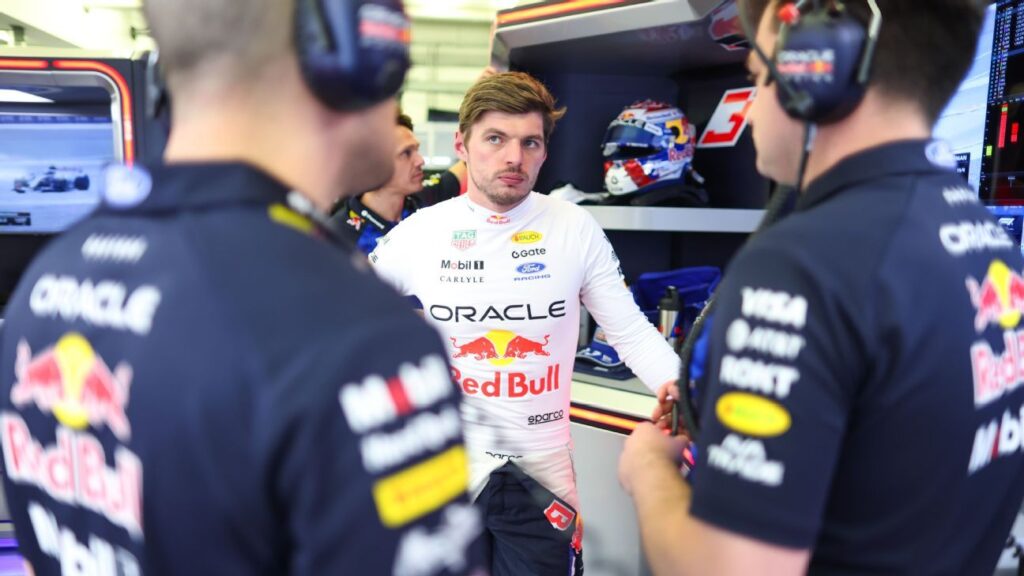
BAHRAIN — The new generation of Formula 1 cars hasn’t even hit the track for a competitive lap yet, but they’ve already come under fire from the sport’s top drivers.
F1’s carefully crafted narrative around its latest cars was disrupted just a week into the first official preseason test this month. Seven-time champion Lewis Hamilton remarked that the vehicles are so intricate that “you need a degree to fully grasp it all.” Meanwhile, Max Verstappen, a four-time champion, compared them to an amplified version of the all-electric Formula E series. Verstappen has reiterated his concerns this week.
Criticism hasn’t been limited to the two rivals from 2021. Fernando Alonso, a two-time world champion, suggested that the energy management needed for the new cars—featuring an almost even split between internal combustion and electric power—makes them so easy to drive that even media members or Aston Martin’s chef could navigate the corners effortlessly. Charles Leclerc from Ferrari has expressed worries about the challenges of overtaking. Initially supportive, Lando Norris, the new world champion, reversed his stance on Thursday, stating he defended the new cars just to gauge public reaction, ultimately declaring they lack a true racing experience.
This awkward prelude is far from the glorious new era F1 hoped for. The 2026 models include sweeping modifications to both their aerodynamic structures and engines. Visually, they resemble cars from the mid-2000s, stripping back some complex designs in hopes of promoting more wheel-to-wheel racing.
Underlying these impressive exteriors are the tech complexities that have sparked this month’s criticisms. The intricate nature of F1’s new formula has dominated preseason discussions, with Hamilton’s comment gaining traction during the initial week in Bahrain.
“I don’t believe fans will comprehend it,” the Ferrari driver stated. “It’s absurdly intricate. I was in a meeting recently where they explained it all, and you need a degree to grasp everything.”
F1’s new power units—essentially hybrid engines—represent an unprecedented shift for the sport. The 50-50 balance between internal combustion and electric power emphasizes energy management and battery regeneration throughout a race. Two new battery-based power modes are being introduced: Overtake mode, which replaces the drag reduction system (DRS) and serves as a straightforward overtaking aid for drivers within a second of the car ahead, and a separate boost mode for drivers to utilize as they see fit.
The push towards a balanced power output has not only complicated the tasks of drivers but has also introduced unique terms into F1’s vocabulary.
Alonso’s comment about the Aston chef being capable of driving through Bahrain’s Turn 12 highlights how cars now harvest energy during braking, leading many drivers to approach corners more slowly to ensure fully charged batteries for their straights. This electric component has given rise to phenomena like “super clipping,” which is expected to be a topic of discussion in the early races. This term describes a peculiar occurrence with hybrid engines where, in certain situations, when a driver is at full throttle, the energy recovery component effectively takes over the power unit, leading to a reduction in speed despite the accelerator being fully pressed.
Super clipping is just one of many peculiar and technical points that have overshadowed the lead-up to the season-opening Australian Grand Prix at Melbourne’s Albert Park on March 8. It’s not only Hamilton who’s been perplexed in these meetings; ESPN has learned that several prominent broadcasting figures have also faced lengthy presentations about the new cars that left even seasoned media members scratching their heads.
Verstappen, who has stated that his continued participation in Formula 1 will be contingent on enjoying this generation of cars, reiterated his initial Formula E comparison this week, advocating for the complete removal of electric elements.
“I want us to remain true to being Formula 1,” he said. “Let’s not increase battery capacities; rather, eliminate them and concentrate on a strong engine, keeping Formula E separate, as that’s their identity. From what I’ve seen and heard from friends in the sport, the new car will be impressive, but let Formula E be Formula E. We must maintain our identity as Formula 1.”
F1 and the FIA are also testing a modification to the start procedure to address safety concerns arising from the longer times it takes for turbocharged gasoline engines to reach operational speed from a standstill. A new five-second pause is likely to be introduced at the usual grid start before the standard five lights illuminate sequentially.
Potential rule adjustments might extend beyond the starting procedure. Ongoing discussions between teams, F1, and the FIA may address the extent of electrical deployment permitted for each driver, aiming to alleviate various lingering concerns regarding the new cars.
As criticism of F1’s new vehicles escalates, series CEO Stefano Domenicali addressed the media on Thursday via a nearly hour-long Teams call. His message boiled down to: “Stay calm.”
“I don’t share this anxiety; we need to maintain our composure,” Domenicali stated. “As with any new regulations, there’s always doubt about whether everything is flawed. I recall similar sentiments in 2014, 2020, and 2021. F1 has consistently demonstrated that technical solutions enable teams to be fast and drivers to excel, so I’m confident in that.”
Domenicali devoted a significant portion of the week to discussing drivers’ concerns. He reassured the media that he believes Verstappen is unlikely to permanently exit the sport due to the new cars, even after the Dutchman described them as “anti-racing.”
“I assure you that Max wishes to remain and is more invested in Formula 1 than anyone,” Domenicali noted. “He has his own way of conveying his points, but we had meaningful discussions, and he also has constructive discussions planned with the federation and teams to address his views on maintaining the focus on driving style without altering the overarching approach.”
Adjustments are still feasible. F1, the governing FIA, teams, and manufacturers are engaged in ongoing discussions regarding modifications to address some of the more concerning aspects of the new rules before and after the Australian Grand Prix, though it’s unclear how much these changes will address Verstappen’s and his competitors’ concerns.
Domenicali concluded his call with a rallying cry: “Do not fret about energy management. We will resolve any issues … if necessary.”
How did F1 arrive at this juncture?
It seems clear that F1 was prepared for some backlash right from the start.
The first testing window for teams was January’s unofficial shakedown in Barcelona, where media and fans were not allowed to attend. While F1 stated that teams requested both the additional private test and restricted public content, it appeared that controlling the narrative was the objective from the onset of the year. yet, comments from influential drivers like Hamilton and Verstappen broke through that strategy as soon as they faced the media post-driving.
There’s rationale behind the shift toward a 50-50 power split.
The new regulations were geared toward attracting road-relevant technology, which helped draw manufacturers like Audi into F1 as full engine producers. This electrification helped persuade Honda to reverse its 2021 exit decision. Ford has also increased its involvement in Red Bull’s new engine project, while General Motors plans to build its own motors for the new Cadillac team by 2028 or 2029. So, on paper, it seems like a significant win.
The overall well-being of Formula 1 is frequently assessed based on the diversity of participating manufacturers, but it’s equally true that the road car industry is distancing itself from loud traditional combustion engines. For those longing for a resurgence of roaring V12 or V10 engines, the rising criticisms of F1’s current formula seem to support their argument—that the sport ought to move away from the trends of the automotive sector, as Verstappen suggested.
Formula E CEO Jeff Dodds recently seized on Verstappen’s comments to invite him to test one of their cars. Dodds also contended that F1’s greatest challenge in reaching its current situation has been getting stuck between two extremes.
“Max, Lewis, and others have expressed their concerns regarding compromising technology—keeping combustion technology while introducing powertrain technology without committing to a single pathway,” Dodds told ESPN.
This perspective is indeed valid: F1’s new rules feel like a mix of disparate extremes. The FIA’s head of single-seater racing, Nikolas Tombazis, suggested that the push for electrification has made it challenging to please everyone amid new regulations.
“We must always keep in mind that the sport has numerous stakeholders, particularly drivers who are crucial,” Tombazis told ESPN and other media on Thursday when asked about Verstappen’s suggestion of eliminating electrification. “Drivers are the stars, but we must also consider that big motor manufacturers like Mercedes, Audi, Ferrari, Cadillac, and General Motors all have their reasons for wanting to be involved in the sport.
“During the discussions around these regulations, they were very firm about these parameters. Life would undoubtedly be simpler for everyone if we had just one engine and didn’t have to contend with all these variables. I’m not denying that at all.”
The FIA is investigating whether energy deployment levels can be adjusted to mitigate issues like super clipping. yet, this isn’t a quick fix. F1 is on a five-year regulatory cycle, and there’s a strong inclination within the governing body to avoid impulsive decisions until enough data is available from actual racing.
How will the racing actually fare?
Numerous sources from F1 and the FIA have made a similar, valid point to ESPN regarding the new terminology: All this upheaval is occurring during the preseason. The very nature of testing implies experimentation. The increased spotlight on preseason testing in recent years has only amplified the criticism surrounding the cars, beyond what might have been acceptable a decade ago.
Not long ago, testing occurred in front of a limited media presence, but now it’s a fully televised event, with drivers frequently engaging with press outlets. This shift is a direct consequence of the Drive to Survive era, which has propelled drivers and team executives into an unprecedented level of fame by making outspoken and sometimes controversial remarks.
In other sports, it would be uncommon for media and fans to spend hours scrutinizing a missed penalty in practice or an interception during training. If such occurrences impact competitive play, criticism would be more justifiable.
Formula 1 has historically been one of the most complex sports, often finding that innovation and improvement come swiftly in response to challenges. Similar discontent followed the introduction of the halo cockpit device in 2017, but fans now regard it as standard practice.
While the new F1 regulations are undoubtedly intricate, and the initial criticisms from drivers appear valid, until the grid lines up for the Australian Grand Prix, it remains uncertain whether these concerns stem from mere initial incongruity or if they will hold true as the season unfolds.