








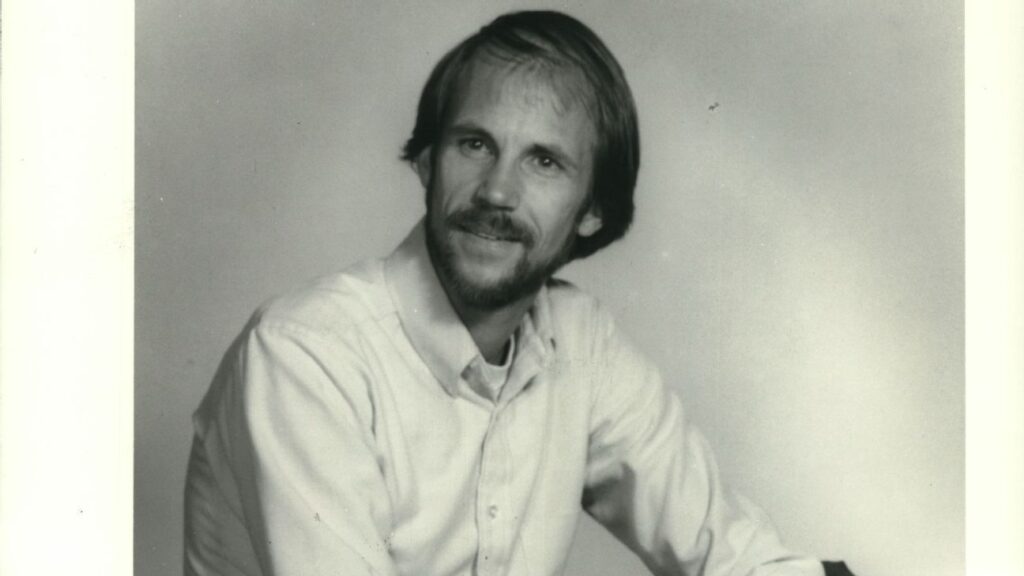
Jeff Galloway, a key member of the 1972 U.S. Olympic team who inspired both elite athletes and countless amateur runners for decades by advocating a run-walk-run method, passed away Wednesday at the age of 80.
He suffered a hemorrhagic stroke and died in a Pensacola, Florida hospital, as confirmed by his daughter-in-law, Carissa Galloway.
His impact was evident until the end; many people shared videos online expressing their hopes for Galloway’s recovery after emergency neurosurgery, as well as their gratitude for his guidance that helped them feel confident at race starting lines.
His family disclosed the surgery on February 20 and encouraged the public to share their support.
Jim Vance, an elite endurance sports consultant based in San Diego, described Galloway as a “pioneer” in motivating individuals to take up running.
“He removed the mental barriers that kept people from running,” Vance told The Associated Press. “Running shouldn’t be a painful experience. It should be relaxing and enjoyable, allowing people to appreciate running instead of fearing it.”
Having survived heart failure in 2021, Galloway was still aiming to finish another marathon, having completed over 230 throughout his life.
“My mission now, at over 80, is to show that it’s possible for people to accomplish things usually deemed unattainable, and to do so safely,” he shared with The New York Times in December.
Galloway’s run-walk-run philosophy began in 1974 when he agreed to instruct a running class at Florida State University, just two years after competing in the Olympic 10,000 meters. He believed it would attract customers to Phidippides, his new running store.
“None of them had run in at least five years. So we began with walking and incorporated a few one-minute jogs,” Galloway recounted on his website.
“I worked with each group during our runs to customize the timing of walk breaks, ensuring that no one was panting, even at the end,” he noted. “The walk breaks kept everyone together. Every participant successfully completed either a 5K or a 10K with smiles at the finish.”
Galloway was convinced that integrating walking into running decreased the chances of injury, conserved energy, and bolstered confidence.
“I’ve been using this method ever since,” he mentioned, “adapting the running-to-walking ratios based on individual pace and needs.”
He even had his own technique; during the 1980 Houston marathon, he walked through every water station and finished with a quicker time of 2:16:35 compared to his prior run-only marathon efforts, according to the Times.
Galloway shared his insights through books, online platforms, and retreats. He also served as the official training consultant for runDisney, a series of events at Disney resorts, where he would often run alongside participants. Many fans took to the internet to pay tribute after his recent surgery.
“I never envisioned myself as a runner. I never thought I’d participate in a half marathon,” said Karen Bock-Losee of Jacksonville, Florida, in a video. “Now at 70, I’ve completed several since I discovered Galloway running after my 60th birthday. Thank you!”
Susan Williams recalled seeing Galloway as she pushed through to finish a half marathon in Murray, Kentucky, in 2011.
“You passed me, and I was struggling,” she said. “You turned back and guided me through it. That was incredible.”
Bobby McGee, a running coach based in Colorado, stated that Galloway’s run-walk-run method made running accessible to so many.
“After any run—be it marathons or fun runs—participants discuss their times,” McGee noted. “No one inquires if they ran the entire distance.”
Galloway is survived by two sons and six grandchildren.