







Pillar, a platform that helps commodity-driven businesses (like those in metals, food, and airline companies) manage financial risk, announced Tuesday a $20 million seed round led by Andreessen Horowitz.
Others in the seed round include test Capital, Gallery Ventures, and Uber CEO Dara Khosrowshahi. The company has raised $23 million to date.
Pillar, founded in 2023, automates hedging processes for such businesses. Hedging is when a company places a trade that can offset or cancel out losses from other priced trades. Geopolitics has not been kind to the commodities market, which has seen much volatility in the past year.
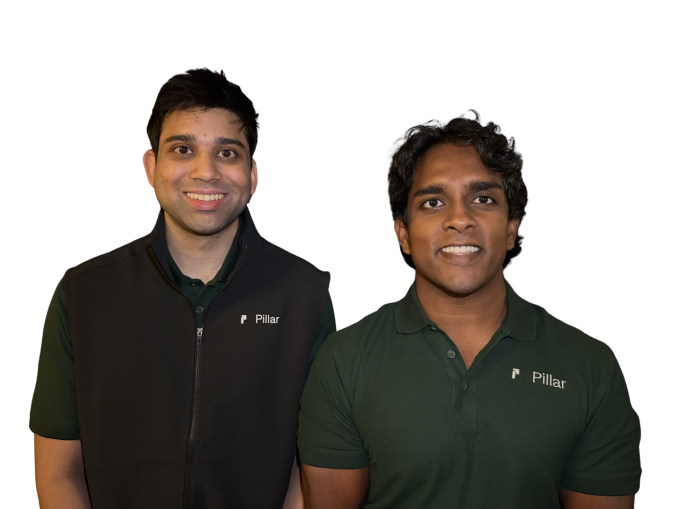
Harsha Ramesh, the company’s co-founder and CEO (founded alongside Chinmay Deshpande, the company’s CTO), said the company uses AI to ingest and parse data from client contracts, cash flows, inventories, ERP software, spreadsheets, and even WhatsApp messages to “continuously analyze exposure across commodities, FX, and freight.”
It can then build and manage a hedge portfolio for its clients, and adjust positions automatically based on “market conditions, volatility, and the client’s risk tolerance,” Ramesh continued. The platform executes trades and continuously monitors risk and exposure, turning hedging from a “static, periodic decision to a continuous, autonomous system,” Ramesh said.
Pillar’s clients include Shibuya Sakura Industries, a trading firm that buys and sells commodities like metals; the recyclable materials company Sigma Recycling; and United Metals Solution Group, which also recycles and trades metals.
Ramesh was once a macro trader, managing large derivative trading books and working with some of the largest companies in the world as they sought to hedge foreign exchange rates and interest rate exposure, he said. “I also spent time at a medium-sized physical business in import-export,” he recalled.
Techcrunch event
San Francisco, CA
|
October 13-15, 2026
“What stood out was that sophisticated institutions had access to tools, infrastructure, and talent, while the actual producers, importers, and manufacturers driving global trade had little to no access to this,” he said. “Risk management was treated as a luxury, despite being essential.”
Pillar hopes to offer sophisticated, institutional-grade tools to small and medium-sized enterprises. “Our goal is to make hedging as accessible and ubiquitous as payments or accounting software,” he said.
Others in this business include the legacy desks at big banks and the commodity risk platforms like Topaz and RadarRadar.
Ramesh said humans are still in the loop in some ways at Pillar, handling “approvals, oversight, and strategic decisions.” Humans also help with more “complex situations” — like large transactions, where a human team will mix their judgment with the machine’s execution.
Source: techcrunch.com