








Every time you use AI, you are, in some small way, depending on a 42-year-old, 44,000-person Dutch company that spends €4.5 billion each year to advance its technology.
ASML, headquartered in the Netherlands, makes the machines that make the chips that make AI possible. More specifically, it makes the only machines in the world capable of printing the microscopic patterns on silicon wafers that define the most advanced semiconductors — a process called extreme ultraviolet lithography, or EUV. The machines are roughly the size of a school bus, take months to assemble, involve hundreds of suppliers, and cost anywhere from $200 million to upwards of $400 million apiece depending on the generation (prices that give even ASML’s biggest customers pause occasionally).
That monopoly has made ASML the most valuable company in Europe, worth over $530 billion. And with the four largest American tech companies — Microsoft, Meta, Amazon and Google — committing more than $600 billion in AI infrastructure spending this year alone, demand for ASML’s machines has surged to the point where the company has openly said the world won’t have enough chips for years.
All that demand has also made ASML a target. Substrate, a San Francisco startup founded by a protégé of Peter Thiel, has raised more than $100 million and been valued at over $1 billion on the claim that it can build a rival lithography machine. Separately, there have been reports that former ASML engineers in China have partly reverse-engineered the technology, a prospect with enormous geopolitical implications.
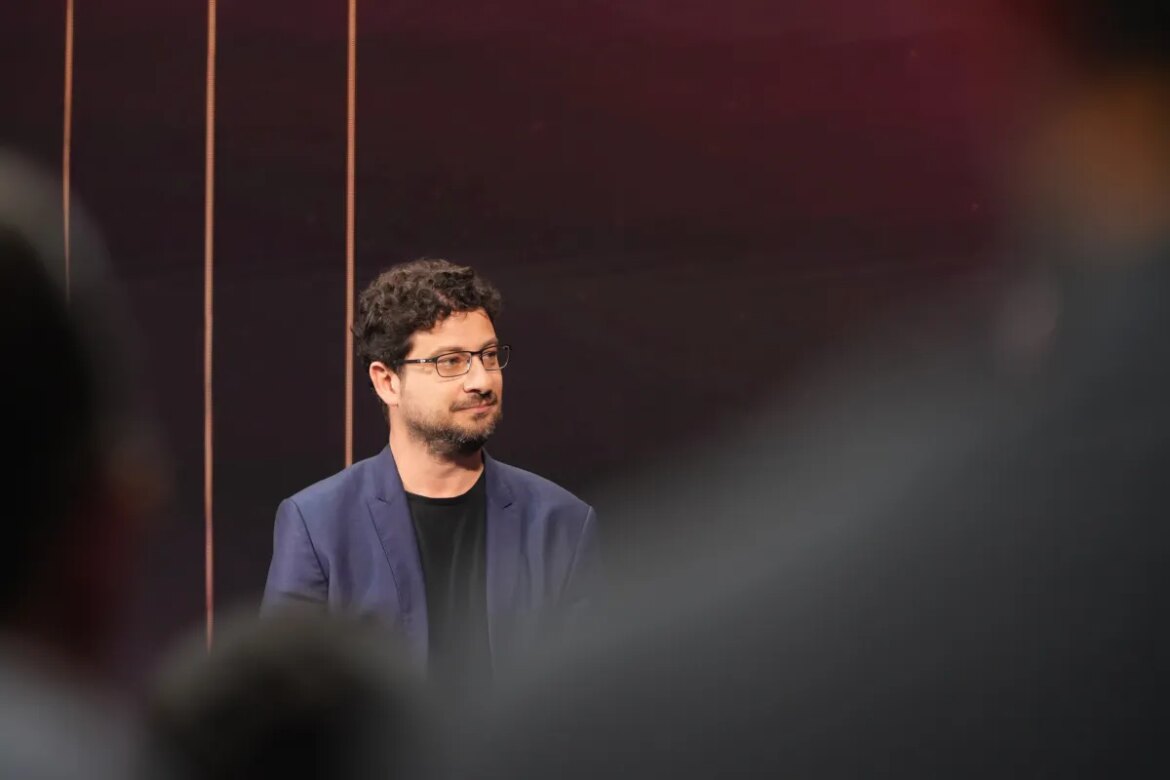
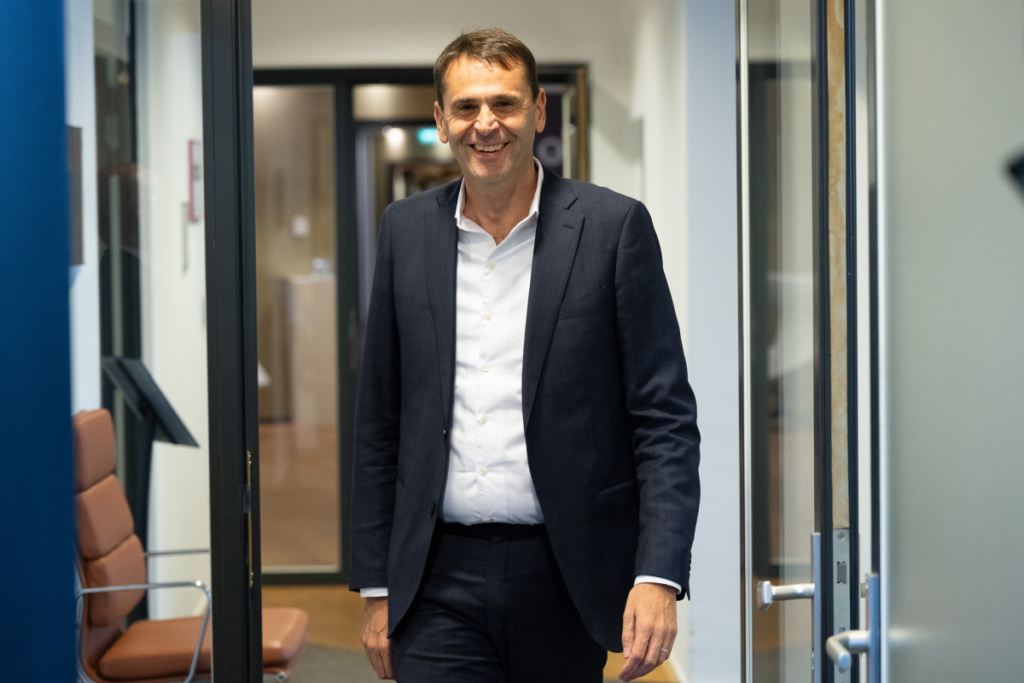
Christophe Fouquet, who became ASML’s CEO in 2024 after more than a decade at the company, sat down with this editor on the rooftop deck of his Beverly Hills hotel Tuesday morning ahead of his appearance at the Milken Institute Global Conference. Dressed in a blue suit and white shirt, he was relaxed — even when the conversation turned to the rivals.
This interview has been lightly edited for length and clarity.
TC: Did you see the AI explosion coming?
Techcrunch event
San Francisco, CA
|
October 13-15, 2026
CF: No, not at all. We worked very hard, but not with the idea that this would come. You went from a concept — something people thought would eventually arrive — to ChatGPT, which was really the first good example of what AI could do. And now I think we look at AI as the next revolution, not only industrial but societal. Did I see it coming? No. Sitting in the middle of it every day, sometimes we wake up in the morning and still check that what is happening is really happening.
The big question everyone has is whether the supply chain can keep pace with demand. Can it?
The demand is such that the market overall will be supply-limited for quite a bit. Right now, the biggest bottleneck seems to be in chip manufacturing. We, as an equipment supplier, follow our customers, and so far we’ve followed them pretty well — but we know we have to step up our entire supply chain and capacity. If you talk to the hyperscalers, I think they will tell you that for the next two, three, even five years, they’re not going to get enough chips.
TSMC made news recently saying your latest machines are too expensive. How do you respond?
An EUV system, if you look at the price, is going to be more expensive than a low-NA system, but the cost of making a wafer with this tool on some advanced layers will be cheaper. We can get 20%, 30% cost reduction.
[Editors note: both machines Fouquet is referring to here are EUV machines — the same fundamental technology. NA stands for numerical aperture, a measure of how finely a machine can focus light onto a chip. Low-NA EUV is the current generation; high-NA EUV is ASML’s newest generation, capable of printing even finer patterns but carrying a price tag of $350 million or more apiece. Fouquet is arguing that even though the new machine costs more, it produces chips more cheaply.]
I get a lot of questions about whether it’s going to be this month or next month or the month after. And I usually say it doesn’t really matter, because we designed high-NA for the next 10, 20 years. You can go back to the press from 2016, 2017, and you’ll find the same quotes — low-NA EUV was very pricey. We know what happened after that. The same will happen with high-NA.
There’s a startup called Substrate, backed by Peter Thiel, claiming it can build a rival lithography machine. What do you think of it?
Wanting to have it and having it — that’s still a huge difference. The challenges of lithography are many. Being able to make an image is a starting point, but you need to make that image in very high quantity, at very low cost, at high speed, and with nanometer accuracy. I always say the only reason ASML could build an EUV machine is because 80% of it already existed, based on previous knowledge and products built over time. We had to solve one problem — getting EUV light — and that alone took 20 years. When you start from scratch, the challenge is enormous. I’ve seen a lot of claims. I’ve seen a few pictures. But we had our first EUV picture 30 years ago, and we still needed 20 more years of hard work to turn it into a manufacturing system.
What about xLight, a laser startup partly backed by the U.S. government that wants to work with you?
xLight is focusing on one element of our EUV machine — the source that creates the light. The source we have can be extended for many years to come, and we know how to scale it. What xLight is doing is a new source that still has to be built and proven. The only question is whether it provides a performance or cost advantage over what we have. I think the jury is still out. We are working with them so they can demonstrate their technology — we feel that’s a responsibility on our side. But it’s still a very long journey.
There are also reports that former ASML engineers in China have reverse-engineered your machines.
To reverse-engineer anything, you first need to have the machine. And there is no EUV machine in China — we never shipped any tools there. All the tools we have shipped, we know where they are. They’re either in use with customers, and we track those, or they’ve been dismantled and came back to us. The idea that one of our systems is in China is simply wrong. And because our EUV technology has never been exported there, we also have no people in China trained on EUV.
Very early on, when restrictions came in, we created a complete separation within the company between those who can access EUV technology, documents and training, and those who cannot. Our team in China sits on the other side of that line. The facts point to very little, if any, progress at all. It’s hard for people to accept that because access to this technology is so important.
On export controls more broadly — Jensen Huang was here last night arguing that companies should sell globally, that more corporate revenue means more tax dollars for a company’s home country. He also said the important thing is to keep the best and latest closer to home. Do you agree?
I think he’s totally right. What he adds — and I think this is what Nvidia has done — is that you can keep a technological advantage by maintaining a generation gap in what you sell. Nvidia sells a few generations back, and that lets them find the balance between still doing business and not handing a strong competitive advantage to countries where you won’t sell the latest. We believe the same approach should apply to our products. Today we ship tools to China — allowed by export controls — but it’s a tool we first shipped in 2015. If you apply Jensen’s philosophy to our situation, Nvidia is working with roughly an eight-generation gap. We’re looking at two or three. There’s room for rationalization — finding the right balance between not doing business at all, losing a major opportunity, and strongly inviting others to compete with you.
How do you assess where things stand with the current administration on all of this?
There is a good dialogue, which is very important. I think there’s a genuine understanding of what business needs, but there’s still the challenge of finding the right balance between all the different voices and interests. The dialogue is there, and we appreciate that. I’ve been in Washington many times. At least the discussion is happening. But it’s a very complex topic.
You don’t seem concerned about anyone short-cutting your technology.
People like to have the greatest technology, but they tend to forget what it took to build it. It’s been many years of work — not only at ASML but with our suppliers. Many different groups of people solving very difficult problems, and then one company bringing it all together using decades of lithography expertise to turn it into a manufacturing system. This is in no way easy. And I think that’s also our best protection. It’s simply what it took to put it together.
When you purchase through links in our articles, we may earn a small commission. This doesn’t affect our editorial independence.
Source: techcrunch.com