









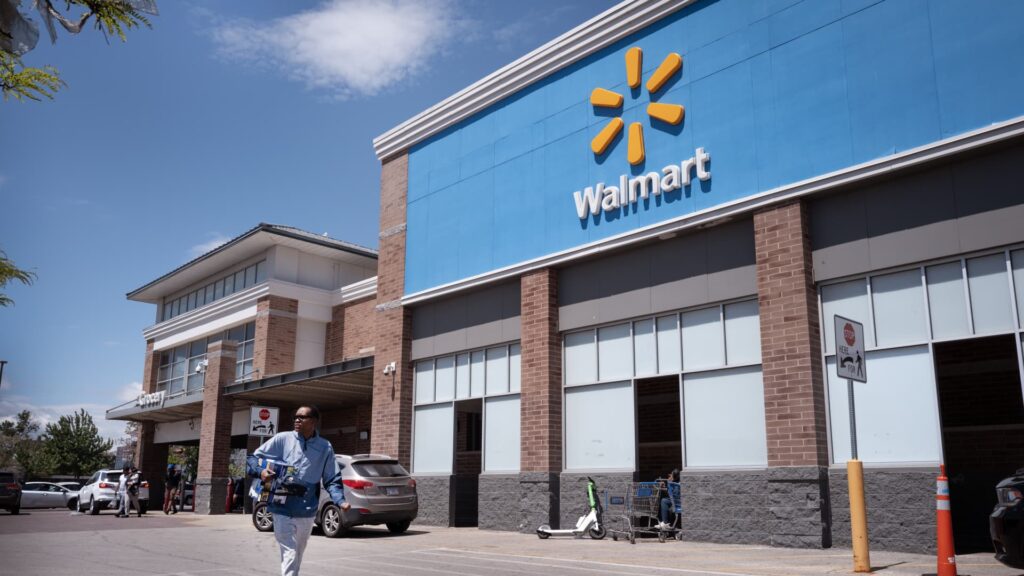
Customers shop at a Walmart store on May 13, 2026 in Chicago, Illinois.
Scott Olson | Getty Images
With all eyes on the health of the U.S. consumer, Walmart‘s fiscal first-quarter earnings report Thursday morning may offer Wall Street some of the best clues yet.
The big box retailer is expected to report another quarter of growing sales and profits, but its commentary on consumer spending – if it’s seeing any pressure and where – could offer investors a view into the strength of the U.S. economy.
Here’s what analysts expect Walmart to report for the quarter, according to consensus estimates from LSEG:
- Earnings per share: 66 cents per share
- Revenue: $175 billion
In the three months since Walmart last reported earnings, there’s a new conflict in the Middle East, gas prices have soared and consumer sentiment has plummeted, falling to a fresh record low in May. The flurry of bad news comes on top of years of sticky inflation, higher interest rates and a global trade war that’s pushed prices even higher.
Walmart has long been among the best positioned to weather just about any economic storm, but given the wide consumer segments it caters to, it’s uniquely positioned to see whether and where cracks in the economy are forming.
Long a value play among lower-income shoppers, Walmart in recent years has been winning over more high-income consumers, which has helped fuel its growth and insulate it from economic shocks that have hit lower earners more acutely.
When reporting earnings on Thursday morning, investors will want to know: Are higher-income shoppers still as resilient as they’ve been, or are higher gas prices having an impact? How much more pressure is the lower income shopper facing?
If consumers start pulling back, leading to a greater concentration of lower-margin groceries over higher-margin discretionary goods, Walmart’s additional revenue streams are expected to help offset those pressures. Its advertising and marketplace businesses are both high-margin revenue streams that have helped Walmart keep prices low and maintain profits.
So far this earnings season, major companies have largely said consumer spending has held up in the face of higher gas prices. But that resilience also came amid higher tax returns, which Target said on Wednesday may have fueled some of the growth it saw during the first quarter.
“We believe this year’s higher tax refunds were a source of upside to consumer spending in Q1, and that benefit will be fading over the rest of the year,” finance chief Jim Lee said on a call with analysts. “While consumers have proven to be resilient so far, sentiment has been declining recently. And we’re keeping a close eye on their spending behavior.”
Investors will want to know if Walmart has seen a similar trend and what that could mean for the duration of the fiscal year and the economy at large.
Source: www.cnbc.com