









-

Ryan O’Hanlon
Manchester United wrapped up last season in 15th place. yet, in 2023-24, they climbed to eighth position. They even touched third in 2022-23 but ended last season in sixth place. The team has experienced a net-zero goal differential or worse in three out of the last four seasons. It seems like mediocrity has become the status quo.
When they dismissed manager Ruben Amorim earlier this month—without a successor lined up—where do you think they were in the standings? Perhaps 16th? Or maybe 12th? Just a slight improvement, but not sufficient for the fourth-wealthiest club globally, right? Surprisingly, when Manchester United let go of Ruben Amorim, they were actually tied for fifth place.
If this decision sounds unwise, consider what another richer club, Real Madrid, did last week. They parted ways with manager Xabi Alonso following a cup-final defeat to Barcelona. Real Madrid also failed to have a replacement prepared, but this rivalry is as deep-rooted and generational as Michigan-Ohio State, where a loss can feel more significant than winning a championship.
yet, this loss wasn’t in the Champions League or even the Copa Del Rey. It was merely the Spanish Super Cup: ranked as the fifth-most significant competition that season, at best, and one whose final stages are now hosted in Jeddah, Saudi Arabia—in sweltering heat, right in the middle of the season, while Spain’s winter sets in.
But could this be the breaking point? yesly, Real Madrid must be struggling in the Champions League? Actually, they are on track for a first-round bye—better than their performance last year. What’s their status in LaLiga? They’re merely four points behind the leader, and their expected-goal differential—an indicator of future success—is the best in Spain.
Both clubs are on the cusp of successful seasons. Madrid might still capture the Champions League and LaLiga titles after not coming close last year, while United find themselves in a fierce battle for the Champions League spots after finishing three places above relegation just the previous year. Yet they both let go of their managers without a clue about who would step in next.
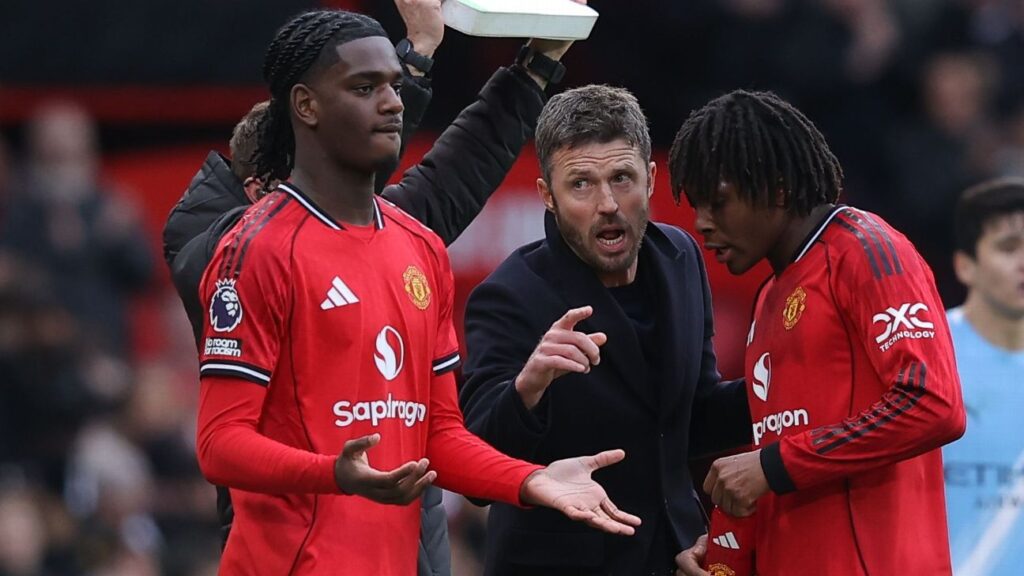
Both organizations plan to wait until summer to resolve this matter, as made evident when they announced new coaches—Alvaro Arbeloa in Madrid and Michael Carrick in United—would only oversee the teams until season’s end. Both clubs have ample motivation to perform. They (A) dismissed their young and costly managers and (B) didn’t even care to secure a reliable candidate to lead the team for a longer duration.
Whether intentional or not, it certainly feels like clubs in Madrid and Manchester are conveying that managers might not hold that much importance.
– Evaluating the USMNT’s premier U-21 talents for 2026
– ‘Head coach’ vs. ‘manager’: The significance of titles at Man United
– Projecting the Premier League standings: How will all 20 teams rank?
Understanding Why Managers Matter—and Why They Don’t
There exists a well-established yet somewhat niche field of study: coaching effects. Successfully quantifying the impact of a soccer coach may not earn you credibility among peers engrossed in intricate studies of protein pathways linked to Alzheimer’s or conducting anthropological fieldwork in Colombia about the coca leaf’s significance. Share your findings in sporting circles, and you might just find yourself laughed at and sent back to the library.
Most studies suggest that coaches don’t substantially influence outcomes. This observation strains credulity yet resonates as truth simultaneously.
It’s questionable because, after all, we’ve watched Jurgen Klopp revolutionize Liverpool’s style and performance. We’ve seen Pep Guardiola shape Manchester City into possession-dominant entities, as well as the impacts of Jurgen Klinsmann on the U.S. national team and Diego Maradona’s stint with Argentina. Managers can invigorate players, fine-tune strategies, and alter a team’s playing style.
You don’t need to be an expert or a top-tier athlete to grasp this. Anyone with a history in sports recalls coaches who enhanced their performance versus those that made them question competition and consider joining a monastery.
Conversely, managers often matter less than we assume due to a couple of obvious reasons. The first becomes clear when any manager discusses leading a soccer team: They aren’t the ones on the pitch. “If your players are better than your opponents,” said the legendary Johan Cruyff, “90% of the time, you will win.”
1:52
How Carrick’s ‘hands-on coaching’ could succeed at Man United
Craig Burley assesses Michael Carrick’s upcoming matches as he manages Manchester United and explains why he was chosen for the role.
Imagine the scenario: if the average fan were managing France in the World Cup while Klopp managed the USMNT, France would still be heavy favorites. yet, if an average fan took the role of center forward for France and Kylian Mbappé played for the USMNT, the USMNT would likely be favored—or at least the competition would be close.
This leads us to the second reason coaches are often less significant than we think: the pool of effective managers is notably larger than that of effective players.
If a coach is exceptionally poor and mismanages their team’s best talents, leading them to play in ways that harm their winning chances, they won’t have a stint in the Champions League. so, most studies reveal that, over extended periods, top managers don’t exhibit significant distinctions in performance. Certain strategies from particular coaches may resonate well with specific players at certain times—like Arne Slot’s success with Liverpool last season—but many coaches can’t maintain that additional value as team variables transition year after year.
A study presented at last year’s Sloan Sports Analytics Conference by George Ferridge offers a concise summary of managerial analytics: Most managers cluster around an average performance, with just a few outliers on either side. Klopp and Guardiola notably grade out as exceptional compared to their peers.
“This indicates that while many managers show little to no correlation with player performance, several are linked to either significantly positive or significantly negative deviations in those performances,” noted Ferridge. “This aligns with other findings regarding higher-level managers’ differential effects but illustrates the overall interchangeability among managers in this sphere.”
A relevant study from 2010 titled “The performance of football club managers: skill or luck?” reached similar conclusions. The researchers accounted for a team’s results considering wages, transfer spending, and injuries, subsequently attributing any over- or under-performance to the manager. especially, the study highlighted which coach exhibited consistently superior results.
Surprisingly, it’s the “No Manager” strategy that clubs like Manchester United and Real Madrid are currently adopting for their squads’ long-term future.
“Of all 60 managers examined, it’s intriguing that, on this measure, the absence of a permanent manager ranks as the ninth best option,” the study’s authors stated.
The Logic and Risks of Appointing a Caretaker Coach
If lacking a manager often ranks higher than having one, what does that imply? The study deduced, “This may reflect that players are likely to exert extra effort under a caretaker manager, knowing their future with the club—and livelihood—might be in jeopardy.”
It’s overly simplistic to claim that Manchester United and Real Madrid are (A) cognizant of this study, and (B) interpreting its conclusions so incorrectly that they think lacking a permanent manager will yield better results. yet, it does suggest something about contemporary soccer: two of the largest clubs globally are currently in seasons where success is still within reach and have turned the reins over to short-term coaches with no prior coaching experience at a Champions League level.
Arbeloa is without professional managerial experience, while Carrick has never managed in any country’s top division.
1:53
Why Real Madrid’s defeat to Albacete is a ‘failure’ for Arbeloa
Ale Moreno analyzes Real Madrid’s 3-2 loss in the Copa del Rey against Albacete during Alvaro Arbeloa’s inaugural match.
The reasons leading both clubs to this point vary. Under Jim Ratcliffe’s partial ownership, United aims to modernize its structure, incorporating varied personnel in roster decision-making, and dismissed Ruben Amorim after he rejected that collaborative approach. Conversely, Madrid discarded Xabi Alonso for opposing reasons; they remain a club primarily influenced by players and the president, while Alonso sought to introduce a modern tactical style that demanded more commitment from star players than they were willing to provide.
Regardless of the reasoning, there exists a certain logic to both choices—assuming we grant both clubs the benefit of the doubt concerning the untenability of their managerial situations. yet, this is a major assumption, given the continuous dysfunction that both clubs tend to cultivate. If truly only a few coaches can enhance a team, it would be wise to take your time to find one of those exceptional candidates. The likelihood that a suitable candidate is readily available in the middle of a season is diminutive—especially with several successful managers expected to become available after the World Cup this summer.
so, rather than rushing to make another costly long-term commitment after already making an expensive decision to fire a coach, isn’t it wiser to appoint a low-cost interim to navigate the remainder of the season? This is particularly relevant if we presume that most coaches don’t significantly impact results in any tangible way.
After all, history bears out the success of many interim managers—evidenced in both past research and real-life scenarios. In 2012, Chelsea captured the Champions League with Roberto Di Matteo serving as interim manager. In December 2019, Bayern Munich dismissed Niko Kovac and appointed Hansi Flick as caretaker; at season’s end, they won the Champions League. Gareth Southgate earned a knighthood for his role as England’s manager, a position he initially assumed on an interim basis. Perhaps most famously, Mario Zagallo captured the 1970 World Cup with Brazil shortly after being appointed temporarily just months before the tournament.
Certainly, the downside exists that your interim choice might actually deteriorate the team’s performance. When selecting from a typically less-accomplished pool of candidates willing to accept a fleeting opportunity, the chances of hiring an ineffective coach rise beyond the norm. This scenario played out when Tottenham replaced Antonio Conte with interim Cristian Stellini, who was soon dismissed and substituted with interim Ryan Mason, leading to a fall-off in results.
This captures the risk and paradox present in the situations in Manchester and Madrid, as well as managerial roles in general. Recruiting a coach is a costly endeavor that could revolutionize your club. Yet more often than not, it may yield negligible changes, one way or another.
The most probable outcome for both United and Madrid from here is they continue to perform at roughly the same level that compelled them to release their previous managers.