








-

Zach Kram
The midpoint of the NBA season introduces fresh hurdles for rookies. While the early season can be tough due to the heightened level of competition, with opponents who are larger, faster, and more skilled, reaching the 41-game mark adds yet another layer of difficulty as rookies begin to adapt: They must now navigate the lengthy grind of the longest basketball season they’ve ever experienced.
Last year’s NCAA national champion played a total of 40 games; Warriors rookie Will Richard, who was a key player for that Florida team, hit the 40-game mark in the NBA on Tuesday night and still has half the season ahead of him.
This also serves as an ideal opportunity to evaluate the rookie class with an updated ranking. Note: This ranking reflects the quality of the rookies’ performance at this moment, rather than a long-term forecast. Richard (who was ranked seventh in the initial version of these rankings in November), the Hornets’ Sion James (eighth), and the Pelicans’ Jeremiah Fears (10th) have all dropped out of the top 10 in this update, with Fears being the last to be cut.
Stats are current as of the morning of Jan. 21
Jump straight to the No. 1 player

November ranking: Not ranked
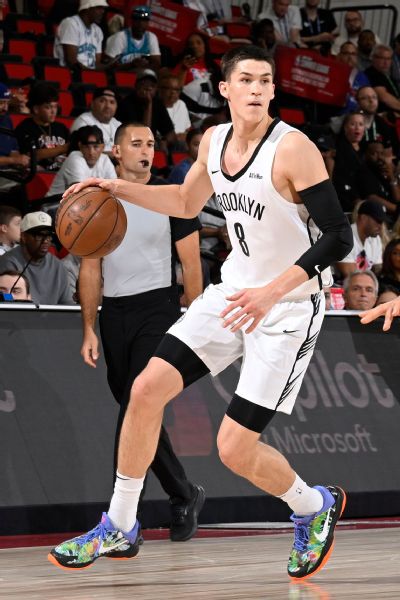
Demin is a player of contrasts. He seldom reaches the rim and very rarely draws free throws, yet he possesses exceptional passing abilities and, at 6-foot-8, embodies the modern prototype of a big lead playmaker. His 3-point shooting percentage has surged to 39.8% — a significant upgrade from his 27% average in college.
If Demin can consistently hit shots from beyond the arc, defenses will need to guard him more closely on the perimeter, allowing him to leverage his passing skills more effectively. When Demin plays alongside Michael Porter Jr., the Nets boast a plus-3.6 net rating and a 120.1 offensive rating, according to databallr, which is four points higher than the league average.
November ranking: Ninth
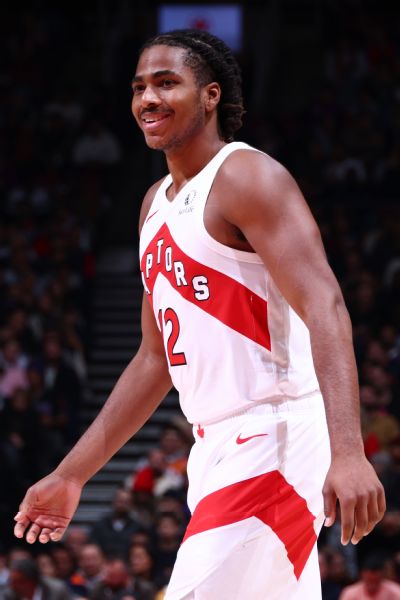
even if officially listed at 6-7, Murray-Boyles has played 93% of his minutes at center, per Cleaning the Glass. This small-ball strategy has its drawbacks, given Murray-Boyles’s numerous offensive limitations; he has only made 15 3-pointers across 37 games. but, his versatility and agility make him a perfect fit defensively: The Raptors hold a 106.6 defensive rating when Murray-Boyles is on the floor with Scottie Barnes, outperforming the league average by 10 points.
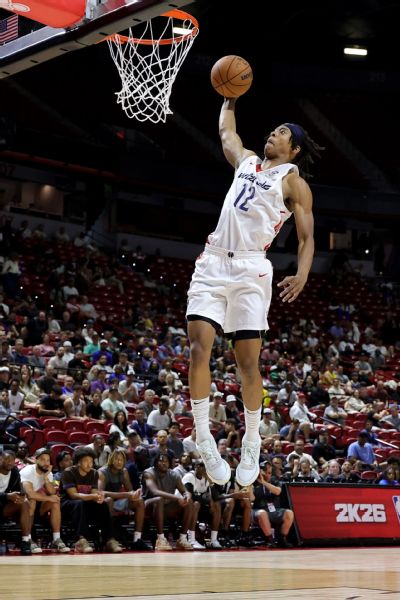
November ranking: Not ranked
Shooting is arguably the most crucial skill a player can possess in today’s NBA, and Johnson has that ability in spades. The 19-year-old is converting 39% of his 5.3 3-point attempts per game, and he has shown equal proficiency on pull-up shots (40%) as well as catch-and-shoot opportunities (39%).
Johnson has also experienced increased opportunities since the Wizards traded for Trae Young, not because Young is currently setting him up with pinpoint assists — the former Hawks guard has yet to make his debut with Washington — but because the departure of CJ McCollum and Corey Kispert in the deal has opened up more playing time for the Wizards’ young talents. Johnson’s four highest-minute games of the season (31 minutes once, and 30 minutes three times) have all come since the trade.
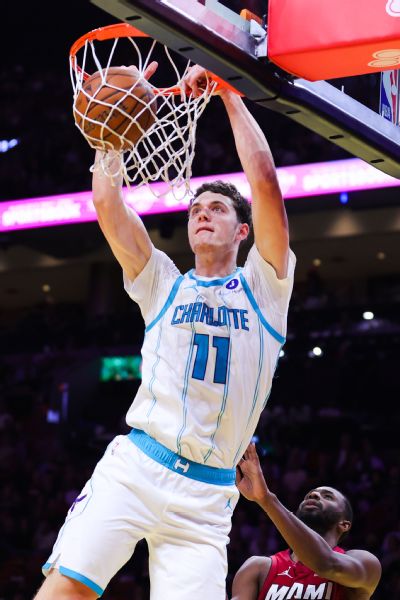
November ranking: Fifth
Kalkbrenner missed several weeks straddling the new year due to an elbow injury. but, the reasons that this second-round pick ranks above many higher-drafted players in these rankings remain unchanged. Kalkbrenner is an effective rim protector for a rookie, boasting an average of 1.6 blocks per game and an opposing field goal percentage of 58% at the rim, placing him alongside elite defenders like Nic Claxton of the Nets, Donovan Clingan of the Portland Trail Blazers, and Joel Embiid of the Philadelphia 76ers on the NBA leaderboard.
While Kalkbrenner’s offense isn’t particularly groundbreaking, his ability to finish at the rim is valuable; he converts 77% of his shots. The only other player averaging at least four attempts per game with a percentage over 70% this season is Rudy Gobert (72%) of the Minnesota Timberwolves.
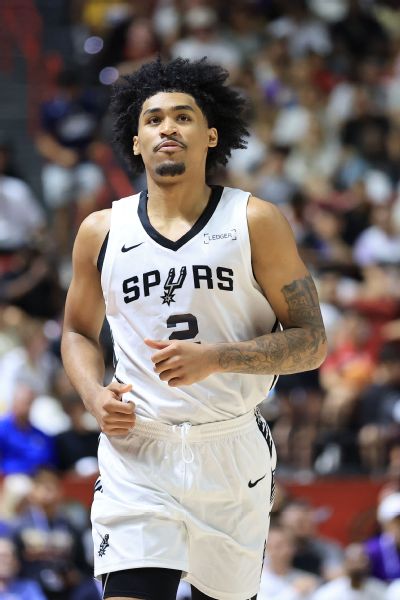
November ranking: Fourth
Harper signifies a tier elevation in this ranking; no player below sixth has ever been seriously considered for a higher spot, while the next few players are closely grouped and have shifted positions several times throughout the ranking process. There’s an argument that Harper could justify a couple of spots higher or remain in fourth as he did in the last edition. even so, despite the No. 2 pick’s explosive drives, craftiness around the rim, and perimeter defense on a young, promising team, a major shortcoming in his shooting is causing him to slip down a notch.
Harper is currently converting only 74% of his free throws and 24% of his 3-point attempts. Among 200 qualified players, he sits at 196th in true shooting percentage.
This issue isn’t just a temporary setback, as San Antonio is gearing up to contend for the 2025-26 title; Harper’s shooting difficulties could also impact his long-term potential. According to Stathead, here is a list of rookie guards since 2010 who have shot worse than 75% from the free-throw line and below 30% on 3s (minimum 1,000 minutes), a category Harper currently falls into: Stephon Castle, Isaiah Collier, Cody Williams, Josh Christopher, Isaac Okoro, Jarrett Culver, Josh Okogie, Ben Simmons, Kris Dunn, Elfrid Payton, Michael Carter-Williams, Phil Pressey, Nate Wolters, Alexey Shved, and Eric Bledsoe.
Very few on that list evolved into reliable starters, let alone offensive leaders, with Simmons being the only exception who became an All-Star. Perhaps Harper can follow in the footsteps of his teammate Castle, who is carving his own promising path despite facing shooting challenges. but, the concerning nature of this precedent does cause Harper to drop a few positions at this time.
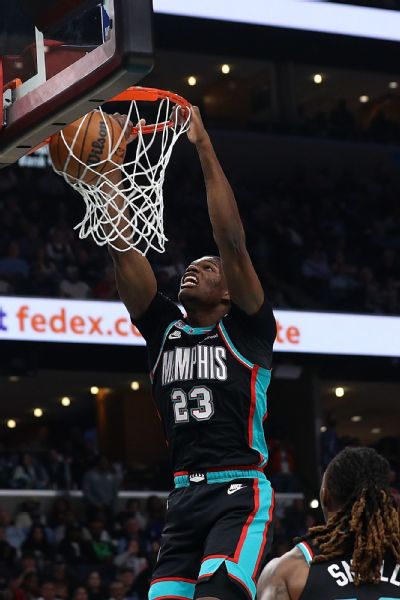
November ranking: First
The season’s inaugural rookie rankings coincided almost perfectly with Coward’s early peak. He has since seen a decline, dropping to 34% from distance, though he remains efficient overall due to his strength in two-pointers and free throws. Coward is undoubtedly a foundational player for Memphis as the franchise contemplates whether to maintain its current course or embark on a more extended rebuild.
Yet, a significant area of concern is Coward’s lack of defensive impact, especially given that he appears to meet all the criteria for a 3-and-D wing. While box score stats only tell part of the story on defense, Coward’s averages of 0.5 steals and 0.3 blocks per game are underwhelming. In terms of per-minute impact, Coward ranks 29th among 34 rookies with at least 250 minutes played this season.
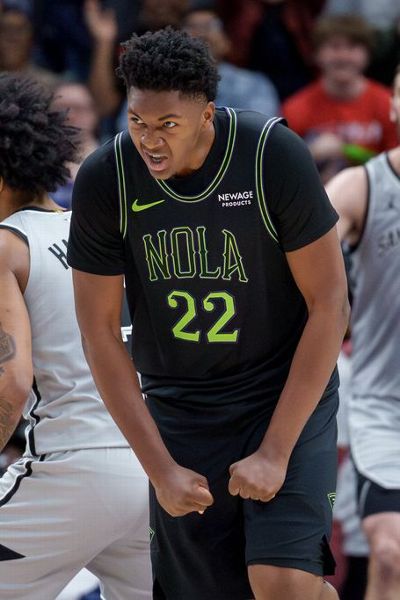
November ranking: 10th
Generally speaking, most NBA rookies experience more struggles than successes. Sometimes, it’s essential to look for flashes of potential instead of focusing on overall statistical averages.
And, my, does Queen exude potential. Catch him on the right night, and he can appear to be the best rookie in the entire class: By game score, Queen’s 33-point triple-double against the Spurs in December is tied for the most remarkable performance by a rookie this season.
but, a key trend to keep an eye on is that the Pelicans have encountered substantial difficulties when Queen shares the floor with Zion Williamson. New Orleans has a minus-14.3 net rating during those minutes, with an offensive rating that is five points worse than the league average and a defensive rating that is nine points worse.
It’s tough to envision exactly how Queen fits into a winning team context, given his poor synergy with Williamson and his considerable defensive issues, coupled with a lack of shooting range (he’s just 8 for 42, or 19%, from beyond the arc). Nevertheless, Queen’s unique combination of size and playmaking ability is intriguing enough that, even in a strong rookie class, he merits a spot as high as this.
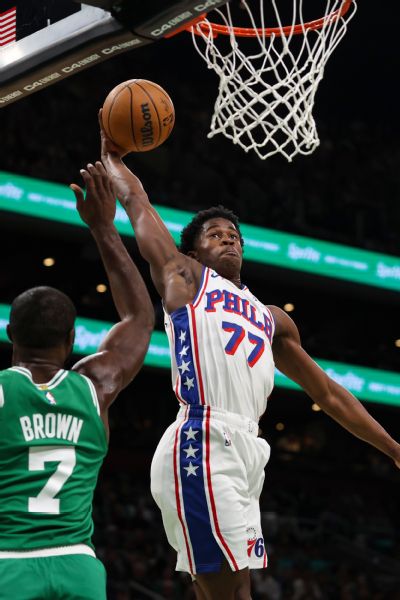
November ranking: Second
Edgecombe started off strong in October, stumbled in November, and has since rebounded to establish himself as a solid NBA starter at just 20 years old. While his overall efficiency leaves something to be desired, his 37% shooting from 3-point range marks a significant improvement over the 34% he achieved at Baylor on the shorter college line. His defensive hustle is commendable, as he averages 1.5 steals and ranks 14th with 3.5 deflections per game.
The young guard still has a lot of room for improvement. For instance, in pick-and-roll situations, Edgecombe is averaging just 0.76 points per play, ranking him last among 94 players with at least 300 picks this season.
even so, the context of his team benefits him, as he is contributing impressive overall numbers (15.8 points, 5.3 rebounds, and 4.2 assists) while playing for a winning team. Harper is the only other rookie near the top of this list who can make a similar claim, and unlike Edgecombe, he’s coming off the bench while Edgecombe is logging 36 minutes per game in Philadelphia.
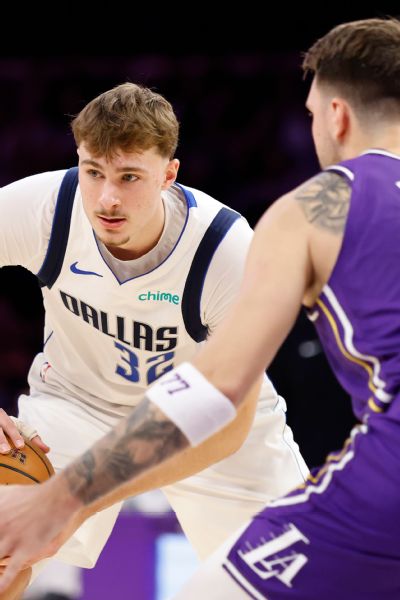
November ranking: Sixth
Flagg was never going to remain in the middle of these rankings for too long. although a shaky start to his career while playing point guard and a persistently inconsistent jump shot (28.6% from 3-point range), he has made significant strides since November.
Flagg is, unsurprisingly, the most well-rounded rookie in this class. He is the top defender — and it isn’t even close — while his advancements on the offensive end within just two months are noteworthy. In his first 10 games, Flagg averaged 13.9 points and 3.0 assists on 40% shooting, but he has since ramped up to 20.4 points and 4.5 assists on 50% shooting. Much like Queen, Flagg possesses that “wow” factor.
Flagg missed some time last week due to a sprained ankle but returned without any issues in a victory over the Knicks at Madison Square Garden on Monday. Given his upward trajectory, it wouldn’t be surprising to see him claim the top spot in the next round of rookie rankings.
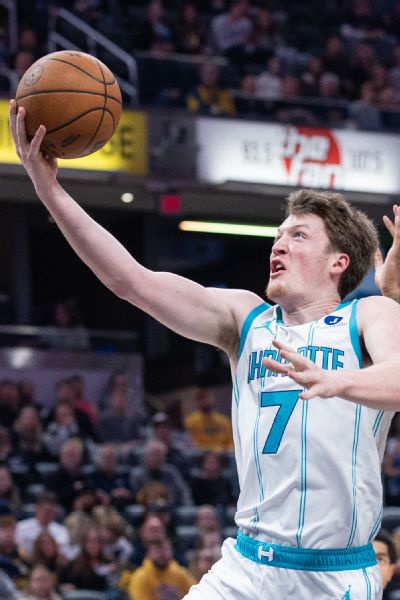
November ranking: Third
Flagg is a heavy favorite for Rookie of the Year (-750) according to betting markets, yet his former Duke teammate has emerged as the best rookie in the NBA this season. Whether it’s due to his play with the underappreciated Hornets — who have subtly improved their point differential to an even 0.0 for the season — or because he was drafted fourth instead of first, Knueppel seems to have flown under the radar this season despite exceptional performance.
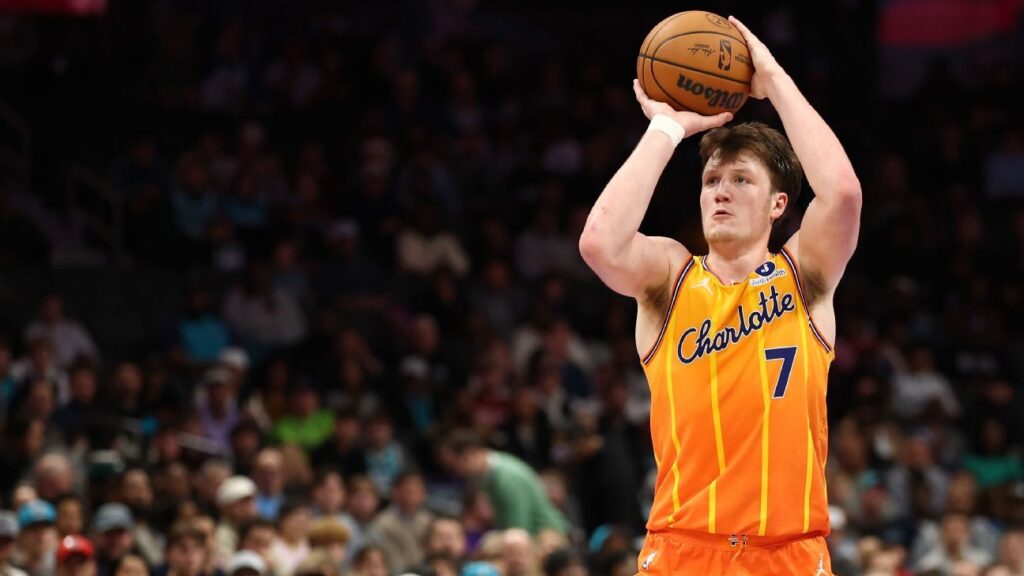
The main storyline surrounding Knueppel is his chase for various rookie 3-point records: he’s making an average of 3.4 3-pointers per game at a 43.5% success rate. The rookie record for total made 3s, held by the Kings’ Keegan Murray, stands at 206, but Knueppel is on track for 273.
Equally impressive — and perhaps even more noteworthy — is Knueppel’s overall efficiency. His 64.5% true shooting percentage is the highest recorded for any rookie in NBA history with a usage rate above 20% over 1,200+ minutes.
Most rookies around the top of that leaderboard are centers; however, the most efficient rookie seasons among non-big men belong to Sarunas Marciulionis (a veteran European pro before joining the NBA at age 25), Magic Johnson, Charles Barkley, James Worthy, Eric Gordon, and Michael Jordan. That’s a remarkable roster of comparisons.
Knueppel has benefitted from rising efficiency across the league since players like Johnson and Jordan made their debuts. Nevertheless, Knueppel’s true shooting percentage exceeds the league average this season by 11%, making it comparable to the performances of those inner-circle Hall of Famers during their rookie campaigns.
In terms of this season alone, Knueppel’s true shooting percentage surpasses seven of the 10 All-Star starters (all except Nikola Jokic, Giannis Antetokounmpo, and Shai Gilgeous-Alexander), and it stands as the third-best among all high-usage guards, following only Gilgeous-Alexander and Austin Reaves.
This level of performance would be impressive for an established veteran star — and Knueppel is delivering it as a 20-year-old halfway through his inaugural NBA season. It’s this outstanding achievement that propels Knueppel to the top of these rankings and allows him to maintain his lead over Flagg for now.