










-

Ryan O’Hanlon
The top four teams in the Premier League have managed eight games across the last two matchdays. Want to take a wild guess at how many points they’ve accumulated collectively?
It’s six. That’s right, just six out of a possible 24 points — an exhilarating average of 0.75 points per match. West Ham United is currently clocking a 0.77-point-per-match rate while being stuck in 18th place, with betting odds showing they have a significantly high chance of being relegated.
And things may actually look even worse than those numbers imply. From the eight matches, Arsenal, Manchester City, Aston Villa, and Liverpool collectively have zero wins. compared to, West Ham, Leeds United, Nottingham Forest, and Everton together have achieved four wins and garnered 14 points in the same timeframe.
but, if we momentarily pull our gaze from the top four teams and broaden our perspective, a few other astonishing facts surface. Over the last two weeks, no Premier League team has won more than one match. And in the last three weeks? The same story applies.
As I discussed a few weeks back, the Premier League is facing a contextual crisis due to the current subpar quality of attacking play — compounded by the fact that the average team’s standard is higher than ever. Every fanbase seems to feel frustrated as their teams drop points to sides they typically don’t.
In an attempt to gain insight into the Premier League’s condition, we’re rolling out everyone’s favorite 13-letter, two-word term: power rankings! Welcome to the inaugural edition of ESPN’s Premier League Power Rankings, offering our monthly assessment of the actual strongest and weakest teams.
– Is hiring a caretaker manager a blunder for Man United?
– Evaluating the top 15 USMNT U-21 prospects of 2026
– Forecasting Premier League standings: How all 20 teams will conclude
Understanding the Premier League Power Rankings
A piece of advice: Don’t rely on this list to outsmart the betting market. You will eventually lose.
Now, regarding what these rankings signify. They aren’t claimed to be the most precise power rankings of all time — our aim is to construct something simple yet intuitive, retaining some predictive capability. The real value lies in comparing these rankings to the current standings, noting discrepancies, and identifying the reasons behind them.
As for the metrics steering these ratings, there are four key inputs. The first is the team’s non-penalty expected-goal differential, noted for its predictive accuracy regarding future performance. The second metric is the estimated squad value from Transfermarkt, which serves as a proxy for a team’s talent level.
That already provides a solid foundation, but saying just “xG and money” feels monotonous despite usually being on point. With assistance from Kevin Cole of Unexpected Points, I assessed several additional metrics and found two that enhanced predictions while aligning intuitively with our understanding of soccer dynamics.
The first metric is PPDA, or passes allowed per defensive action specifically in the opposition territory. This is the most recognized measure of a team’s pressing intensity, and it’s my conjecture that it improves predictions because teams disrupting play higher up the field are more likely to produce dominant performances than those lacking pressing efficacy. Such teams are also less prone to being overrun.
The second is the pass completion rate outside the attacking third — a statistic I first discovered at Markstats. This can be considered the inverse of PPDA, assessing a team’s capability to resist opponent pressure. Teams achieving high completion rates here likely indicate less aggressive pressure from rivals, revealing something about the team’s quality.
For straightforwardness, our rankings consist solely of these four parameters. We utilize them to evaluate teams on a scale of 100, translating these ratings into a projected goal differential for an average match. Here’s how our rankings are shaped:
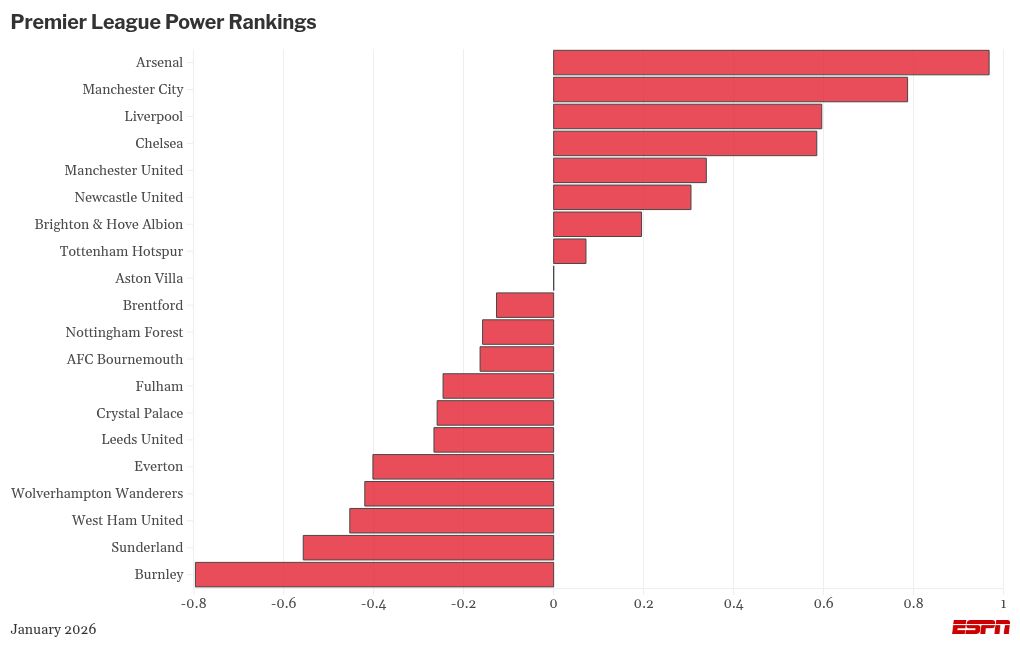

This observation is rather clear. Judging purely by underlying performance across 22 games, Arsenal stands alone — followed by another quartet of teams. They are also flawless in the Champions League.
Currently, this is plainly the best team in the world:
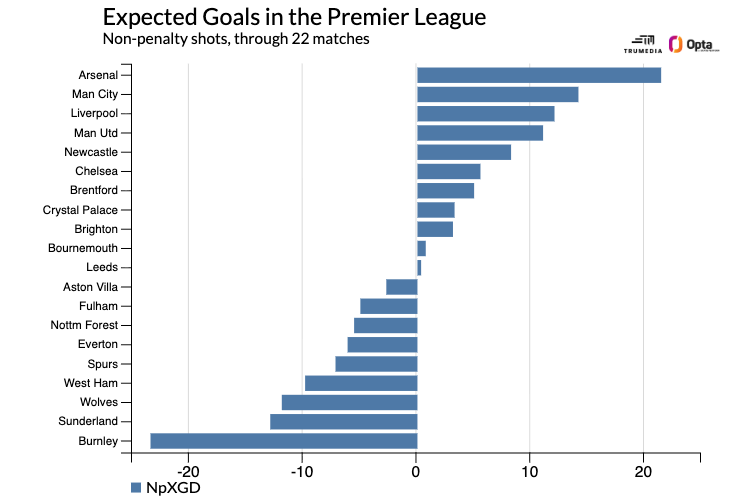
especially, Manchester City’s power ratings position is significantly closer to Arsenal than their expected-goals metrics suggest. Why is this the case? City started the season with the league’s second-most valuable squad and boasts a nearly 90% pass completion rate outside the attacking third.
When a reporter directly asks if another coach is being considered to succeed you, it signals … well, it signals many things unrelated to Arne Slot or Liverpool, reflecting the general climate of the team. but, such inquiries rarely surface unless unrest is brewing around the coach’s position.
though Liverpool has drawn their last four Premier League fixtures, they’ve been among the top performers in the league over the last ten matches:
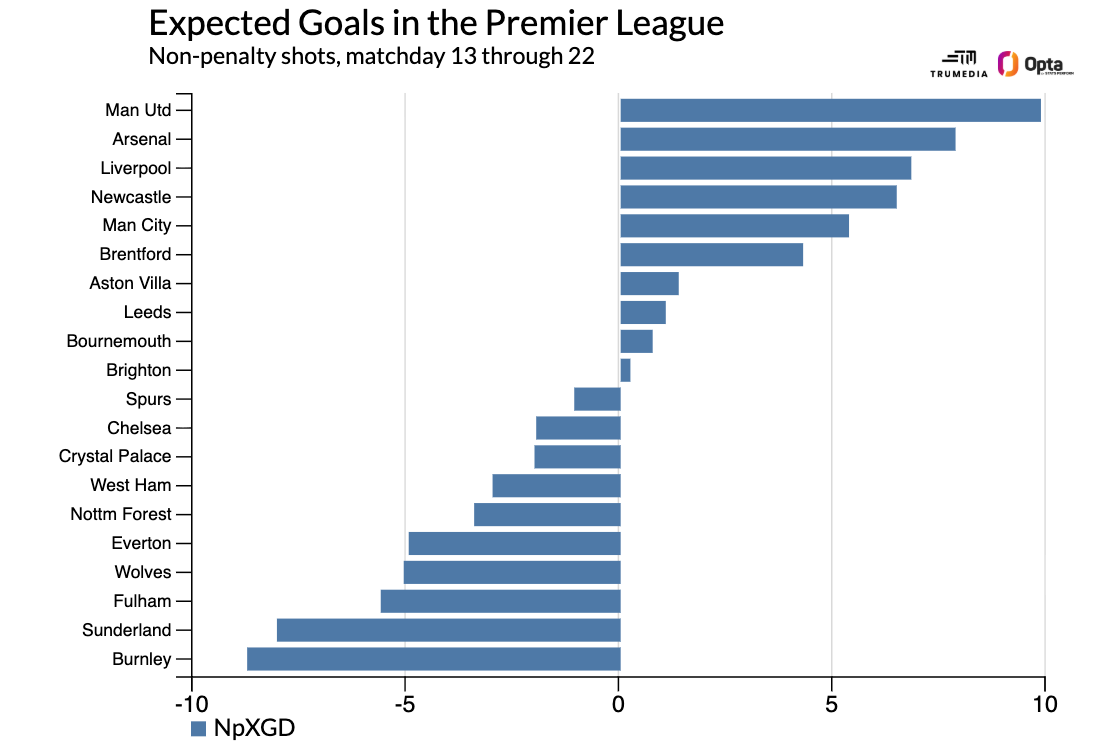
The discontent surrounding the team seems more about aesthetic preference than actual quality.
Liverpool has generated enough chances to secure victories in most recent outings, but fans have grown accustomed to witnessing Jürgen Klopp’s teams engage in fast-paced, high-scoring affairs. The current incarnation of Liverpool under Arne Slot might be effective, but it lacks the explosive style characteristic of Klopp’s heavy-metal football.
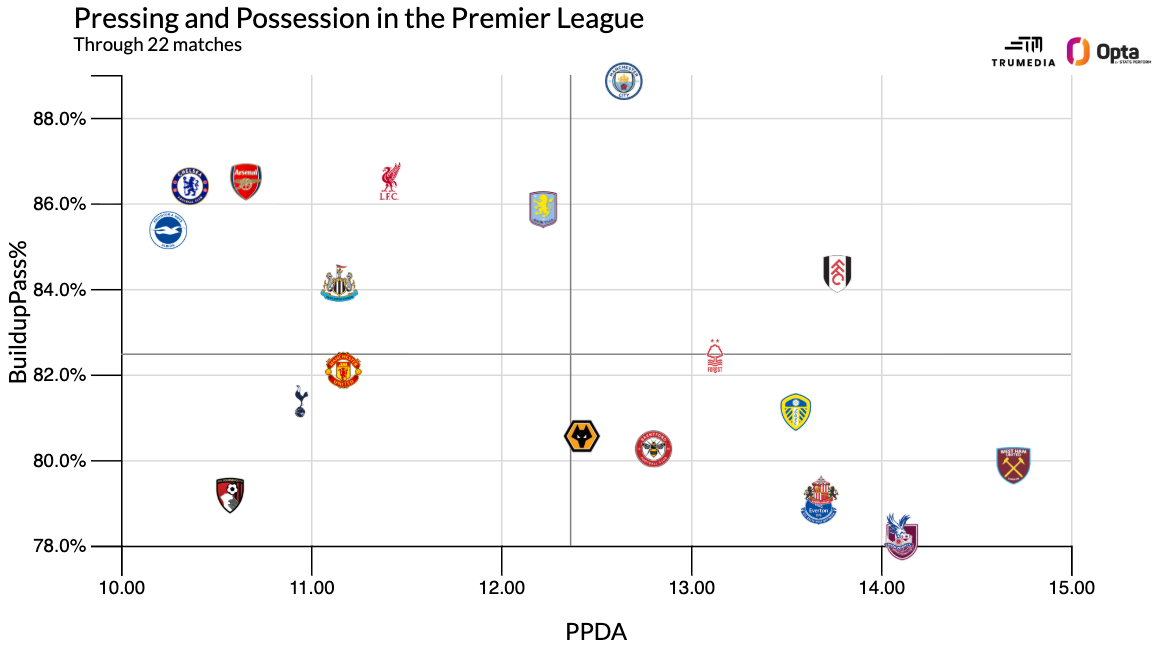
It’s a rare occurrence for me to observe that seven Premier League teams are pressing more assertively than Liverpool this season.
although an xG differential akin to Leeds, Chelsea’s ranking remains competitive with the defending champions, largely due to their extensive, skilled lineup and a high-pressing, possession-focused philosophy yielding positive results in the league.
It remains to be seen if this trend continues under new manager Liam Rosenior, who witnessed his team maintain less than 50% possession while managing only six attempts on goal in a fortunate 2-0 win over Brentford last weekend.
0:31
Rosenior admits he has to ‘earn’ support from Chelsea fans
Liam Rosenior speaks following Chelsea’s 1-0 victory over Pafos FC in the Champions League.
The recent triumph over Manchester City was monumental and impressive, yet I’m unsure we gleaned much insight regarding Manchester United — or specifically, United under Michael Carrick.
City entered the match with what I would describe as a fourth-choice backline, and United capitalized on those weaknesses repeatedly. This strategy might not be feasible in most upcoming fixtures, and when it is, future opponents are likely to present a far stronger defensive lineup than City had available.
still, this squad has shown considerable potential under Ruben Amorim. If Carrick can carry this momentum forward, they could very well be among the top five teams in a league that’s expected to yield five Champions League berths next season.
One area where Newcastle holds an edge over Manchester United in our ratings is in their ability to maintain possession while producing comparable-quality performances and levels of pressing intensity.
Manchester United is completing the lowest percentage of pre-final-third passes seen in the past nine seasons. Conversely, Eddie Howe’s team is achieving a higher percentage of passes outside the attacking third than any other season during that time span.
Though it hasn’t translated into results or performances, Brighton appears to play like a team statistically inclined to garner many points: they have the league’s lowest PPDA and their buildup-pass completion rate surpasses all except last season’s top four and Aston Villa. They likewise possess a theoretically deep and gifted squad.
I’m hesitant to fully endorse this theory — not every manager and player group can consistently convert pressing and possession into points — but squinting hard might allow one to believe the Seagulls hold a higher ceiling than all teams outside the top six in these rankings.
If you’re still wondering whether the Premier League is underwhelming or if all its teams are merely above average, allow me to draw your attention to North London.
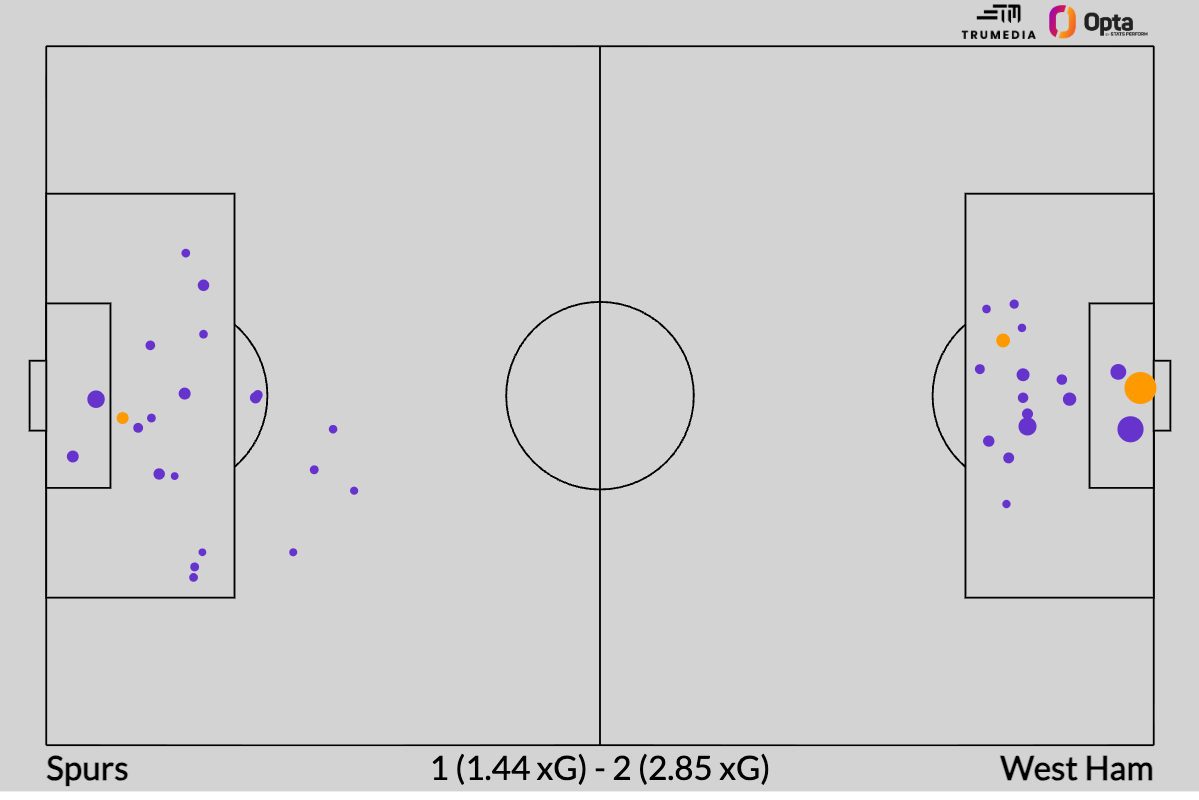
That’s what Tottenham managed against West Ham at home.
And then they followed it up with this performance against Borussia Dortmund at home:
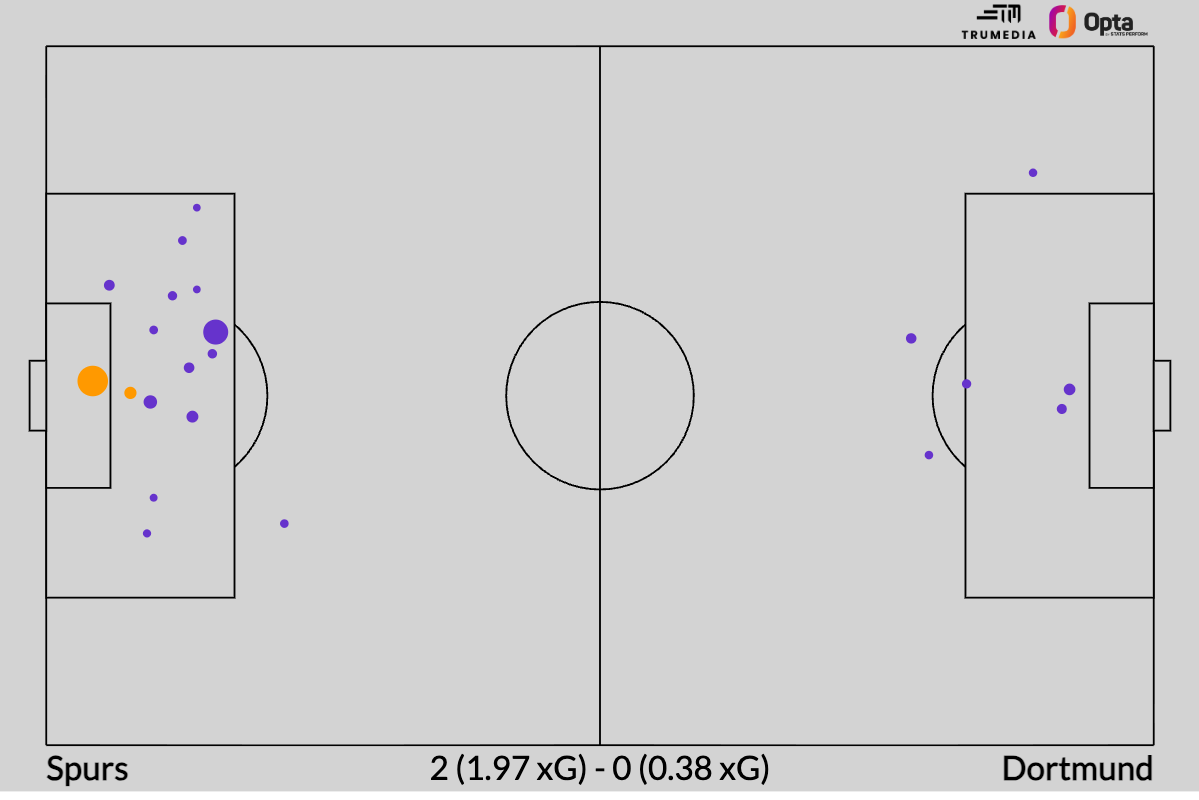
Their underlying league metrics are genuinely dreadful — ranking 16th! — yet they currently sit in fifth place with one match left in the Champions League group stage, just one point ahead of the defending European champions PSG.
I’m interpreting this as a win for the ratings.
A … win? A win?!?! This team is currently tied for second place, and you’re saying that a homemade algorithm that ranks them below Brighton and Spurs is effective? It’s identifying them as the most average team in the league!
To counter my italicized critic: Power rankings lack value if they simply mirror the standings. If that were the case, you’d just check the standings yourself! Our aim is to pinpoint the underlying elements that drive success and utilize them to identify teams most likely to accrue points in the future.
Simultaneously, solely focusing on xG would place this side in 12th place. Villa possesses more talent than that suggests, and by showcasing their unique, City-like strategy of patient possession without aggressive pressing, we may be uncovering some rationale for why Unai Emery’s squads consistently outperform their expected metrics every season.
2:42
Why Aston Villa are ‘not title contenders’ after loss to Everton
Frank Leboeuf and Craig Burley analyze Aston Villa’s 1-0 defeat to Everton in the Premier League.
This is one of those instances where, based on pure statistics and match evaluations, I’d argue Brentford is the superior team compared to Tottenham. But if my life were at stake and they were to face off on neutral ground, I might instinctively lean towards Tottenham — which would likely end up costing me dearly. Who knows?
Brentford has had a remarkable season but has pursued a strategy that makes mastering dominant performances challenging.
According to every metric outside of points, they resemble a slightly below-average team: their pressing, passing, chance creation, and concession all align with such a designation, as does their talent.
Six teams in the league have a pass completion rate below 80% outside the attacking third, and five of those teams rank in the bottom six for PPDA. This aligns with the typical underdog strategy: they retreat and absorb pressure before delivering vertical, riskier passes. This tactical approach has been a hallmark since the days someone in Scotland realized it was permissible to pass to teammates.
Among the teams achieving below-average CPDA is Andoni Iraola’s Bournemouth, who are pressing more vigorously than all but Brighton and Chelsea.
Marco Silva’s side benefits from a commendable level of security with ball control outside the attacking third. They may fall short elsewhere, but they are executing a greater percentage of successful buildup passes than all but six other teams.
Silva is extracting more from this side — an aging squad lacking high-caliber talent — than he should, illustrating how their unique tactical profile plays a role.
If we’d launched these rankings earlier in the season, I believe they would have anticipated Crystal Palace’s downward trend. Not the complete cultural implosion where they let their captain depart for a lower fee than previously offered and their manager announced he’d step down after the season, subsequently igniting turmoil in the team’s strategy during a post-match press conference.
although delivering impressive performances earlier in the season, Palace achieved this without effective control of the ball or opposition territory.
For a larger club to consider hiring Oliver Glasner, they must ascertain his ability to implement change with more talented players under a significantly demanding performance benchmark.
They currently sit 16th in the standings, yet are closer to 10th than the relegation zone. My campaign for “Daniel Farke as Manager of the Year” remains unstoppable.
This revelation surprised me more than any other on the list. Everton is currently in 10th place! Jack Grealish! A mere three points shy of fifth place! They just defeated Aston Villa! Yet these ratings reflect their performance as nearly equal to that of Wolves.
Why is this? Their xG differential ranks just 16th, and they still embody the quintessential David Moyes style — lacking in both pressing and ball control.
I think I might still classify Wolves among the “three worst teams” in the league, but their placement here reveals a couple of things: they’ve managed to press and control possession in ways typical relegation contenders do not, and their underlying performances are markedly better than their historically poor point totals imply.
One reason the relegation battle may be less intense is that the team currently in 18th place is genuinely the 18th-best squad in the league.
Another factor minimizing the relegation fight is the team with the second-worst xG differential (Sunderland) being just two points away from the previous season’s Premier League champions (Liverpool).
to sum up Sunderland’s current circumstances: they have a superior chance at qualifying for the Champions League than facing relegation, but they are likely to be among the favorites for demotion before the upcoming season begins.
Data analysts frequently refer to the so-called Messi test: you could validate any player-value metric by seeing if Lionel Messi topped it. likewise, my checks for these ratings indicate that as long as Burnley remains at the bottom, my method is on the right track.