








-

David Hale
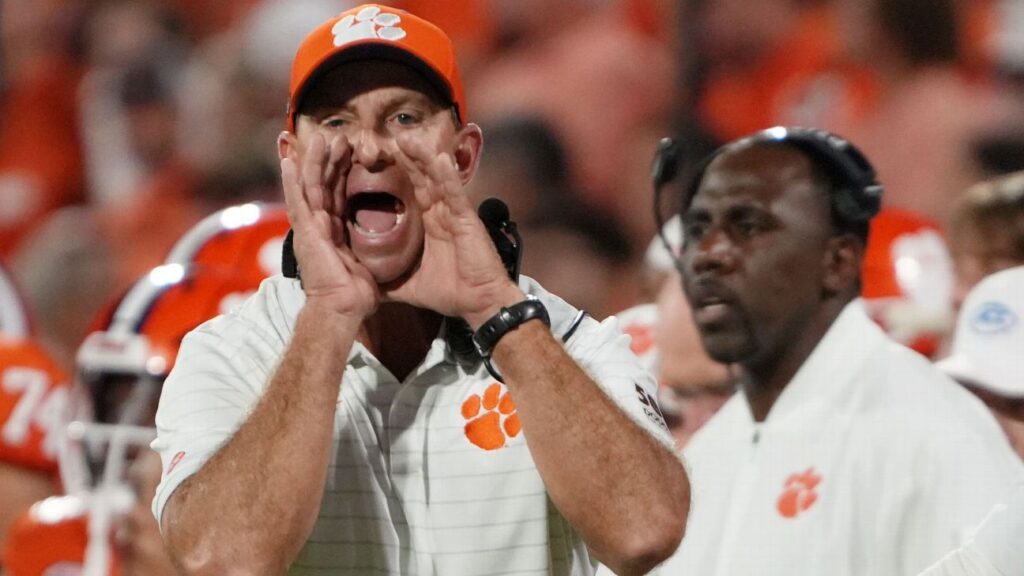
In a news conference lasting over an hour on Friday, Clemson head coach Dabo Swinney criticized Ole Miss coach Pete Golding for what he described as direct tampering with a Clemson player. Swinney expressed concern about the current state of college football that fosters such behavior and put forth suggestions for reforms he believes are necessary to create guidelines for the existing system.
Swinney blasted Golding for allegedly making ongoing attempts to entice linebacker Luke Ferrelli to enter the transfer portal, despite Ferrelli already having signed a contract and begun attending classes at Clemson. He labelled it a “clear case of tampering” and urged his fellow coaches to “serve as role models for younger coaches in this profession and uphold integrity or remain silent to avoid complaints.”
Swinney called the transfer portal situation “flat-out extortion” in certain cases and used Ferrelli’s situation as a “blatant” illustration of how serious the problems have become in a system seemingly devoid of accountability.
“This is a completely different level of tampering,” Swinney stated regarding Golding and Ole Miss’ engagement with Ferrelli. “It’s total hypocrisy. … This is a deeply troubling situation. We have a flawed system, and if there are no repercussions for tampering, then we are devoid of any regulations or governance.”
Swinney’s remarks follow numerous high-profile disputes over player mobility in the transfer portal, including Washington quarterback Demond Williams Jr., who attempted to exit a contract with the Huskies only to return, and Duke quarterback Darian Mensah, who is facing a lawsuit for contract breach as he tries to transfer despite previously committing to the Blue Devils.
Ferrelli, considered one of the premier freshman defenders in 2025 at Cal, entered the portal in January. Swinney provided details of a two-week timeline in which Ferrelli visited both Ole Miss and Clemson, agreed to a revenue-sharing contract with the Tigers, secured an apartment, bought a car, enrolled in classes, and began offseason training there.
On January 14, after more than a week of attending classes at Clemson, Ferrelli’s agent notified Clemson general manager Jordan Sorrells that “Ole Miss was pursuing Ferrelli aggressively.” At Swinney’s request, Sorrells reached out to Ole Miss GM Austin Thomas to ask for an end to their communications with Ferrelli.
Swinney shared that Thomas assured Sorrells he did not condone tampering, although Golding “does what he does.”
Swinney proceeded to recount a series of alleged communications from Golding to Ferrelli that began during an 8 a.m. class. According to Swinney, Ferrelli received a text stating “I know you’re signed, but what’s the buyout?” which was followed by an image of a $1 million contract proposition and subsequent calls from quarterback Trinidad Chambliss and former quarterback Jackson Dart trying to entice Ferrelli back into the portal.
According to Swinney, Ferrelli communicated to Clemson that he was not interested in leaving. but, Ferrelli’s agent, Ryan Williams, refused to share those text messages unless Clemson agreed to a two-year extension on Ferrelli’s contract that included a $1 million increase. Clemson declined the proposal.
Swinney and athletic director Graham Neff outlined a tumultuous four hours on January 15, during which Ferrelli was on campus reassuring coaches of his intent to stay. By late afternoon, he had ended up in the compliance office expressing his desire to enter the portal and move to Ole Miss.
On January 16, Clemson filed a formal complaint with the NCAA, citing “blatant” and “clear-cut” tampering. Neff indicated that the school would contemplate further legal action if a resolution does not materialize.
“I’m not aiming to get anyone fired, but when does it become too much?” Swinney questioned. “If we have regulations and tampering is prohibited, then there should be consequences for those actions. And shame on the adults if we do not keep each other accountable.”
Golding has occupied the head coaching position at Ole Miss for less than two months, following former coach Lane Kiffin’s move to lead LSU just before the Rebels’ playoff run. Golding contended with various schools attempting to entice Ole Miss players after Kiffin’s exit, all while managing a demanding schedule preparing for playoff games as many of his coaching staff juggled responsibilities between Ole Miss and LSU.
When Swinney confronted Ole Miss regarding the tampering accusations, one of their responses was that other institutions had also tampered with their players.
“What I do know,” Swinney remarked, “is two wrongs do not make a right.”
According to Swinney, NCAA officials expressed surprise at Clemson’s forthrightness in its complaint, noting that several schools have reported frustration or made less straightforward accusations of tampering but rarely take the step of filing an official complaint.
It remains uncertain whether the NCAA will impose sanctions if it finds Ole Miss committed tampering with Ferrelli. While tampering is against NCAA regulations, it is often viewed as a significant issue involving indirect communications to circumvent strict definitions of violations.
“This isn’t just about a linebacker at Clemson,” Swinney emphasized. “I don’t want anyone who doesn’t wish to be part of our team. But it concerns the future of young athletes and the message communicated by allowing straightforward tampering to occur without penalties. This transcends our program; it involves college football as a whole.”
To conclude Friday’s press conference, Swinney offered several recommendations to rectify the most pressing challenges in college football, including shifting the transfer portal window to the spring, redefining spring football to resemble structured OTAs based on each program’s schedule, and limiting free transfers to one per player unless a head coach leaves or the player graduates. He even proposed that collective bargaining may serve as a better alternative than the current arrangement — a significant shift for a coach who has historically opposed considering student-athletes as employees.
Swinney also advocated for a more equitable revenue-sharing model where a portion of revenue would be retained and distributed upon graduation or upon reaching the age of 25, aiming to prevent long-term financial issues for players.
“If we do not take action regarding the existing transfer regulations, we will eventually witness a multitude of players without degrees who squandered their short-term finances,” Swinney warned. “In a few years, we may face a cohort of individuals struggling at 30. … College football is currently organized to benefit the 2 percent who have a shot at making it to the NFL. As adults, we have a responsibility to do better for the 98 percent who likely will not play professionally. We must ensure we educate, prepare, and graduate these young individuals entrusted to our care in college football.”