








-

Myron Medcalf
Multiple Authors
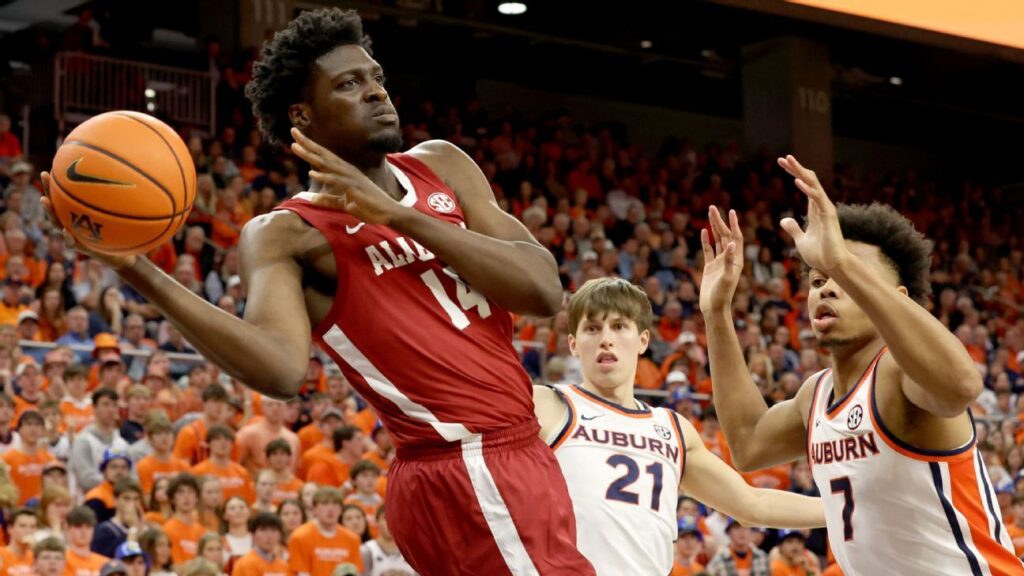
Charles Bediako’s college basketball journey has come to an end once more after a circuit judge in Alabama rejected his request for a preliminary injunction on Monday, effectively concluding the 7-foot center’s season with the Crimson Tide.
Tuscaloosa County Circuit Court Judge Daniel F. Pruet dismissed Bediako’s attempt to restore his eligibility after he departed Alabama for the NBA draft in 2023, subsequently signed a two-way NBA contract, and spent the last three seasons in the G League — actions that disqualified him from collegiate play, as per NCAA regulations.
Pruet determined that Bediako had no “reasonable expectation” for a return to college basketball, especially since no other player in similar situations had been granted eligibility.
NCAA President Charlie Baker expressed his satisfaction with the court’s decision, stating it “upheld the rules of our members.”
“Common sense prevailed today,” Baker remarked. “The court understood this for what it is: an effort by professionals to revert back to college, potentially undermining the opportunities for the next generation of athletes. College sports are meant for students, not for those who have already transitioned to professional careers and now wish to reverse that decision at the expense of aspiring teenagers’ dreams. While we’re pleased the court upheld the rules valued by our members, one victory does not resolve the larger issues posed by state laws. It is time for Congress to act and help us establish some actual stability.”
Bediako, who was averaging 10.0 points, 4.6 rebounds, and 1.4 blocks across five games for Alabama this season, was granted an unprecedented second chance to compete in college basketball last month when another judge awarded him a temporary restraining order.
This ruling enabled Bediako to rejoin Alabama mid-season — three years after he previously served as a defensive anchor for a squad known for having one of the top three defenses in the 2022-23 season, which was his second year with the team prior to entering the draft.
In Monday’s ruling, Judge Pruet stated that Bediako did not fulfill the requirements for a preliminary injunction to permit him to play for the remainder of the 2025-26 season because he “failed to establish that he would suffer irreparable harm,” did not show “he has no adequate remedy at law without the injunction,” and did not demonstrate “a reasonable chance of success on the merits of his claims” that the NCAA violated antitrust laws in his situation.
The judge also noted that the case was “not about whether the Plaintiff can be compensated for playing basketball, but for whom,” referencing the income he earned at the professional level, as Bediako indicated he would lose out on revenue-sharing opportunities if he wasn’t allowed back into college basketball.
The court also confirmed that Bediako is subject to NCAA regulations.
“To access the benefits promised for participation in NCAA basketball, the Plaintiff must qualify for NCAA participation,” the judge indicated. “Eligibility for NCAA competition is dictated by the Defendant’s enforcement of the eligibility criteria set forth by NCAA members.”
This ruling marks a significant triumph for the NCAA.
Following the eligibility granted to several European prospects with professional basketball backgrounds, other players linked to American pro teams began pursuing similar opportunities. A number of G League players and James Nnaji, selected in the 2023 NBA draft, were deemed eligible by the NCAA this season.
yet, the NCAA contested Bediako’s case, fearing that granting him renewed eligibility would set a precedent for other athletes with NBA experience to return to college basketball and evade NCAA regulations.
Alabama expressed disappointment with the ruling, urging consistency from NCAA officials.
“We are saddened by today’s court ruling which denied Charles Bediako’s injunction,” the university stated. “While we recognize the complexities surrounding the competitive and developmental implications of former professional athletes entering college, it is crucial to acknowledge the reality. The NCAA has approved the eligibility of over 100 current men’s basketball players with previous professional experience in the G League or overseas. Providing eligibility to some former professionals, but not others, is what creates the turmoil we’re experiencing and highlights the urgent need for consistent decision-making.”
Crimson Tide coach Nate Oats, during his “Hey Coach” weekly radio show on Monday, expressed his disappointment regarding the ruling and “disappointment in the system — both the NCAA and the courts, the entire situation.”
Oats criticized the “inconsistencies” regarding player eligibility.
“It appears that international players from Europe are receiving preferential treatment over American ones,” he noted. “Hopefully, at some point, someone will successfully challenge this ruling. It didn’t happen today. Someday, someone will win a case and reform the system. Changes in the NCAA don’t typically occur without such pressure.”
Bediako’s representative, Daniel Green, did not promptly respond to ESPN’s request for comments.
Alabama (16-7, 6-4 SEC) will face Ole Miss on Tuesday.
The Associated Press contributed to this report.