









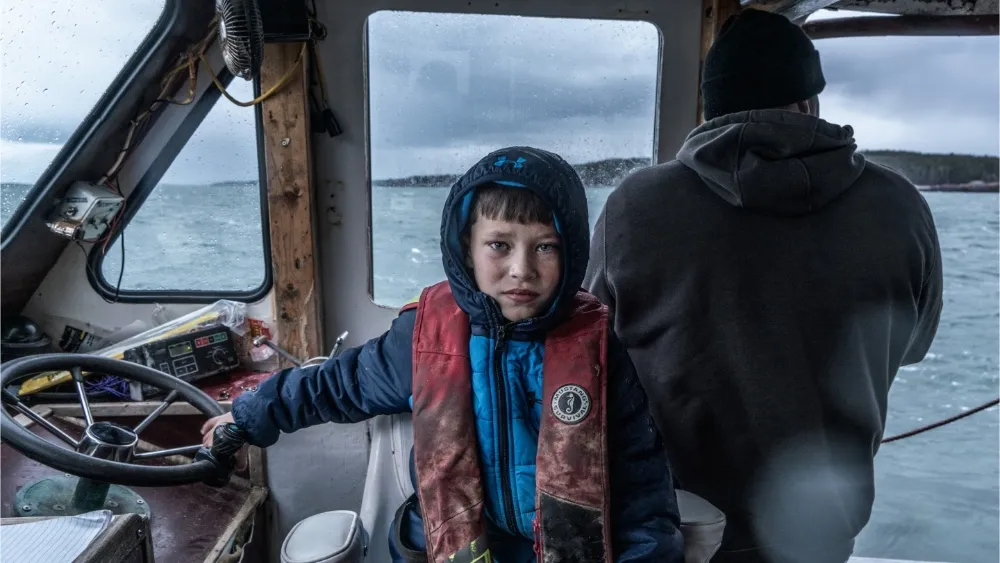
The coast is craggy and rugged in “Bucks Harbor,” and so are many of the faces — lined and hard-lived and visibly storied, in a way that plainly speaks to the original photographer in director Pete Muller, here making a fluent and expansive transition to documentary filmmaking. His camera loves the weary, callused men of the small Maine fishing community that lends the film its title, though his heart evidently does too: As it takes in the rhythms and routines of lives buffeted by time, tide and weather, “Bucks Harbor” never treats its subjects as rural ethnographic case studies, but as full-bodied characters with complicated tales of their own to tell.
The film’s empathetic interest in individual, often eccentric human lives gives it a warmth that overrides the underlying melancholy of the material, making for a pleasingly unsentimental crowdpleaser. Following its world premiere in Berlin’s Panorama program last month, “Bucks Harbor” was a runner-up in the section’s audience awards. A North American premiere in the True/False fest followed, sure to kick off a lengthy run of docfest appointments. Nonfiction-oriented distributors should take interest in a film that could play engagingly on streaming platforms, though theatrical exhibition would best serve its textured, wind-whipped sense of place.
“If Bangor, Maine is the asshole of the world, we’re 200 miles up it,” says stoic lobster trawler Mike of the remote waterfront he calls home, not far from the Canadian border. His tone isn’t bitter, and indeed, a mood of jaded contentment prevails in Bucks Harbor: It may be sleepy and dilapidated, but it has its own shabby comforts.
Fisherman and former drug addict Dave has lived his whole life there, equally stifled and saved by his surroundings. As a teen, he showed artistic talent that ultimately had nowhere to go: Today, he supplements his modest income with regular visits to a local food bank, and draws in his spare time to amuse himself. Mostly, he’s good-humored and glad to still be around, fixing what he can in his life with some support from his salty, independent-minded mother — delightfully good value whenever she’s on screen. Women need men “just for babies,” she insists; her son, equally happy to be alone, resists that purpose.
A drawlingly funny and generous storyteller, Dave is the most outwardly charismatic of the film’s four principal subjects, though the others flesh out a more surprising overview of local working-class masculinity than what initially meets the eye. Married, middle-aged Mark works in a tackle shop, and seems a taciturn, hard-shelled type, though he has, over time, found an unexpected outlet for his more expressive impulses.
The aforementioned Mike is a more typically rugged family man, raising two preternaturally toughened young sons who already ply the family trade — there’s something rather poignant about the stern-faced proficiency they show on their father’s boat. Finally, profusely bearded clamdigger Wayne reflects on his various failed marriages and brutal childhood abuse at the hands of his father with a shrugging lack of self-pity, though there’s silent sorrow in his tired, scarred demeanor.
Muller and editor Noel Paul don’t impose a narrative arc on these fragmented lives, instead casually drifting between them at a pace that suggests the loping rhythm of their days. (The film’s strictly observational approach extends to a complete absence of onscreen names or contextualizing title cards: We get to know these men in their own good time.) Occasionally the focus drops to the fishermen’s crustacean quarry in the deep, also guarded and unhurried but intensely vulnerable; the man-lobster parallel isn’t stretched to the point of contrivance, but the film takes a thoughtfully holistic view of all the region’s living inhabitants.
Likewise, “Bucks Harbor” captures the spread of male archetypes in this small community — some more patriarchally conservative, some more queerly progressive, all a little wounded — in sufficiently perceptive detail that any more direct social commentary is unnecessary. All these men are products of their raw, challenging environment, albeit no two in quite the same way. And as shot by Muller and his fellow DPs Nathan Golon and Mark Unger in seasonally shifting shades of storm and stone, the water a defining presence in proceedings whether churning, frozen or serene, Bucks Harbor comes across as a forceful, compellingly changeable place, the kind that makes its humble residents do its bidding.
Source: variety.com