








For young people, the trend removes the stigma of being unmarried and alone, and recasts it as something to aim for, not avoid.
Source: www.wired.com


For young people, the trend removes the stigma of being unmarried and alone, and recasts it as something to aim for, not avoid.
Source: www.wired.com

Chinese filmmakers are struggling with bureaucratic hurdles and different audience expectations in international co-productions, according to panelists at a “Belt and Road” discussion at SIFForum, the Shanghai International Film Festival’s industry dialogue sessions.
Yan Peng, deputy general manager of state-owned Huaxia Film Distribution suggested major regulatory and copyright issues impact Chinese producers seeking co-productions abroad.
“Differences exist across different regions regarding regulations on co-production project approval qualifications, lead-to-supporting actor ratios, investment proportions, and film censorship content,” said Yan. “From copyright to derivative IP rights, issues of inconsistency often exist. Also, distribution cycles and currency settlements across theatrical, streaming, and TV ends also differ which leads to cumbersome cross-border accounting.”
Yan also went on to suggest that differences in audience preferences, working customs and societal taboos often led to extended production cycles and fragmented release strategies.
Xie Meng, founder of arthouse distributor Rediance, emphasized that audiences preferences were moving from the global to the local.
“Films all tell stories about people, about nations, ethnicities, and cultures,” said Xie. “We’ve been saying that it seems audiences in the Chinese market don’t love watching foreign large-production blockbusters as much anymore. Everyone is focusing more on stories that are closer and more specific to people, whether domestic [local] or foreign.”
In this environment, how producers reach audiences is getting more fragmented, threatening to make traditional distribution obsolete.
“We’ve seen audience’s demand increase for films from more diverse countries and richer genres. Perhaps a more important breakthrough is regarding how traditional distribution can better satisfy audience demands,” said Yan. “The past method of indiscriminate, simplified distribution is seeing its role weaken.”
The importance, and relative lack of experience in new forms of distribution was echoed by Mohannad Al-Bakri, Managing Director of the Royal Film Commission – Jordan.
“In the Arab region to this day, distribution is not our strong suit. Especially if we look at the distribution model in China, this is a market we are trying to learn from and seeking to seize opportunities in,” said Al-Bakri.
“We’ve also seen extreme changes in distribution methods. For example, you have platforms like Netflix that cover all parts of the world. It is the same in the Arab world. Sometimes, in terms of content investment, it seems to be easier; making investments through these channels seems to be easier, and it can more easily obtain better returns on investment,” he added.
Source: variety.com
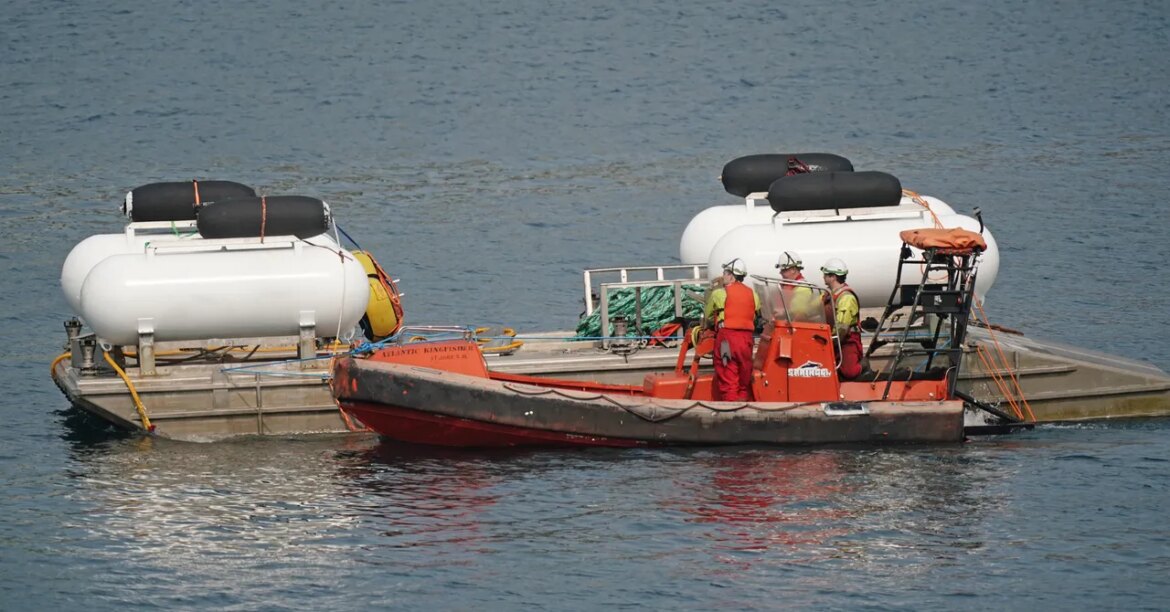
A report from Canada’s Transportation Safety Board has highlighted regulatory failures that allowed OceanGate’s unregistered, unflagged, and uncertified Titan submersible to operate out St. John’s, Newfoundland, for years before it imploded on a tourist trip to the wreck of the Titanic in 2023.
“When it came to the Titan, critical information existed across multiple federal government organizations, but no one was responsible for connecting the dots,” says TBS chair Yoan Marier in a statement. “Without a complete picture of the operation, the Titan continued to operate in Canada without regulatory oversight.”
OceanGate first interacted with the Canadian government while Titan was still undergoing final assembly in Everett, Washington. In May 2021, Fisheries and Oceans Canada laid out plans to pay the company $25,000 to support deep-sea ecosystem research during missions to the Titanic the following year. But Global Affairs Canada denied OceanGate a research permit after the company claimed, inaccurately, that Fisheries and Oceans would act as its sponsor.
The Titan’s maiden voyage to the Titanic the next month was unsuccessful after one of its titanium domes fell off, and the ship carrying the sub, the Horizon Arctic, returned to St. John’s. But before any of the disappointed passengers who had paid over $100,000 to see the wreck could disembark, the ship was directed to a secure lockdown area of the harbor. There, a team of armed officers from Canada’s Border Security Agency boarded the Horizon Arctic. They interrogated the passengers about Covid-19 precautions and their role in the dives.
“They were extremely intimidating,” passenger Gary Philbrick tells WIRED. “I couldn’t get off the ship fast enough.”
The agents also asked why OceanGate was operating without a research permit. David Concannon, a lawyer who had worked with OceanGate in the past, told them that the Titan would only be diving in international waters, and the agents left. “They had zero interest in the sub. Absolutely none,” he tells WIRED. “They were there to look at paperwork.”
That was correct, says Etienne Seguin-Bertrand, an investigator with the Transportation Safety Board: “As long as the sub had been imported properly and any applicable duties paid, it wasn’t part of their mandate to make sure that it was properly registered and safe.”
Another agency, Transport Canada, is responsible for overseeing compliance with regulations for all vessels, including submersibles. These include requirements that vessels are registered, flagged, or certified, particularly if they are carrying passengers. It can inspect vessels and, if necessary, carry out enforcement. But Transport Canada had decided that the Titan was actually part of the Horizon Arctic’s cargo and therefore not a vessel subject to inspection.
In July 2021, a researcher from Fisheries and Oceans Canada traveled on a subsequent OceanGate mission as an observer. They reported back that the carbon fiber Titan had not been approved or certified by any regulatory body and was not carrying insurance. Their concerns never made it to Transport Canada’s team that oversees marine safety, though the report doesn’t make clear where the disconnect was. Fisheries and Oceans never followed through with its plan to fund Titan missions.
As OceanGate continued to operate from St. John’s in 2021 and 2022, the Titan made successful dives to the Titanic and several sites within Canadian waters. The company eventually interacted with a total of 10 Canadian federal agencies, including Parks Canada, the Department of National Defense, and the Royal Canadian Mounted Police. But the company’s operations were never directly reported to the team responsible for marine safety. “In terms of the actual people that were responsible for marine oversight, their focus was on the Canadian support vessel,” says TSB investigator Jason Melvin.
Source: www.wired.com
According to Bloomberg, U.S. Commerce Secretary Howard Lutnick has, in a series of recent meetings, told senior ASML executives he’s concerned that one of the Dutch chipmaker’s extreme ultraviolet lithography machines — the EUV systems that are the only tools on Earth capable of printing the most advanced semiconductor patterns — may have ended up in China. That would be a major breach of export controls that have barred ASML from selling EUV to China since the first Trump administration.
It’s a serious claim. Senior administration officials told Bloomberg they have evidence that ASML shipped EUV-related components and transport equipment to China, though they’ve declined, repeatedly, to show it — to Bloomberg or, apparently, to ASML itself. The company says no such machine exists in China and has never existed there. The Commerce Department didn’t respond to Bloomberg’s questions about whether it has evidence of an actual EUV system on Chinese soil.
You might think this isn’t worth paying attention to if you’re outside the chip industry, but it is. ASML is a Dutch company most people have never heard of, but it is, by a wide margin, the most important company in the global AI buildout that isn’t named Nvidia or one of the hyperscalers. It makes the only machines on the planet capable of EUV lithography — the process of printing the microscopic circuit patterns that define the most advanced chips.
Every cutting-edge processor made by TSMC, the foundry behind Nvidia’s and Apple’s chips, depends on ASML tools that took the company roughly two decades and untold billions to develop. There is, at present, no second supplier. That monopoly has made ASML Europe’s most valuable public company, with a market capitalization that has been trading in the neighborhood of $700 billion as of this week, up sharply over the past year on the back of insatiable AI-driven chip demand.
That scale is exactly why the China question matters so much. If even one EUV machine made it into Chinese hands, it would represent one of the most consequential breaches of the export-control regime the U.S. has built over the past several years to keep advanced AI capability out of Beijing’s military and industrial base.
I sat down with ASML CEO Christophe Fouquet six weeks ago, well before this story broke, and asked him directly about the China question.
Fouquet told me ASML tracks every machine it has ever shipped — they’re either in active use with monitored customers or have been dismantled and returned to the company. He said the firm built an internal firewall years ago: employees who can access EUV technology, documentation, and training are walled off from those who can’t, and ASML’s China-based staff sit on the wrong side of that wall by design. He argued the only reason ASML could build an EUV machine at all was that 80% of it already existed from decades of prior knowledge, and that solving the one genuinely new problem — generating EUV light itself — took 20 years on its own. His broader point seemed to be that you can’t reverse-engineer a machine you’ve never had, and nobody in China has had one.
There’s also a simpler commercial logic that cuts against the idea that ASML would risk its export license to quietly arm a Chinese customer. ASML does sell older-generation deep ultraviolet tools to China — gear it first shipped a decade ago — but Fouquet framed that explicitly as a protective calculation, not a loophole. The idea, he suggested, is that it keeps enough of a generational gap that customers can still do business — but without manufacturing its own future competitor. ASML expects roughly 20% of its 2026 revenue to come from already-permitted sales to China. Risking the EUV ban entirely would put that revenue, and the company’s standing as the most valuable monopoly in European industry, on the line over a single illegal sale.
None of this proves the allegations are false. The government hasn’t yet made its evidence public, and it’s worth withholding judgment until it does.
The Commerce Department, under Lutnick’s leadership, agreed late last year to put up to $150 million of taxpayer money into xLight, a startup developing a next-generation light-source technology that’s been written about as a long-term challenge to the core of ASML’s EUV monopoly. xLight’s own CEO told me last year that the company sees itself as a future partner to ASML, not a rival, building hardware meant to plug into ASML’s machines rather than replace them. When I put that framing to Fouquet in May, he was polite about it but unconvinced; ASML, he made clear, doesn’t see itself as needing xLight’s technology to keep its lead.
Does that have anything to do with why Lutnick is suddenly pressing ASML on EUV? Nothing public connects the two. It could be entirely unrelated. But a federal official scrutinizing a monopoly while his own agency has money riding on a startup angling to improve that monopoly’s core technology is worth examining.
xLight isn’t the only outside bet on the future of lithography. Peter Thiel — who has his own long-running ties to Trump’s political orbit — has backed Substrate, a separate startup explicitly pursuing its own EUV-rival technology, with ambitions to compete with ASML more directly than xLight says it intends to.
As Bloomberg notes, a bipartisan bill moving through Congress would go much further than EUV — it calls for an effective ban on all of ASML’s deep ultraviolet (DUV) shipments to China, the less advanced lithography tools that account for roughly a fifth of the company’s expected 2026 revenue. The bill cleared a key committee in April, and the Trump administration hasn’t taken a formal position on it.
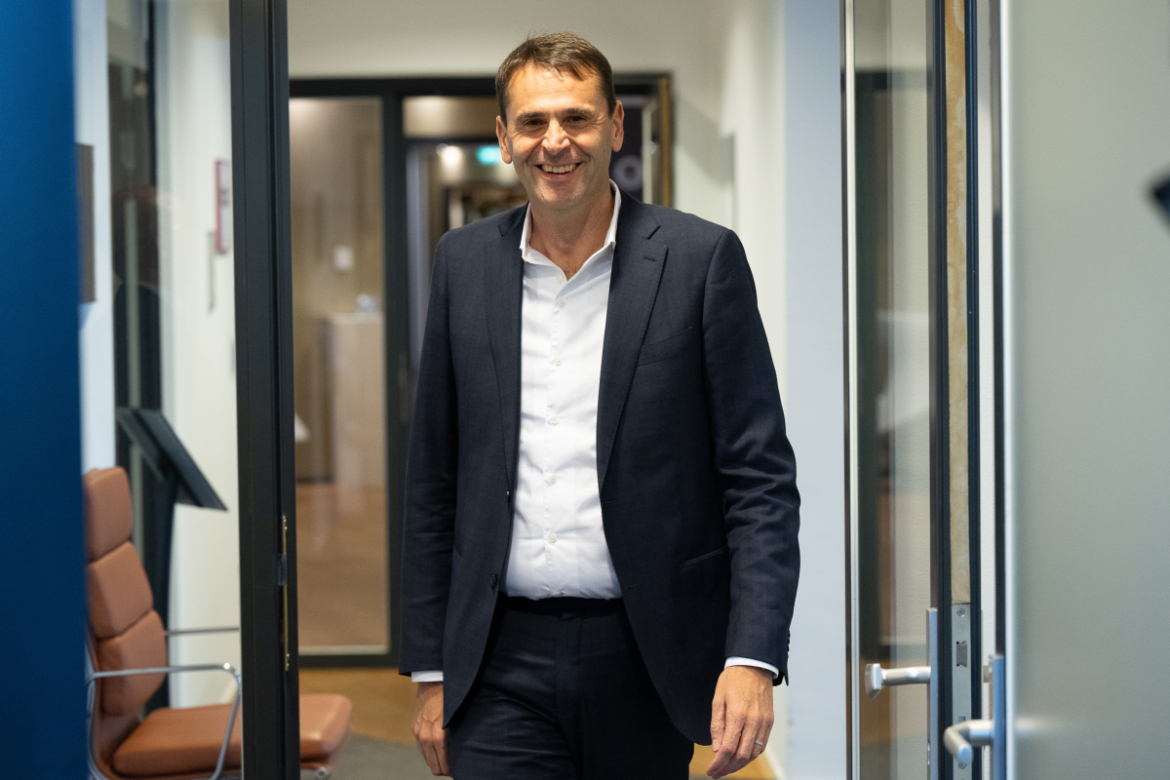
Pictured above: ASML CEO Christophe Fouquet
When you purchase through links in our articles, we may earn a small commission. This doesn’t affect our editorial independence.
Source: techcrunch.com

A clinic in London, run by a former maker of artisanal ice cream, is treating patients with stage 4 cancer using a method that involves sealing them, naked from the neck down, in a plastic bag while gassing them with the oxidizing industrial bleach chlorine dioxide—a treatment that even the person administering it admits is “dangerous.”
Alastair Jessel, who operates the Battersea Park Clinic in south London, spoke earlier this month on a podcast popular among those who believe that chlorine dioxide is a miracle cure that can be used to treat everything from cancer and HIV to Covid-19 and autism.
“Having people naked in a bag, which in a clinic situation is probably what a lot of doctors have to face, but as an entrepreneur sitting in front of a naked person in front of me is something I hadn’t sort of planned on doing in the last few years, but what it’s achieving has been really quite incredible,” Jessel told a podcast focusing on chlorine dioxide earlier this month.
The typical “protocol” sees users ingest several drops of chlorine dioxide solution daily. Jessel is administering a different, little-used “protocol” first posited by Andreas Kalcker, a German man who has been one of the main boosters of the bleach-like solution in recent decades. The treatment includes sealing people naked in a plastic bag from the neck down before exposing them directly to the undiluted gaseous form of chlorine dioxide.
Jessel said in the podcast that he had asked a private messaging group of other chlorine dioxide influencers if anyone had ever tried Kalcker’s so-called Protocol G, and no one responded.
“Protocol G, obviously, is probably the most dangerous protocol out of all of them,” Jessel said, adding: “Nobody’s ever done it. So I don’t know whether I’m the first person in the UK to do it, but I’m definitely a rarity.”
Writing about Protocol G’s uses on his website, Kalcker does not mention cancer treatment. “Properly applied, with the straightforward precaution of avoiding vapor inhalation, it is a well-tolerated procedure,” Kalcker tells WIRED, dismissing Jessel’s description of the treatment as dangerous. While he will not comment on the efficacy of this treatment for all cancers, he says that in relation to skin cancer, Protocol G would be “directly relevant.”
“Currently there is no scientific evidence that chlorine dioxide gas exposure is a safe or effective treatment for people with cancer,” says Caroline Geraghty, senior specialist information nurse at Cancer Research UK. “Taking unproven treatment or remedies for cancer instead of those that are medically approved could affect how well the treatment works and have dangerous side effects. It’s incredibly important that people speak with their cancer doctor, GP, or specialist nurse before trying any alternative remedies.”
Jessel did not respond to a detailed list of questions, simply writing, “I can only refer you to protocol G in Dr Andreas Kalcker’s book Forbidden Health. That is all I do.”
For decades, pseudoscience grifters have peddled chlorine dioxide solutions—sold under a variety of names such as Miracle Mineral Solution—as “cures” for a wide variety of illnesses and disorders. There is no credible evidence to back up any of these claims.
yet, over the last year, there has been a resurgence of interest in chlorine dioxide after US health secretary Robert F. Kennedy Jr. mentioned chlorine dioxide when questioned about President Donald Trump’s Operation Warp Speed during his Senate confirmation hearing in January 2025. Then, a year ago, the Food and Drug Administration removed a warning about the substance from its website. While the agency says the removal was part of a routine process of archiving old pages on its site, it has had the effect of emboldening the bleacher community.
Source: www.wired.com

Philippine filmmaker Mikhail Red has set his next feature: “Remote,” a paranoia thriller set in contemporary Manila, with Anne Curtis attached to star.
The project is produced by Evolve Studios and Viva Films, with production scheduled to begin later this year.
Curtis plays Violet Olvido, a journalist who begins investigating a string of killings linked to a shadowy international outsourcing company that recruits remote workers across the Philippines. As she goes deeper undercover within the organization, her grip on reality begins to erode.
Red said the film draws on his personal proximity to the remote-work world that emerged in the wake of the pandemic. “There’s been a rise of online digital nomads post pandemic, displaced in their own timezones working graveyard shifts,” he said. “Most are VAs or virtual assistants for western companies, who do odd tasks for high pay due to the exchange rate but at the same time may be vulnerable to exploitation because of legal grey zones. The film also poses the question of who or what really controls us? It is the colonization of consciousness itself and the weaponization of fear.”
For Red, “Remote” marks a return to genre territory he explored in his early work. “My earliest films explored crime, violence, and investigation through thrillers and police procedurals,” he said. “‘Remote’ revisits that territory, but this time through the lens of psychological horror and paranoia. It is also perhaps the closest I have come to making a serial killer film, a genre I have always wanted to explore.”
The film reunites Red with Evolve Studios, the genre-focused production banner he leads as chief creative officer, and with Viva Films, the veteran Philippine outfit that co-produced “Deleter” (2022), the highest-grossing Filipino horror film of all time. His most recent feature, “Lilim,” premiered at the International Film Festival Rotterdam earlier this year.
Curtis, one of the most prominent stars in Philippine entertainment, most recently appeared in “The Loved One,” which crossed PHP300 million ($5 million) at the Philippine box office earlier this year. “Remote” will mark her first collaboration with Red.
Source: variety.com