








-

Ian Darke
Multiple Authors
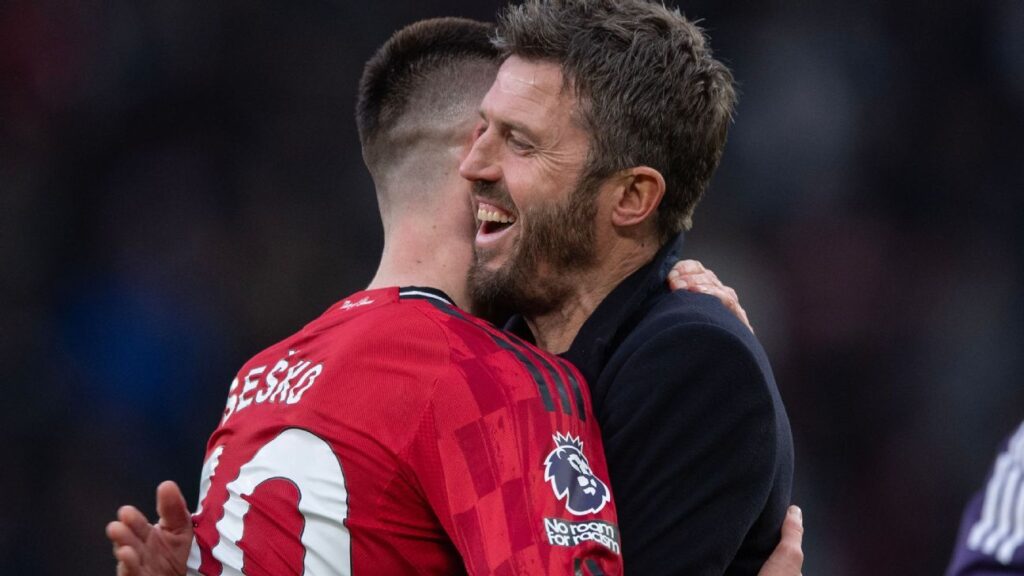
It’s premature to declare a “red revival” or signal the end of Manchester United’s struggles, yet there’s an intriguing transformation occurring under interim manager Michael Carrick. With three victories in as many games—including a Manchester derby and a thrilling 3-2 duel at Arsenal—the atmosphere at the previously somber Old Trafford has shifted noticeably. though Sunday’s win against Fulham wasn’t as emphatic, it culminated in a dramatic fashion reminiscent of the trophy-laden Sir Alex Ferguson era.
Fans of United are tentatively starting to dream again—a triumph over Tottenham on Saturday would inch them nearer to a long-desired five-game winning streak—but it seems many are not yet ready to celebrate. The pressing question remains: Is the improvement in performance simply a case of a new manager bounce, or is it the beginning of something more substantial and enduring? One thing is certain: Carrick, 44, whose elegant midfield distribution was crucial to five Premier League titles under Ferguson, appears to have successfully energized a squad that often looked adrift during Ruben Amorim’s tenure.
– Dawson: Get ready for a showdown: City vs. Arsenal in the Carabao Cup final
– Marcotti: The puzzling logic behind Liverpool’s January transfer window
– Ogden: Stick with Carrick? Hire another coach? Man Utd faces a pivotal decision
Amorim, an advocate of the 3-4-2-1 formation even when it was ill-fitting for the squad, left the club with the lowest goals-per-game ratio and fewest clean sheets among any manager in United’s Premier League history.
Carrick could not be more contrasting. His presence seems to have been embraced by players who respect his legacy as a United player and acknowledge the weight of expectations that wearing that jersey can carry at Old Trafford. While Amorim publicly chastised his team, labeling them “possibly the worst squad in United’s history,” Carrick maintains a composed demeanor. His expression behind the stubble is mostly unchanged as he stands in his tailored overcoat on the sideline. His press conferences are marked by calmness and straightforward responses, in stark contrast to Amorim’s knack for creating sensational headlines that turned United into a soap opera.
Players observing those press conferences are likely impressed by Carrick’s humble and professional approach. Beyond that, he has implemented some significant tactical adjustments.
Among his key changes is a shift away from Amorim’s unsuccessful system to a back four with two defensive midfielders and a dynamic front four. This adjustment has critically enabled team captain and United’s most potent player, Bruno Fernandes, to position himself closer to the opponent’s goal where he can make a greater impact. Just ask Fulham’s Calvin Bassey, who was completely outfoxed before Fernandes set up the match-winning goal for Benjamin Sesko last weekend.
The move away from wingbacks also benefits the talented Amad Diallo, who had been burdened with too much defensive responsibility under Amorim. Now, Amad can flourish as a traditional winger, causing chaos at the opposite end of the pitch.
Carrick has reintroduced Kobbie Mainoo, who had been marginalized during Amorim’s command, back into the squad. Previously, it appeared the young English talent would be sold, but he is now back contributing significantly to the midfield dynamic.
The interim manager has also reinstated Harry Maguire to his position in the back line, shifting Luke Shaw to his natural left back role. Having Lisandro Martínez back in action alongside Maguire has proven beneficial as well.
United player Bryan Mbeumo, who takes pride in wearing the jersey, seems content to fill the “false No. 9” role in Carrick’s revamped lineup, while Matheus Cunha brings an added element of excitement, evidenced by his two outstanding goals.
United’s offense is firing on all cylinders. Under Carrick, they have netted eight goals in just three matches, trailing only the top two in the league’s scoring ranks.
mainly, Carrick has simply placed players in positions that suit their strengths and allowed them to shine. Common sense is prevailing at last.
This is not to suggest Manchester United are suddenly title contenders or that they can leap from fourth place into the title race—it’s clear this team isn’t ready for that leap. Even finishing in the top four and securing a spot in next season’s UEFA Champions League remains a daunting challenge, given the fierce competition from Liverpool, Chelsea, and Aston Villa.
United must seek a defensive midfielder with aggression, stamina, and a sprinkle of creativity. Players like Crystal Palace’s Adam Wharton or Nottingham Forest’s Elliot Anderson could be ideal fits.
overall: United and Carrick have yet to prove themselves. but, they have laid a foundation to strive for a return to the Champions League, which should be the goal this season.
If Carrick can accomplish that mission, his candidacy for the role on a permanent basis will be considerably strengthened. After an extensive apprenticeship and a commendable stint at Middlesbrough, now he’s working with superior talent. He is no novice.
If United regress to their previous mediocrity between now and May, they are aware that several high-profile managers will be available this summer, including the current England coach Thomas Tuchel and perhaps Cesc Fabregas, who is making waves at Como in Italy.
Will Carrick manage to steer his former club away from the distressing patterns of the past? United supporters will hope so, but do they truly believe?