









Last October feels like it was five years ago at this point.
When we last conducted these rankings, just two weeks before Halloween, Crystal Palace’s Oliver Glasner had recently been named manager of the month for September. Ruben Amorim was in the midst of leading Manchester United through a stretch that would earn him the October manager of the month honors. He would then be succeeded by Enzo Maresca, whose Chelsea squad secured three wins and a draw in November.
Now, it’s early February. Both Maresca and Amorim have been dismissed by their clubs, and Glasner has publicly announced his intent to leave. And speaking of the current reigning manager of the month? It’s Unai Emery, who oversees the team we ranked 13th the last time around.
A lot has transpired in the last three-and-a-half months, so we’re back to sort it all out in the only way we know how: by ranking every Premier League team from 1 to 20.
Our updated rankings — which combine individual scores from Bill and Ryan — are noted alongside the previous rankings from October, as well as each team’s current points total and goal differential in the Premier League table.
Here’s the daunting reality regarding Arsenal: they’re the best team in the world, and there’s a real possibility they could be even better.
If we exclude penalties and set pieces, here’s how the teams in the Premier League compare in terms of their expected-goal differential:
This is not too different from what analysts and prediction models anticipated before the season: Arsenal and Liverpool tussling for the top spot, with Manchester City trailing closely behind.
But what if we focus solely on free kicks, corners, and throw-ins? Well …
When we put it all together, Arsenal has been the standout team in the Premier League through the first 24 matches:
If you’re curious about why most Premier League teams have become fixated on the moments when the ball goes out of play or the referee whistles, here’s your answer: it’s crucial enough to elevate you from being merely one of the best teams in the league to unequivocally the top team.
Or: it’s sufficient to forge a six-point lead over second place, even though the three forwards on your team have collectively netted just six non-penalty goals in the league this season. Kai Havertz and Gabriel Jesus have made a combined two league starts this season, with Jesus contributing two non-penalty goals.
This season’s plan never relied on significant contributions from Jesus, but the same cannot be said for Havertz, who is still seeking his first league goal. Recently returned from a long injury layoff, the team consistently performs better when he’s on the pitch — regardless of whether he scores. He’s a winning player who contributes in various ways.
Havertz was anticipated to assume a more peripheral role this season following the club’s hefty purchase of Viktor Gyökeres from Sporting Lisbon over the summer. Gyökeres has notched four non-penalty goals but has yet to provide an assist across 18 starts. even with logging ample playing time, he ranks 34th in the league for non-penalty expected goals and assists.
Evaluating the numbers on a per-90-minute basis, Gyökeres’ underlying attacking performance resembles that of Mikel Merino, last season’s emergency striker who was never meant to play that role again after the club secured Gyökeres. Yet, Gyökeres has participated in six games so far against Tottenham, the Manchester clubs, Chelsea, and Liverpool, attempting just one shot in those encounters.
While Arsenal’s slow tempo and the current tactical landscape of the Premier League have both made it challenging for their strikers to produce, having just six non-penalty goals from their center forwards is essentially the worst-case scenario for a club with Arsenal’s ambitions. Nevertheless, their defense is exceptional, their other attackers are incredibly skilled, their midfield is dependable, and their efficiency from set-pieces is remarkable enough that it hasn’t made a significant difference.
That’s why it’s easier to envision Arsenal improving than regressing.
If Havertz and Jesus become more productive and consistent, they will both represent substantial upgrades over Gyökeres. though it’s less likely for a player already past the halfway point of their peak, Gyökeres could still improve from here. (Several other notable signings from last summer, particularly Liverpool’s Florian Wirtz and Tottenham’s Xavi Simons, have recently stepped up their performances.) If none of this unfolds, Arsenal can just acquire another striker over the summer, which would immediately boost the team’s prospects.
The only reason there remains any semblance of a title race is that Arsenal aren’t receiving consistent output from the player positioned at the center of their front three. If that changes, someone might wait a long time before catching them at the summit. — Ryan O’Hanlon
In the past couple of years, as we’ve conducted these reranking articles, we’ve seldom had the chance to say something positive about Manchester United.
• “Everton and Manchester United: a tale of two underachievers.”
• “Manchester United: the paradigm of mediocrity.”
• “Man United haven’t figured anything out yet.”
• And my personal favorite: “Manchester United: Still stinking up a storm.”
This isn’t personal — it just reflects the reality when a club that once dominated the Premier League finds itself dropping to eighth in the table one year and then falling to 15th the next.
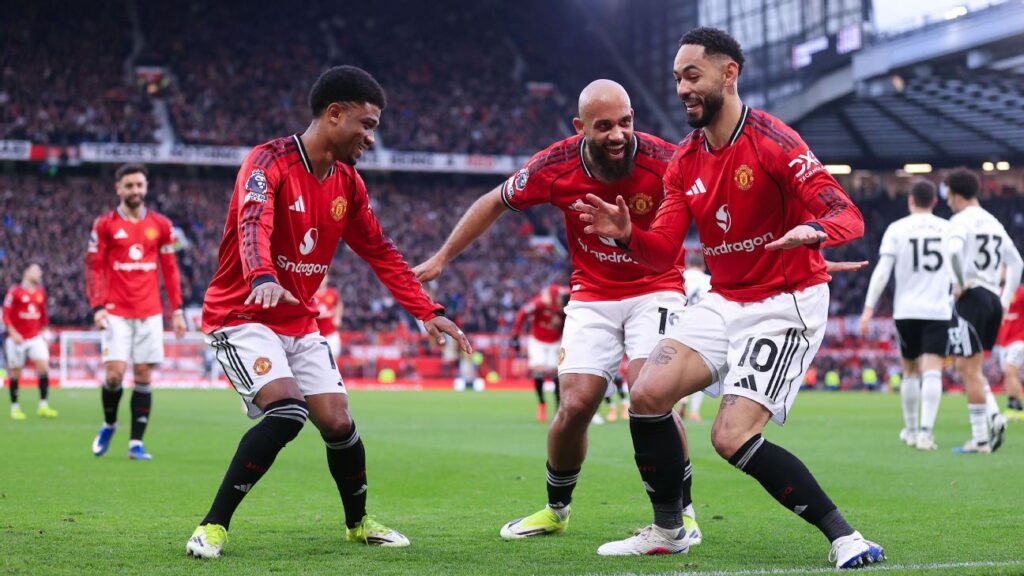
yet, United improved from 11th to eighth in our October rankings — and after ultimately parting ways with Ruben Amorim in early January — they’ve made a notable comeback in the months that followed. They managed to defeat Manchester City and Arsenal consecutively under interim coach Michael Carrick. plus, extending further back, they’ve only suffered two league losses since September, with their expected goals differential for the season ranking third.
This is a verifiably strong squad, holding a 49.1% chance of finishing in the top five (and likely securing a Champions League spot) according to the Opta supercomputer, and a 59.3% chance per xStandings.
Carrick’s sample size is too small for a rigorous statistical evaluation, and their recent three-match win streak has been characterized by sheer directness — they’ve netted eight goals while averaging just 19 touches per match in the opponent’s box (in contrast, opponents average 29.7 touches). This streak has also been marked by a bit of fortune, with Bryan Mbeumo, Matheus Cunha, and Patrick Dorgu scoring six goals from shots worth 2.2 xG.
But the results are not purely fortunate. Casemiro has been quite effective at the core of Carrick’s 4-2-3-1 formation, and we knew from his time at Brentford that Mbeumo excels in transition.
Whether through Amorim’s three-at-the-back strategy or Carrick’s adjustments, United has proven to be the most efficient quick-strike team in the Premier League this season. They currently stand fifth in ball recoveries, but lead both in shots (15) and goals scored from ball recoveries (five); they rank fourth in high turnovers created, yet are first in goals scored from them (16).
They have taken the most first-time shots in the league (207) — indicating they’re adept at identifying openings and immediately capitalizing on them. though their defense remains less disruptive and physical, they’ve mitigated their previous habit of allowing numerous shot attempts: currently ranking second in shots per possession and fourth in shots allowed.
1:33
Ogden: Carrick’s success is creating a problem for Man United’s hierarchy
Mark Ogden believes Manchester United will have to make a decision about Michael Carrick’s future soon.
Many in our profession have hastily linked this enjoyable three-match streak to headlines asking, “Are United title contenders?!” and … no. They aren’t. Trailing Arsenal by 12 points with 14 games left, their title odds sit well below 1%.
yet, fans should view this as a positive. The daily existence of a Manchester United supporter appears to be endlessly draining, filled with constant overreactions and a perpetual cycle of resetting expectations.
in fact, while they have a Champions League spot to compete for — and the headlines about whether Carrick should be made the permanent manager won’t vanish if their form continues * — they’re currently playing enjoyable, fast, entertaining, and relatively sustainable football. For the moment, that should suffice.
(*In my view: Certainly, appoint him as the permanent manager. It’s perfectly reasonable. He’s intelligent, former holding midfielders often make great coaches, he had a decent run at Middlesbrough, and folks who are typically mistaken consider it a poor idea; plus, the role of the manager isn’t as significant as it once was, right?) — Bill Connelly
When we last reevaluated the rankings, Aston Villa and Brentford occupied the 13th and 16th spots in the Premier League table, and our list reflected similar standings. Villa was struggling to create decent scoring chances (ranked 16th in goals and 19th in xG created), while Brentford had difficulty preventing opponents from scoring (16th in goals allowed and 14th in xG allowed).
yet, things have shifted dramatically since then:
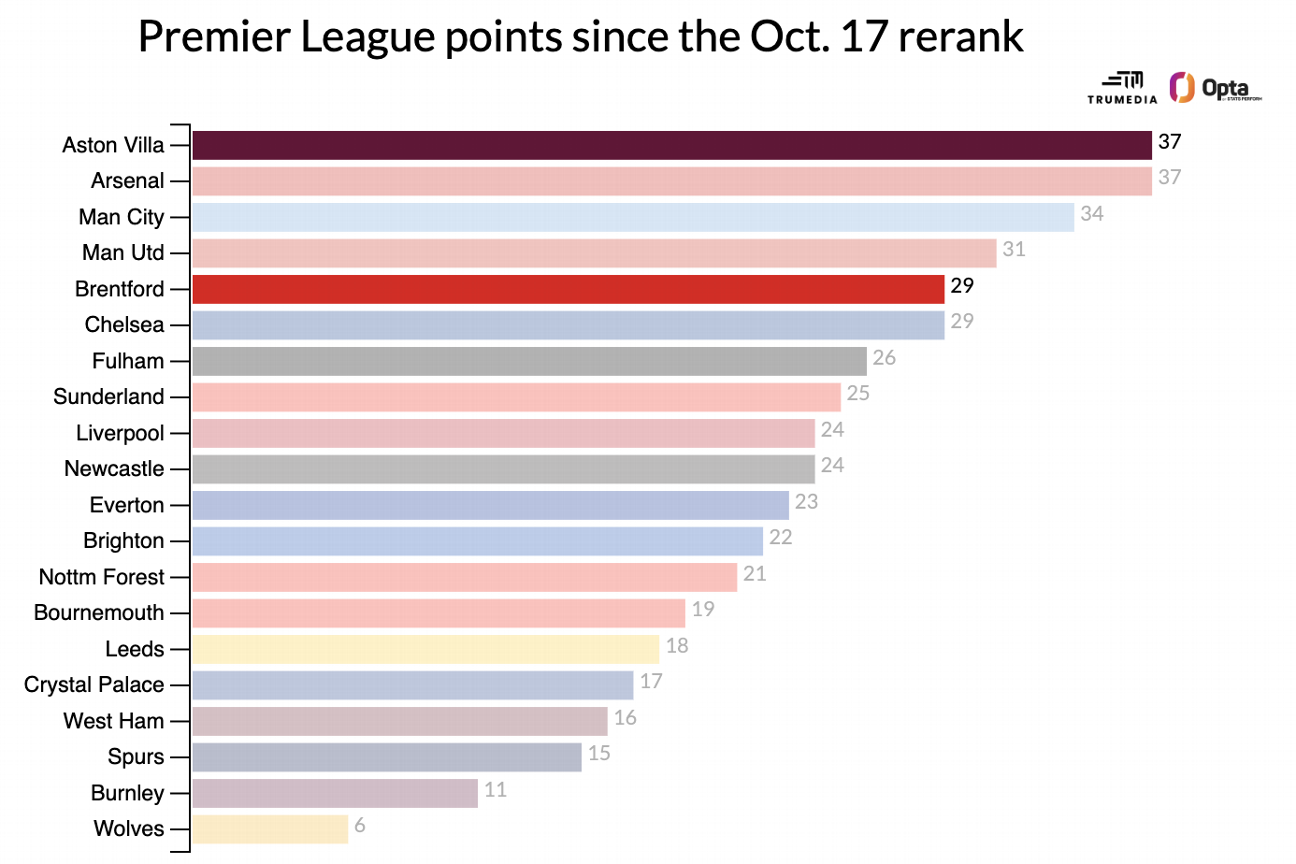
Villa has matched Arsenal with 37 points across the last 17 matchdays, while Brentford has only been surpassed by Villa, Arsenal, and the Manchester clubs. Have they really been among the five best teams in this window? Probably not. Villa’s plus-10 goal differential over these 17 matches has stemmed from a +0.6 xG differential, and they’ve managed to win six times (with three draws) in games with a negative xG differential. That’s difficult to sustain.
Brentford has developed a high-variance style: during this 17-match stretch, they’ve won seven matches by at least two goals, yet lost five matches by at least two goals. A high-variance approach can be advantageous for a less-resourceful team, yet it doesn’t associate with consistency. Brentford has defeated Liverpool, Villa, and Newcastle in this timeframe, while also falling to Nottingham Forest and obtaining just one point from two encounters with Spurs (who, as illustrated above, haven’t amassed many points during this period).
Villa has done an admirable job accumulating points lately, even with a touch of luck involved. The Premier League is likely to secure a fifth Champions League spot this season through the European coefficient table — and Villa, at 46 points, is closer to first-place Arsenal (53) than sixth-place Liverpool (39).
yet, Villa currently faces a couple of pressing concerns. Firstly, they might soon face retribution from the xG gods:
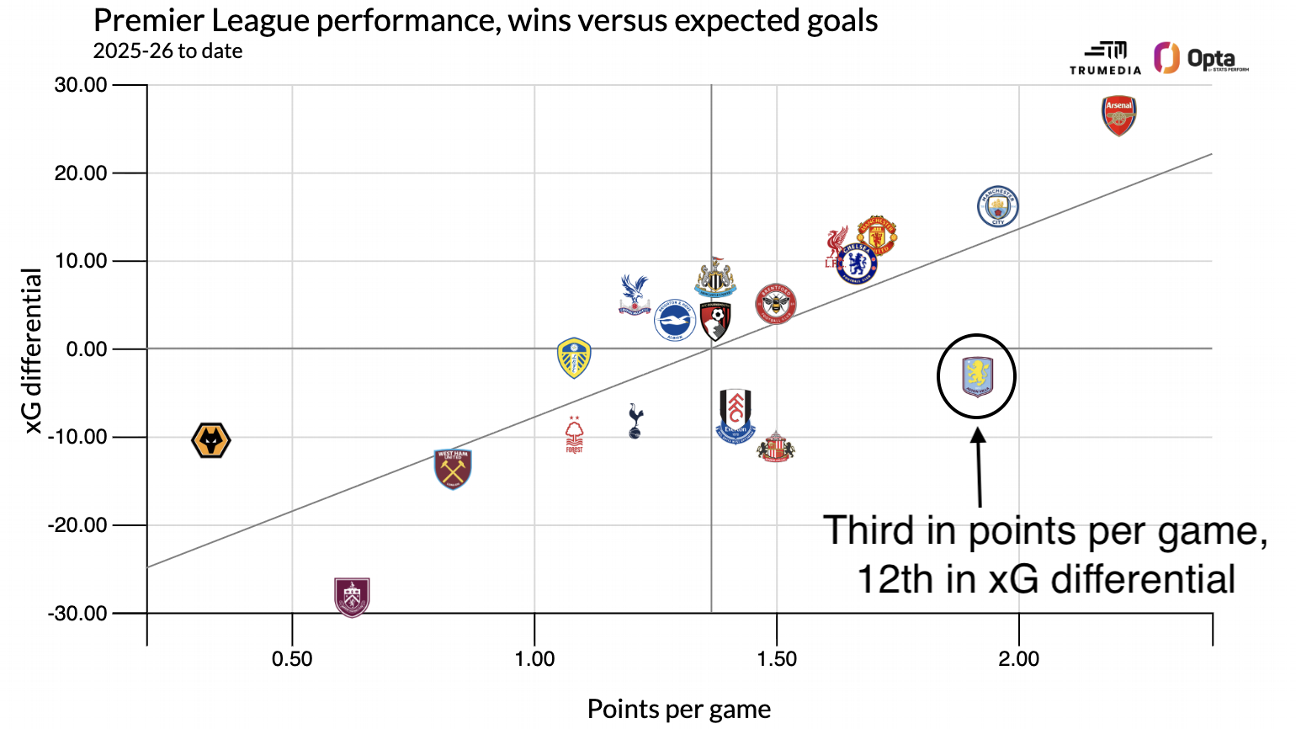
Even following an unexpected defeat on Sunday — losing 1-0 to Brentford despite a +2.0 xG differential — they exhibit the most significant gap in the league between their xGD and their league position. They thrived on a remarkable finishing streak from Morgan Rogers during their six-match winning run from Nov. 23 to Dec. 21, where he scored six goals from only 2.1 xG. yet, Sunday’s outcome might signal the beginning of a statistical reckoning.
Even more concerning are the numerous midfield injuries they are currently grappling with. Boubacar Kamara is out for the season (knee), while Youri Tielemans (ankle) and John McGinn (knee) are sidelined for a few more weeks. plus, Ross Barkley (knee) is unavailable, and Amadou Onana’s minutes are being monitored due to muscle fatigue.
While Villa did secure three players during the January transfer window, only one — Juventus loanee Douglas Luiz, who has been with Villa through the end of the 2023-24 season — is a midfielder by trade. Villa’s next three league encounters are against the teams ranked ninth through 11th above. Depending on their makeshift midfield’s performance, all three matches could be either winnable or losable.
Villa made some short-term transactions in January to theoretically bolster their odds of a top-five finish, while Brentford, conversely, are not a team focused on the immediate future.
Brentford’s solitary January acquisition was 18-year-old forward Kaye Furo, who had logged only 89 league minutes for Club Brugge this season — a total opposite of a win-now move. They will continue with their current roster, which has been fairly productive lately. They’ve tallied 14 goals in their last eight league games, even with Kevin Schade going through a minor finishing slump — since his hat trick against Bournemouth on Dec. 27, he hasn’t scored despite generating shots worth 1.8 xG.
In these past eight matches, Brentford has taken 26 shots with a value of at least 0.2 xG (the highest in the league), allowing only 12 shots against (the sixth-fewest). This isn’t a team sculpted to engender enormous shot volumes, but if you’re consistently taking all the good shots, you’re bound to generate chances. And strangely, despite hiring prolific set-piece coach Keith Andrews as their manager — and competing within a league that’s currently dominated by set pieces — they’ve predominantly created their scoring opportunities in open play.
Opta’s supercomputer now offers Brentford a 42% chance of finishing in the top seven, potentially securing a historic spot in a European competition. yet, the next three matches will significantly influence those chances, in either direction: they’ll visit Newcastle on Saturday, followed by hosting Arsenal and Brighton. — Connelly
Let’s rewind to mid-October when we last evaluated these rankings. At that time, there were three Premier League teams boasting a non-penalty xG differential of plus-4 or better: Arsenal, Manchester City, and Crystal Palace.
okay, Palace had lost Eberechi Eze to Arsenal, but it seemed like it had little impact. This squad was one of the Premier League’s top sides in the second half of last season, and their first seven games this season did nothing to suggest that was no longer the case. They defeated Aston Villa, 3-0, and then generated nearly 3.0 xG in a thrilling 2-1 victory over Liverpool. With five Premier League teams potentially qualifying for the Champions League, Palace appeared to be the leading outsider capable of making it.
Fast forward to early December, and they were indeed making waves. A 2-1 victory against Fulham propelled them into fourth place, and their position was not due to luck. By the season’s fifteenth match, only Arsenal, Manchester City, and Liverpool had registered better xG differentials.
So, guess how many games they’ve won since then? That would be a resounding zero.
In their last nine matches, they’ve drawn three and lost six. As illustrated through various charts in Arsenal’s section, Palace’s overall performance remains fairly decent. yet, here’s where the league standings reflect non-penalty xG differentials and goal differentials based on the latest 10-game stretch:
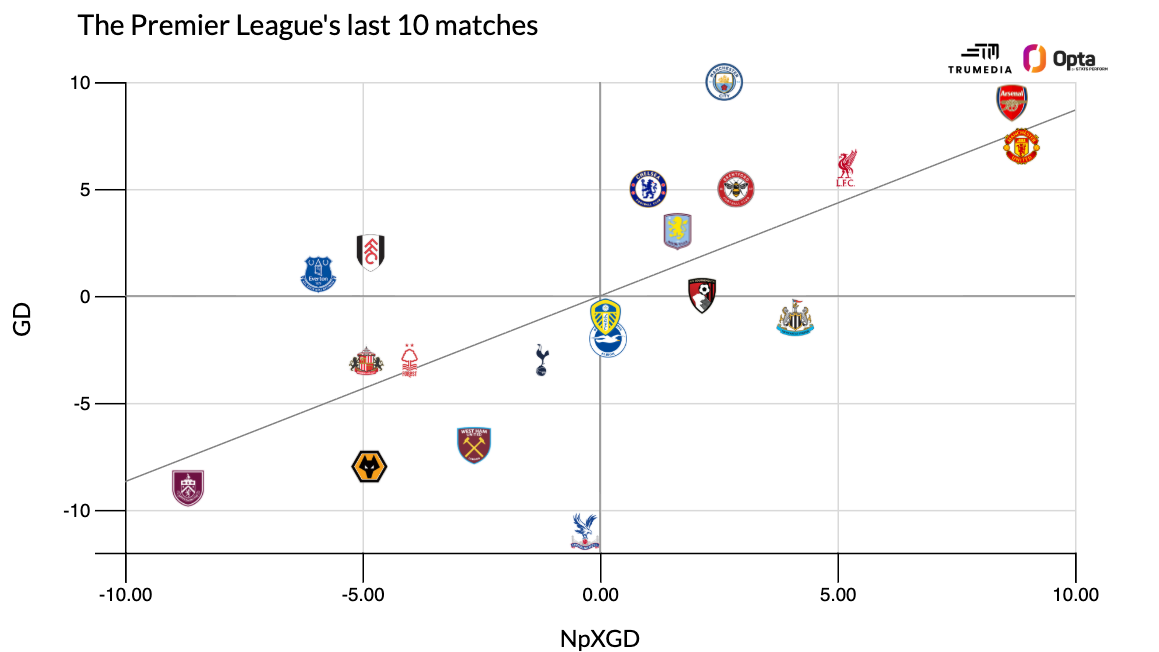
Clearly, you cannot transition from a top-four position backed by favorable metrics to a nine-match winless streak without two significant factors at play: (1) a decline in performance levels and (2) a significant amount of unfavorable outcomes. Recently, Palace has performed like an average league team, yet their goal differential during this stretch is the worst in the league.
I would typically say: hold tight, positive regression is around the corner! yet, it seems this disastrous streak has nearly shattered the club. Head coach Glasner recently had a public meltdown and declared his departure after the season. After refusing to let captain Marc Guéhi leave during the summer, they now appear content to part ways with him just months before his contract’s expiration at a much lower transfer fee. They were also close to allowing striker Jean-Philippe Mateta to exit but were ultimately thwarted when he failed his medical exam with AC Milan.
and, the team’s decline can be attributed to a shortage of players capable of handling the midweek European fixtures that came with their Conference League qualification. Throughout those first seven games, every member of their back five played every minute. Since then, Guehi has departed for Manchester City, and Chris Richards along with Daniel Muñoz have both faced significant injury time. The entire team seems to be struggling with fatigue.
Now, Palace has brought in a couple of new faces during the January window: Brennan Johnson from Spurs and Jørgen Strand Larsen from Wolves, as well as a loan for Aston Villa’s Evann Guessand. Johnson is a solid acquisition — a productive player coming from a Champions League team — while Strand Larsen is large, strong, has netted one goal this season, and plays the same role as Mateta. importantly, Guehi has not been replaced.
While their performances haven’t been categorically poor, the overall atmosphere is negative, results have faltered, and they’ve lost their best player.
Healthier clubs manage to navigate through these rough patches without succumbing to panic or deviating from their strategic plans. If Palace aspired to be a healthy club, they ought to have pondered selling a 43% stake in the team to someone other than the owner of the New York Jets. — O’Hanlon