








-

Tristan H. Cockcroft
Multiple Authors
If you’ve engaged in the thrilling game of fantasy baseball for any duration, you’re likely feeling composed, informed, and confident about your chances of winning your league’s championship. This healthy self-assurance is a crucial element in your fantasy baseball toolkit.
but, despite your confidence, you may still not have attained Jedi-like mastery.
There are more nuances in this game that you must grasp to become a serious championship contender. After all, the ultimate aim in fantasy baseball is to claim championships, right?
Here are nine strategies to help you become a more competitive player. While seasoned fantasy managers may be familiar with some or all of these, it’s never a bad idea to refresh your knowledge.
1. Focus on skill-indicator metrics, not just traditional stats
Rotisserie baseball gained popularity during the height of the bubble-gum card era and at a time when players were often introduced on TV with basic metrics like “AVG-HR-RBI” for hitters and “W-L-ERA” for pitchers.
Back in the day, Pete Vukovich could clinch a Cy Young Award based solely on his 18 wins and ace status for the eventual American League champ Milwaukee Brewers, despite having almost five fewer WAR (Wins Above Replacement) than Dave Stieb.
Regardless of your stance on what’s relevant for postseason awards or which stats belong in fantasy realms, future analysis—the foundation of your team—relies more on deep, advanced metrics than on basic stats. While a player’s batting average, wins, and ERA tell you how they performed, metrics like expected batting average, Barrel rate, and FIP (Fielding Independent Pitching) allow you to assess who they are.
Here are some examples illustrating the advantages of digging deeper into a player’s metrics alongside their raw stats:
-
Gavin Williams: He emerged as a top-25 starting pitcher in fantasy points during a standout 2025 but had the largest gap between his ERA and Statcast expected ERA (4.30 xERA, minus-1.24 differential) and between his ERA and FIP (4.39 FIP, minus-1.33). even if Williams has potential, he may regress without improving his raw performance.
-
Dylan Cease: Last season, no ERA-qualified pitcher had a wider gap between their ERA and expected ERA (4.55 vs. 3.46, a 1.09 differential), nor did anyone have a gap between ERA and FIP that matched his (4.55-3.56, 1.00). The Toronto Blue Jays noticed this before signing him for $210 million over seven years, expecting improvement in 2026.
-
Brandon Pfaadt: He secured 13 wins with a winning record despite a 5.25 ERA, a feat unmatched by ERA-qualified pitchers in 2024 or 2025. Pfaadt’s success may be hard to replicate, as he benefited from significant run support, and PECOTA forecasts his Arizona Diamondbacks will score 0.4 fewer runs per game in 2026.
-
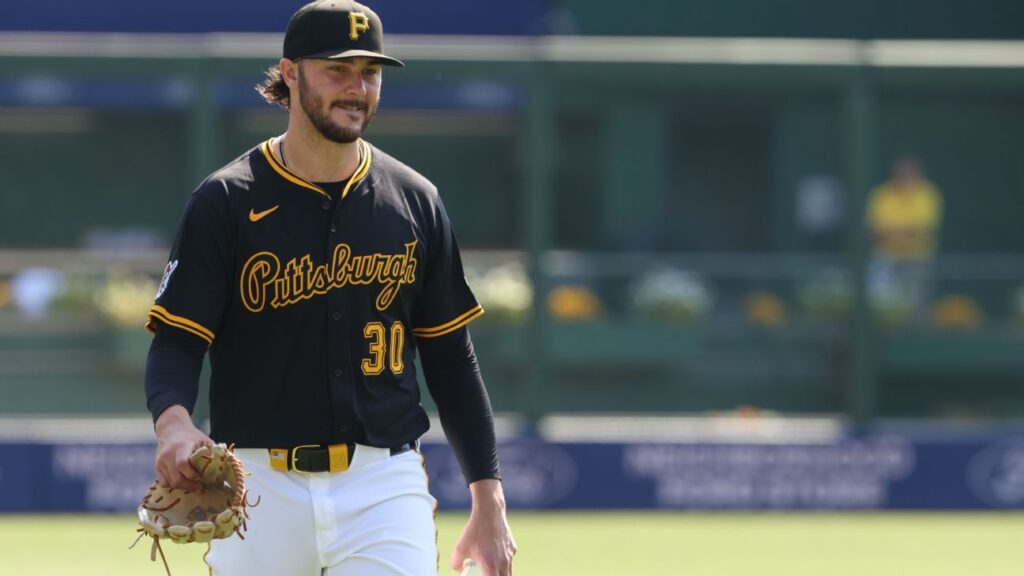
Paul Skenes: He boasted a 1.97 ERA, 0.95 WHIP, and 216 strikeouts but only won 10 games last season, a historical low for a pitcher with those numbers. Skenes had the third-fewest average runs of support among qualifiers, but PECOTA expects improvement for his Pittsburgh Pirates in 2026.
-
James Wood: He led the league with 21.2% of his fly balls clearing fences, the highest rate for eligible hitters since Christian Yelich’s 21.6% in 2018. After hitting nearly half his batted balls on the ground, he must make adjustments to reach fantasy stardom, particularly following a disappointing final stretch in 2025.
-
Salvador Perez: His .236 batting average was the lowest since 2018. but, Statcast estimated he could have hit .269 based on his contact quality, indicating potential for regression in 2026.
2. Trade wisely: Buy low, sell high
Similar to the stock market, the perceived value of players on the fantasy trade market fluctuates based on numerous factors, such as recent performance, health, role, and supporting cast; however, this perception does not always reflect a player’s actual value.
Identifying undervalued or overvalued players is pivotal for your team’s success. It’s not solely about making the right trade but rather executing the right trade at the opportune moment.
“Buying low” involves acquiring a player at a low point in their value trajectory, whereas “selling high” means trading a player at their peak, when demand is at its highest. It’s crucial to understand that both strategies do not need to be performed simultaneously, and trying to do so is a common mistake among fantasy managers.
The strategy of buying low and selling high is most effective around the 25% mark of the season, roughly in the first two weeks of May, when seasonal stats represent a small sample size and managers are often dissatisfied with their teams’ slow starts. but, this strategy can be implemented throughout the year, particularly if you’re diligent in reviewing recent player performance.
To execute this strategy, look for players who are significantly exceeding or underperforming expectations, and consider the underlying metrics discussed in tip No. 1. Be prepared to take risks, as buying low necessitates belief in the player’s potential for improvement.
-
Cristopher Sanchez: At the season’s onset, Sanchez would have represented an excellent buy-low candidate. After a standout spring, a forearm scare limited his early performance. Managers recognizing his recovery would have benefited from trading for him in time for his strong second-half performance.
-
Jacob Wilson: Initially, Wilson seemed destined for an AL Rookie of the Year title with his impressive numbers. A closer look, however, would have uncovered metrics indicating unexpected luck, making him a prime sell-high candidate as his performance regressed later in the season.
3. Stream starting pitchers
Streaming a player means to roster them for just a single day (or week, for leagues with weekly lineups), only to release them for another player with a favorable matchup. This is a favored tactic in fantasy baseball, particularly when daily transactions are permitted.
The intention is to maximize counting stats like home runs, RBIs, and wins in a rotisserie league or increase your team’s point-scoring potential by keeping players active at every position. except if there are rules limiting starts, your success will depend on your ability to have quality, healthy players in favorable matchups.
Streaming is especially advantageous for pitchers, as their stats are often more volatile than those of hitters, allowing you to capitalize on favorable matchups for starting pitchers. In weekly leagues using points, targeting two-start pitchers can also be beneficial.
To find the best streaming options, focus on matchups against weak-hitting lineups or pitchers in parks favoring pitching.
Using PECOTA projections, here are the ten teams expected to score the fewest runs in 2026:
According to Statcast’s Park Factors Leaderboard and its three-year outlook, these are the top ten pitcher-friendly parks:
4. Volume is essential, especially in points leagues
Volume is key in fantasy baseball. You want as many opportunities as possible to collect stats from your players.
Apart from managing your lineup daily or weekly, another way to achieve this is to draft or acquire hitters from high-scoring offenses. More runs scored by a team translates to more opportunity for your hitters to contribute.
also, drafting or acquiring players who bat higher in the lineup can give you significant advantages, as higher lineup spots yield more at-bats.
The disparities in plate appearances across lineup spots approximate an 18 PA difference for each successive position. also, the gap between slots two and seven reaches 86. Such factors contribute to differences in value, as seen with Brendan Donovan, whose trade to the Mariners bolstered his fantasy value by shifting him from a low-scoring to a high-scoring team, resulting in potentially 30 additional PAs.
Lastly, consider hitters with the most game opportunities and favorable matchups, whether daily or weekly. Fantasy managers often favor hitters scheduled at Coors Field, the most hitter-friendly park, and those playing seven or eight games in a week.
Here are the ten teams projected by PECOTA to allow the most runs in 2026 for attacking advantageous matchups:
And here are the ten most hitter-friendly parks, as per Statcast’s Park Factors Leaderboard:
-
1. Coors Field (Rockies)
-
2. Sutter Health Park (Athletics)
-
3. Fenway Park (Boston Red Sox)
-
4. Great American Ball Park (Reds)
-
5. Chase Field (Diamondbacks)
-
6. Target Field (Twins)
-
7. Angel Stadium (Angels)
-
8. Nationals Park (Nationals)
-
9. Truist Park (Atlanta Braves)
-
10. Kauffman Stadium (Kansas City Royals)
5. Look beyond the stats, but stay alert during spring training
Fans love baseball statistics and eagerly anticipate new stats emerging before February ends, sometimes placing undue faith in these numbers.
The grim reality is that spring training stats are nearly meaningless—derived from a minuscule sample size over roughly 30 days. Many of these stats are accrued against backups, aging veterans, or players likely to be in Class-A ball for 2026.
also, games in Arizona’s Cactus League occur at high elevations, enhancing hitting numbers, while the Grapefruit League in Florida often favors pitchers due to larger parks. Regular players typically don’t play full games, resulting in fewer expected at-bats or innings than during the regular season.
Nowhere is the absurdity of spring training stats clearer than in the saves category. Relievers usually don’t see true closing scenarios in March, with their action often taking place in earlier innings. For instance, over recent seasons, many relievers achieved multi-save springs but accumulated fewer than 60 saves in the regular season.
That said, don’t entirely zone out during spring training — valuable insights do emerge. Always consider context when evaluating stats; use tools like Baseball Reference’s “strength of competition” to gauge relevance.
-
Less established or younger players often need to win roles during spring. For example, Gavin Sheets‘ performance last spring earned him a significant role in the Padres’ DH platoon, making him a viable option in deeper leagues.
-
also, shifts in a player’s strikeout or walk rates from past seasons can indicate changes. Clay Holmes added a kick-change in his repertoire last season, leading to a strong spring and improved future performance.
6. Shop for saves cautiously
While it may be tempting to say don’t invest heavily in saves, rigid guidelines can hinder flexibility during drafts, impeding a successful fantasy strategy. The advice to “not pay for saves” holds some truth, but presents its own pitfalls.
To support this strategy, 44% of the total MLB saves last season came from pitchers who were typically not drafted, underscoring the necessity of flexibility. but, the saves market fluctuates greatly from year to year, with variability seen in the percentage of saves earned by undrafted pitchers.
The depth of your league also plays a critical role in this decision. In AL- and NL-only leagues, the talent pool thins considerably compared to mixed leagues, making it important to address saves sooner in deeper formats.
7. Watch for rookie hype
Every manager wishes to unearth the next big talent. Recent years have seen rookies like Corbin Carroll achieving a historic 25/50 season, while others have made impressive impacts as well.
Nevertheless, it’s essential to recognize the randomness associated with each year’s rookie class. Previously favored rookies, such as Jackson Holliday and Dylan Crews, fell short of expectations. Keep this in mind when assessing the potential of the 2026 rookie class, which features intriguing names like Kevin McGonigle and Trey Yesavage.
8. Avoid recency bias
Fantasy managers, across all sports, tend to pursue yesterday’s standout performances. A player who hits three home runs in a single night can become a hot commodity the following day.
Even seasoned managers can fall victim to recency bias, influenced by shorter stretches of good or bad performances. Familiarize yourself with the term “small sample size,” as understanding its implications is vital for successful decision-making in a long season.
This is particularly true during early-season streaks, where excellent starts can lead to hasty decisions regarding a player’s potential for the remainder of the year. Cedric Mullins, for example, had a promising start in 2026 yet underperformed later in the season.
-
Yordan Alvarez: Injuries hindered his 2025 season, but his historical track record and solid contact metrics show he deserves attention going forward.
-
Geraldo Perdomo: Though he had an exceptional 2025, his power numbers appear inflated compared to his historical performance, indicating a likely regression.
-
Adley Rutschman: even with challenges, Rutschman’s skill set still holds substantial promise, making him a worthy draft target.
9. Exercise patience during streaks when warranted
It’s important to remember that fantasy baseball is a marathon, not a sprint. Over a lengthy season, stats tend to normalize, emphasizing the virtue of patience.
Recognize the distinction between temporary hot and cold spells and substantive changes in a player’s skill set. Certain players are more prone to wild fluctuations, and impulsive moves can cost you in trades.
Sluggers who excel at the “three true outcomes”—home runs, strikeouts, and walks—often exhibit extreme streaks. Kyle Schwarber, for instance, has notable hot months yet struggles at times.
-
Schwarber’s exceptional June performances highlight his potential. If he starts 2026 slowly, patience is crucial, given his established history and skill set.
Players like Schwarber or other power hitters are better suited for long-term roster stability, allowing their skills to shine over the course of the season.