









-

Ryan S. Clark
Multiple Authors
Canada kicked off the 2026 Olympic men’s hockey tournament as the top choice for the gold medal, securing the No. 1 seed for the knockout stage.
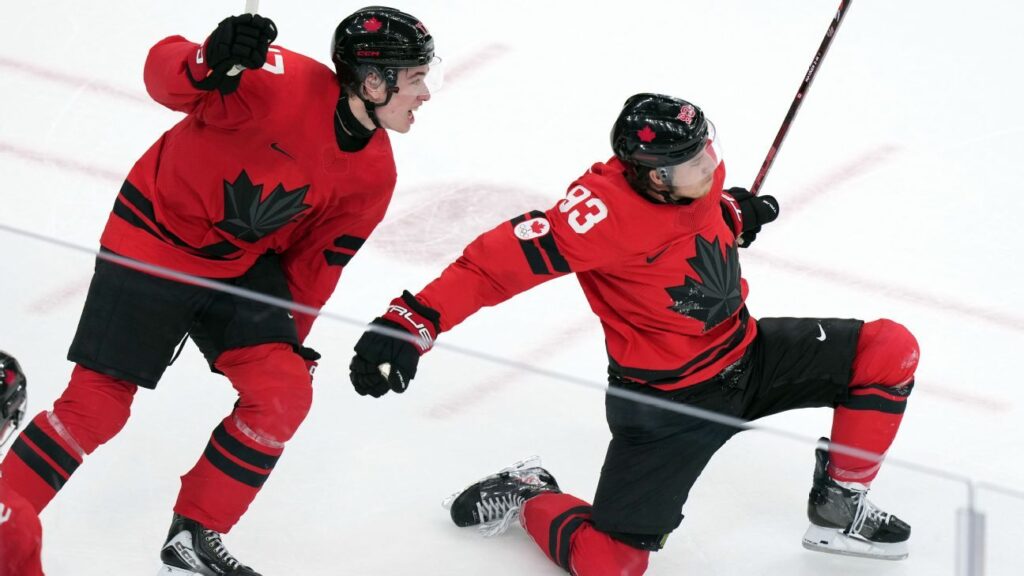
The No. 8 seed, Czechia, pushed Canada to the limit during the quarterfinals. Canada pulled off a thrilling 4-3 win with a last-minute equalizer from Nick Suzuki and a decisive overtime goal from Mitch Marner.
This match featured several pivotal moments, most notably Sidney Crosby’s lower-body injury in the second period, which kept him sidelined for the rest of the game.
Here’s how Marner, Suzuki, and their teammates managed to defeat Czechia, including crucial takeaways, an overall performance grade, the standout player, and pressing questions for the upcoming round.
What does Sidney Crosby’s absence mean for the future?
Canada played without its captain for a significant part of its comeback win over Czechia. He suffered a lower-body injury early in the second period and did not return to the ice.
The superstar from the Pittsburgh Penguins was on the receiving end of a tackle by Radko Gudas but seemed to worsen his condition while being tangled with two Czech players along the boards. This led to Crosby slowly skating back to the bench before heading to the locker room, from which he did not return.
Winning an overtime game without one of their key players underscores Canada’s depth in handling injuries during tight contests. If Crosby’s injury keeps him off the ice longer, Canada’s management has constructed a roster with seven additional centers available to step in, including Suzuki, who scored the game-tying goal.
but, Crosby’s leadership will be missed. Canada boasts five players who have served or are currently in captain roles beyond Crosby’s, but every Canadian fan is eagerly awaiting news on Crosby’s status for the semifinals and onwards.
Czechia identified—and exploited—a few weaknesses
Comparisons are inevitable, especially in a tournament where teams face each other multiple times. On Wednesday, the Czech team that took a 2-1 lead into the second period looked vastly different from the one that suffered a 5-0 defeat to Canada in their first matchup.
yes, Macklin Celebrini opened the scoring, continuing Canada’s trend of striking first in every game. but, Czechia answered with a flexible strategy, demonstrating capabilities that other teams struggled to find in the opening rounds.
Czechia created opportunities for odd-skater rushes and maintained possession in Canada’s zone during the first period. They capitalized on Jordan Binnington aggressively tracking a puck, leading to Lukas Sedlak’s game-tying goal in an empty net. Czechia drew more penalties in the first period than they had in their initial match against Canada, with their first power-play chance resulting in David Pastrnak setting up Roman Cervenka, who scored the go-ahead goal just a minute before the end of the period, putting Canada behind for the first time in the tournament.
This trend continued in the third period as Czechia resisted Canada’s advances until Ondrej Palat scored to give them another lead, before Suzuki tied it up, sending the game to overtime.
WHEN HIS COUNTRY NEEDED HIM MOST, NICK SUZUKI DELIVERED. 🇨🇦 pic.twitter.com/LKLlElEXpK
— NBC Olympics & Paralympics (@NBCOlympics) February 18, 2026
The second period challenged Canada to adapt
Heading into elimination games, one key question was how Canada would react if they found themselves trailing. While other teams tried to challenge Canada in this tournament, Czechia’s approach proved effective in limiting Canada’s dominance over long stretches.
Czechia’s more physical style resulted in Crosby gingerly skating back to the bench, but it also created opportunities that Canada struggled to find in 5-on-5 scenarios. Their ability to maintain possession and generate chances was countered by Czechia’s strategy of limiting space for Canada’s players and allowing goaltender Lukas Dostal the time to track shots.
When Michal Kempny was called for interference, Canada seized the power-play chance, leading to Connor McDavid assisting Nathan MacKinnon for a power-play goal, leveling the score at 2-2 with 7:44 left in the second period. While Canada had its moments of physicality, it was executed in a manner that did not result in penalties against the Czechs.
Czechia’s need to play physically opened the door for Canada to earn another power-play opportunity later in the second, extending into the third. Future opponents should learn to navigate this physicality wisely.

This situation illustrates the ongoing fascination with Binnington’s performance.
He finished the match with a .875 save percentage, allowing two first-period goals in a game where Canada trailed for the first time. but, he recovered superbly in the third period and overtime, bouncing back after conceding the go-ahead goal from Palat to deny Martin Necas on a critical breakaway. Binnington then made another crucial save early in the overtime period before Marner netted the game-winning goal, ensuring Canada’s progression to the next stage.
It may not have been flawless, but it sufficed for another remarkable win for Canada with Binnington guarding the net.
Key questions for the semifinals
There are two crucial inquiries. First, how will Canada cope with Crosby’s situation, and will he be sidelined for any length of time? Second, how much of Czechia’s strategy against Canada can Slovakia and others replicate?
Czechia uncovered ways to counter a team that had previously faced minimal resistance. Their physicality provided both advantages and disadvantages but ultimately put Canada in an unfamiliar position during an elimination matchup. They required Canada to make two comebacks before achieving success in overtime.
While Canada had moments of control and generated high-danger chances, Czechia demonstrated that it is possible to hold off intense pressure and nearly stage an upset.
Overall team grade: B
Facing Czechia for a second time provided Canada with invaluable insights into their potential for the tournament.
Canada averaged over six goals per game in the opening round, which wasn’t surprising given their impressive roster. but, doubts lingered on how they would perform in more closely contested games.
This matchup offered insights regarding those concerns. Canada demonstrated its ability to play effectively from behind and sustained stretches where they controlled possession, fired shots, and utilized depth to wear down the competition.
plus, the victory over Czechia showcased Canada’s resilience in dealing with the loss of their captain and trailing late in the game before scoring critical goals to edge closer to their goal of a 10th Olympic gold in men’s ice hockey.
MITCH MARNER CALLS GAME IN OT. 🇨🇦💥#WinterOlympics pic.twitter.com/8nCO7eg2fa
— NBC Olympics & Paralympics (@NBCOlympics) February 18, 2026