








Africa’s creatives and content producers are upset, fearful for the future and extremely concerned about where it will leave the continent’s film and TV sector after Canal+‘s announcement that it’s pulling the plug on MultiChoice’s video streaming service Showmax.
Aghast, award-winning producers of film and TV, who all spoke to Variety on condition of anonymity since they don’t want to jeopardize professional relationships or future opportunities, are scared of what work, and type of work for streaming they’ll get from Canal+ for Africa going forward.
On Thursday, Canal+ confirmed to Variety that it’s the end of the road for the decade-old Showmax, launched in 2015 to counter Netflix “following a comprehensive review of its streaming activities.”
The shuttering of Showmax, coming two years after Amazon MGM Studios abruptly pulled out of African originals, is once again causing post-traumatic stress for African producers who are wondering what and who they’re left to produce for besides the linear TV channel biz and Netflix.
While Disney+ launched in South Africa but nowhere else on the continent, Amazon Prime is no longer doing originals, Apple TV is not interested, and with HBO Max and Paramount+ having never launched, opportunities for commissioned streamer fare is shrinking even further after Showmax’s demise, and basically leaving just Netflix.
On Thursday, Variety broke the news about the axe coming down on Showmax just as a panel at the 8th Joburg Film Festival running this week in Johannesburg, South Africa, was about to take the stage to discuss “The French Connection” and collaboration between Africa and Europe.
In the room and on stage were the cast and producers of “Spinners,” as well as Canal+’s Laurent Sicouri, head of cinema and series for Canal+ International, to tout the upcoming second season of the drag racing car drama series, a co-production between MultiChoice and Canal+, which now, as a Showmax Original, won’t even be seen on Showmax.
It made for an extremely awkward panel session, touting the “French connection” for a show on a platform that just got canned.
Africa’s content creators are lamenting the loss of Showmax that offered an avenue that allowed for more risque fare and more experimentation in terms of genre, story, and depiction than what MultiChoice commissions for its linear TV channels on DStv’s Africa Magic, kykNET and M-Net, which has a more conservative audience.
“We got to breathe for a while. Now we’re holding our breath. Again. MultiChoice funnelled billions into content creation the past two years since it relaunched Showmax in partnership with NBCUniversal and it felt like a little renaissance in content freedom, content creativity and opportunities to open up the industry across Africa. Now we’re seemingly back at square one,” an award-winning producer-director says.
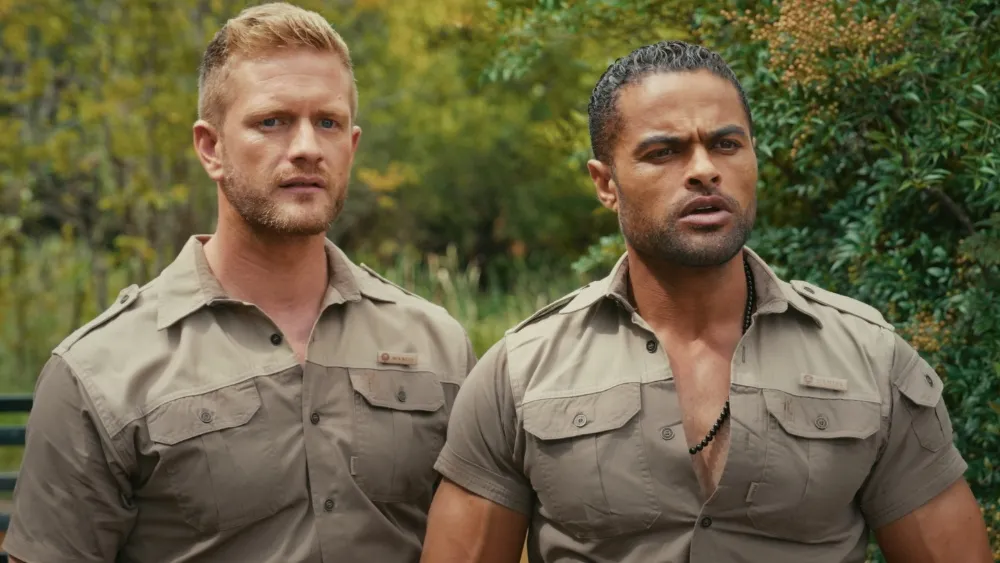
Case in point is something like “Khaki Fever,” the well-received but raunchy, R-rated comedy produced by Nostalgia Production that rocketed up the viewership chart on Showmax in September after it premiered at the kykNET Silwerskerm film festival in August.
in particular commissioned as a Showmax Original, the sex romp “Khaki Fever,” starring Abel Knobel and Christopher Jaftha, would never have seen the light of day as a South African film set on a private game farm where a group of rangers competed to see who could hook up with the most tourists during the holiday season.
” ‘Khaki Fever’ is a perfect example of how Showmax as a streamer allowed African creatives another outlet besides Netflix to do boundary-pushing work. Now it’s gone,” another director-producer says.
Another director says: “Losing Showmax is a huge blow for the local industry.”
On Friday, Neil Brandt, founder and CEO of production company Storyscope at a panel session at JFF, said the announcement about the shuttering of Showmax came as “a slap in the face” for the industry.
Kaye-Ann Williams, Netflix director of scripted content for sub-Saharan Africa, attending the JFF, tried to assuage fears about Netflix this week at a cocktail mixer event the streamer held for producers and creatives, promising that Netflix doesn’t have any plans to disappear like Amazon and Showmax.
“Netflix is here to stay and is always ready to invest in Africa. To be very clear: Our investment is a commitment from us that is ongoing, and continuing and growing,” she said. Up next for instance is a Johannesburg film entitled “180,” a gritty crime caper starring Warren Masemola, Bongile Mantsai and Fana Mokoena, produced by Layla Swart.
On Canal+ shuttering Showmax, Leslie Adams, sales director at Reach Africa, says, “The streaming industry globally is moving out of its ‘growth at all costs’ phase, which saw it prioritize subscriber count, and into a period where sustainable economics and scale matter far more.”
“Content costs continue to rise, from premium series to sports rights, which makes it increasingly difficult for platforms to compete without significant scale. As a result, consolidation across the sector is inevitable, and we’re likely to see more moves like these.”
“At the same time, we’re also seeing more bundling, aggregation and advertising-supported models emerge as platforms search for new revenue streams. For viewers, this likely means fewer standalone services, but stronger platforms, more bundled offerings and a growing mix of subscription and ad-supported viewing options.”
Anna-Marie Jansen van Vuuren, a professor in South African film production studies at the Tshwane University of Technology’s film program, says, “A few years ago, Africa’s creative industries expected that the rise of streaming would democratize commissioning, open space for bold, local stories, and finally create a sustainable pipeline of pan-African original content. Instead, by early 2026, these dreams have shattered.”
“In 2024, Amazon exited and now at the Joburg Film Festival Variety broke the news that Showmax, Africa’s largest homegrown streaming service, will be shutting down after unsustainable losses.”
“The consequences for Africa’s content ecosystem are far reaching. Firstly, a major funding pipeline for local stories has collapsed. Showmax was the most significant commissioner of African originals – far more than any global streamer.”
“It backed edgy South African titles such as ‘Wyfie,’ ‘Koek, the Wife,’ ‘Adulting,’ ‘Spinners,’ ‘Khakhi Fever,’ explicitly supporting bold and authentic local storytelling. Its shutdown removes one of the only willing buyers of high-risk, locally rooted content. also, Showmax’s library was central to the African creative ecosystem; its disappearance leaves a hole in distribution and monetization for local creators.”
Moses Mmutlane, a South African media strategist, says, “The closure of Showmax creates a gap for international companies with huge or moderate wallets to fund local production including movies, series, documentaries, and dramas which will then move South African-owned content to be licensed to overseas companies.”
“Showmax created a space to showcase local African productions and funded a lot of them, creating a continuous channel for local producers and production companies to thrive while simultaneously giving African audiences local relevant content without advertising.”
“While it’s claimed that Multichoice is working on a new streaming platform, we hope it increases local content production and broaden the funding of multiple productions, whilst protecting Africa’s film and production industry against aggressive international conglomerates who are after content and willing to pay for it. Rights and contractual limitations may lead to the closure of some of Africa’s local production companies.”
Source: variety.com