








-
Buster Olney
Close
Buster Olney
ESPN Senior Writer
- Senior writer ESPN Magazine/ESPN.com
- Analyst/reporter ESPN television
- Author of “The Last Night of the Yankee Dynasty”
Multiple Authors
With pitchers and catchers arriving for spring training next week in Arizona and Florida, and all of Kiley McDaniel’s top 10 free agents now signed, there’s finally a glimmer of hope for baseball enthusiasts as the offseason comes to a close.
Before we officially bid farewell to the 2025-26 MLB offseason, it’s the ideal moment to reflect on the key themes of a tumultuous winter and assess their implications for the upcoming 2026 season and the future of MLB.
How will the recent spending sprees by the Los Angeles Dodgers and New York Mets influence the perspectives of baseball’s 28 other franchises? What might this offseason’s trade rumors signify for next summer’s trade deadline? And how should fans of teams that opted for significant changes and those that chose to stick with the status quo feel about the looming season?
We turned to ESPN MLB insiders Buster Olney and Jeff Passan for their insights.
The Dodgers’ spending sparked controversy once more. What are the implications for MLB’s future?
Olney: The financial imbalance between teams is longstanding, but the Dodgers’ significant payroll will likely motivate other owners to push for a restructured financial framework through a proposed cap-and-floor system. As one former player remarked: “It’s reminiscent of 1994 — some owners are looking for players to resolve ownership issues.”
Of course, the players went on strike in August 1994, leading to the cancellation of that fall’s World Series. yet, it remains unclear how far owners will go to reform the system, and whether the players’ union will maintain its unity as it did three decades ago.
Passan: We can’t overlook the Mets, either. Their Opening Day payroll is more than $50 million higher than the Dodgers’. even so, Buster’s observations hold true: The spending by the top two teams has made it clear to the other 28 that change is essential, and they believe that a salary cap might be the route to that change.
Whether the league can ever persuade players to agree to such terms is uncertain, but a strong consensus among baseball insiders — including from the Dodgers and Mets — acknowledges that substantial changes are necessary following the expiration of the collective bargaining agreement on December 1. The extent of these changes will influence the length of any potential work stoppage and its impact on the 2027 season.
Overall spending was robust during the final winter of the current CBA. What does this imply for next offseason?
Olney: As was the case prior to the last owners’ lockout, there’s likely to be a rush of signings for high-profile free agents before December 1, with the major-market teams expected to lead the charge. Many are uncertain about what the sport’s financial landscape will look like post the next collective bargaining agreement, leading agents and team executives to believe that big spenders — the Dodgers, Mets, Yankees, Phillies, Jays, and perhaps others — will be very proactive in making moves under the current regulations, eager to exploit the existing system while they still can.
Passan: That’s what the Dodgers and Mets have already done, right? They’ve recognized that having substantial financial resources gives them a distinct edge, which they’ve translated into formidable rosters. yet, I’m not convinced that this year’s spending is indicative of future trends due to all the uncertainty.
While I agree with Buster that a surge of signings will occur leading into December 1, several executives and agents question whether the diverse potential outcomes of a new basic agreement will temper that frantic rush to sign before a lockout. While that scenario is plausible, a slow November could be an early indication of a long period of inactivity to follow.
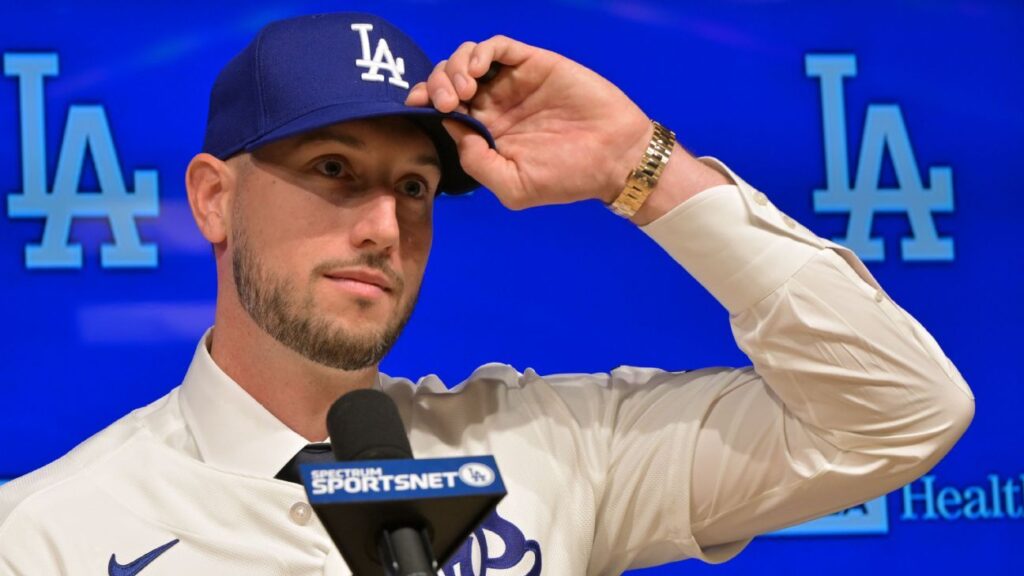
Kyle Tucker accepted the Dodgers’ high-AAV offer instead of a longer contract. What could this signal for future free agency trends?
Olney: Some agents and teams argue that the model for lucrative contracts is evolving toward offering more annual compensation over shorter terms — as demonstrated by Tucker, Bo Bichette, and Framber Valdez.
“There’s a sentiment that long-term contracts can become burdensome for teams,” remarked one league source, referring to a recent exchange between the Phillies’ David Dombrowski and Bryce Harper. “Many teams can’t afford such deals, but those that can might find that allocating aggressive short-term payments is more appealing.”
Passan: Just to clarify: Every team is capable of making that kind of deal. Perhaps not multiple $300 million contracts, but if the Royals can secure Bobby Witt Jr., the Twins can sign Carlos Correa, and the Rockies can land Nolan Arenado, then any team can execute significant deals spread across time.
My concern is that, while shorter-term, high-AAV contracts mitigate the less advantageous final years of contracts, the cash-flow issues impacting some lower-revenue teams may deter them from engaging in such agreements. Coupled with the signing bonuses inherent to these contracts, mid- and small-market teams could find themselves at a disadvantage in the quest for premier free agents against the likes of Los Angeles and New York.
Tarik Skubal and Ketel Marte found themselves the subjects of many trade rumors — yet remained on their teams. What could this suggest for the 2026 trade deadline?
Olney: The possibility of a Skubal trade this summer always seemed unrealistic to me, particularly with the Tigers enjoying a favorable position in the AL Central. How could Detroit possibly trade the league’s best pitcher if they remain close to first place in a winnable division? Fans and even players would likely be outraged.
As of April, Marte will gain 10-and-5 rights to veto any trade. Still, if Arizona finds itself out of contention — certainly plausible in the competitive National League — they might reconsider his trade value come midseason. yet, by then, his performance, the uncertainty surrounding labor issues, and his ability to block any deal could all influence his market value.
Most trade deadline activities are likely to involve impending free agents, as trade proposals for players signed through 2027 could face scrutiny due to the CBA uncertainties.
Passan: That’s true, but it didn’t stop Seattle from trading a hefty package for Brendan Donovan or Washington from receiving five prospects for MacKenzie Gore from Texas. in the end, the most astute individuals — thus, the smartest teams — understand what they can’t control. Regardless of what their owners communicate regarding the likelihood of a capped system, if front offices believe that moves at the deadline will enable them to outshine the Dodgers in 2026, they won’t hesitate to act decisively. Exceptional seasons are both precious and scarce.
Regarding Skubal and Marte: While Buster correctly identifies the value proposition for the Tigers, franchises that acquiesce to perceived fan demands rarely come out ahead, and Detroit understands this. yet, did Framber Valdez’s recent signing of a three-year, $115 million contract change that dynamic? Perhaps the outcome of Skubal’s arbitration hearing, expected Thursday, will shed more light. in the end, whether for Arizona or Marte, it’s about forecasting: Will the benefits of a trade, despite the fan backlash, outweigh what the player can contribute along with the compensation received should he leave via free agency?
The Mets chose to completely overhaul their roster after their 2025 collapse. What does this mean for their 2026 prospects?
Olney: Perhaps more than any other high-spending contender, the Mets present an array of possible outcomes. If Bo Bichette excels, if Luis Robert remains healthy, if Freddy Peralta achieves over 30 starts, if the corner infielders adjust well to their new roles, if Nolan McLean continues the promising performance from last season … This team could genuinely be formidable, potentially posing the greatest challenge to the Dodgers’ championship dominance.
yet, with all due respect to the late, legendary Mets broadcaster Bob Murphy, if the 2026 Mets resemble a team where Murphy’s Law reigns — where many decisions go awry — this could rival the infamous 1993 Mets (dubbed the Worst Team Money Can Buy) in terms of expenses and fan expectations. This is precisely why David Stearns, head of baseball operations for the Mets, faces immense pressure in 2026. He must ensure their success; the Mets need to succeed.
Passan: To put it bluntly: This is much closer to how the Mets will likely be managed moving forward than the previous all-out spending spree approach under Steve Cohen. This is not merely because that strategy failed but rather due to this winter’s demonstration of the Mets’ readiness and capability to engage in significant free agency and trades while still maintaining a value-driven philosophy that promotes equilibrium. The hard reality is that the previous Mets weren’t competitive enough. Are these new Mets? They may not be either, but they are structured in a way that allows for the adaptability and balance that past iterations severely lacked.
The Yankees and Phillies decided to retain largely the same rosters as last year. What does this signify for their World Series aspirations?
Olney: The fate of both teams largely hinges on the return of players recovering from significant injuries — specifically, the Yankees’ Gerrit Cole and Luis Gil, and the Phillies’ Zack Wheeler. It’s easy to overlook that the Yankees shared the best record in the AL last season alongside the Blue Jays, while the Phillies were the team that the Dodgers feared most during the NL playoff series. yet, in general, both rosters are older and likely more vulnerable to injuries.
Passan: I understand the excitement in New York and Philadelphia. When a team falls short of a World Series title, changes are a customary response. even so, Buster’s point about the strength of both teams is crucial. Different isn’t always synonymous with better. Currently, the Yankees and Phillies boast strong lineups. Is that sufficient? Only time will tell.
Beyond Cole and Gil, the Yankees will have a complete season of Cam Schlittler, with Elmer Rodriguez and Carlos Lagrange on the brink. The Phillies are allowing Justin Crawford every opportunity to secure the center field position, with Aidan Miller not far behind. in the end, these Yankees and Phillies could mirror the earlier Mets fiasco: solid, yet insufficient. yet, dismissing their potential now seems hasty. Aside from the Dodgers, they likely possess one of the best chances for success.