








-
Alyssa Roenigk
Close
Alyssa Roenigk
ESPN Senior Writer
- Alyssa Roenigk is a senior writer at ESPN, whose work has taken her to six continents and led to numerous daring adventures. (Follow @alyroe on Twitter).
-
Tisha Thompson
Close
Tisha Thompson
ESPN
Tisha Thompson is an investigative journalist for ESPN, based in Washington, D.C., with work featured on both domestic and international platforms.
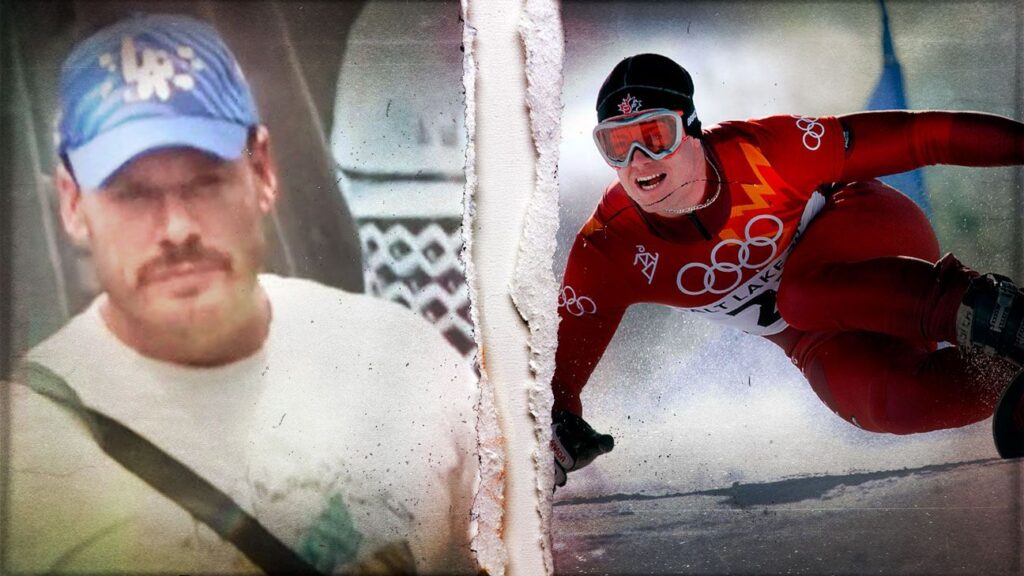
Ryan Wedding, a former Olympian from Canada turned alleged drug kingpin, was apprehended after being on the run for over a decade, following a 17-month manhunt, federal authorities revealed Friday.
Two indictments from the U.S. Attorney’s Office for the Central District of California detail that Wedding, 44, and his associates allegedly trafficked more than $1 billion worth of cocaine between the U.S. and Canada, orchestrating multiple murders, including that of a crucial government witness.
A total of thirty-six individuals have been charged for their suspected involvement in Wedding’s criminal organization, including a Canadian lawyer, a crime blogger, and several hired killers.
Here’s what we know about Wedding’s transition from an Olympic footnote to being on the FBI’s most wanted list, along with details about the ongoing case.
Who is Ryan Wedding?
Born into a family passionate about snow sports, Wedding’s grandparents owned a small ski area in Thunder Bay, Ontario, while his father competed in college skiing and his uncle coached Canada’s women’s alpine ski team during the 1992 Olympics in Albertville, France. Reports suggest Wedding was skiing before he could even walk.
At the age of 12, following the family’s move to Coquitlam, a suburb of Vancouver, Wedding transitioned from skiing to snowboarding and excelled quickly, earning a place on the Canadian national snowboard team just three years later.
At 20, he qualified for the 2002 Salt Lake City Olympics in parallel giant slalom—a competition that later inspired the FBI’s investigation name, “Operation Giant Slalom.” During the races, he was noted for carving aggressive lines on the course. In a sport featuring athletes reaching speeds over 70 mph, Wedding’s racing photos notably show him without a helmet during the 2002 Games.
Though he did not advance past the first round and finished in 24th place, ESPN reached out to several of Wedding’s former teammates and coaches during the initial FBI pursuit, but none were willing to comment on the record. Many Olympians from other countries who participated in the 2002 Games also stated they did not recall him.
What is he accused of?
U.S. prosecutors assert that Wedding led a massive criminal enterprise, allegedly becoming Canada’s principal cocaine supplier. The operation reportedly cooked cocaine in facilities managed by a Colombian paramilitary group and collaborated with Mexican cartels to distribute the drugs across Southern California and beyond as outlined in an indictment.
In November, U.S. Attorney General Pam Bondi described Wedding as the head of “one of the most significant and dangerous drug-trafficking organizations globally.”
“He’s a contemporary El Chapo,” stated FBI Director Kash Patel on Friday. “He embodies the essence of a modern-day Pablo Escobar, believing he could escape justice.”
Wedding was convicted in 2010 for attempting to purchase 24 kilograms of cocaine from a U.S. government agent in Los Angeles and was sentenced to four years in prison, with his release occurring the following year. In 2015, Canadian authorities charged him again for drug trafficking offenses, but he managed to evade capture, and federal authorities maintain that he continued to smuggle cocaine into Canada for years afterward.
In the quest for Wedding, the FBI, believing he was hiding in Mexico, seized an uncommon 2002 Mercedes CLK-GTR worth over $13 million, while Mexican authorities confiscated dozens of rare motorcycles, primarily Ducatis, estimated to be valued over $40 million, including three motorcycles believed to be raced by Italian MotoGP legend Valentino Rossi.
plus, two Canadian national snowboarding medals were discovered.
The indictments reveal that the FBI recruited a trusted confidant of Wedding’s as an informant in 2023. This informant’s assistance enabled federal agents to intercept vital communications between Wedding and a complex network of couriers and truck drivers moving vast quantities of cocaine throughout the Greater Los Angeles area.
FBI agents acquired evidence suggesting that Wedding and his associates orchestrated the murders of rival drug traffickers. American and Canadian court documents link Wedding to the assassination of an alleged drug trafficker who was shot in his driveway in Niagara Falls, Ontario. The court filings also recount an incident that mirrors the slaying of a couple in their Toronto-area home in 2023, identified as mistaken identity. Wedding’s organization allegedly sought revenge against an individual they believed had stolen 300 kilos of cocaine.
What lengths did Wedding allegedly go to evade capture?
In January, an incident unfolded in a Medellín restaurant when a man was shot multiple times in the head.
Federal authorities contend this was the final act of a plotted scheme by Wedding designed to avoid extradition to the U.S.
On the day U.S. prosecutors released a 2024 indictment against Wedding, which outlined details about the informant, a Canadian attorney representing Wedding’s organization advised him that eliminating the government’s witness would effectively dismiss the case against him, as per court documents.
The indictment does not reveal the witness’s name, but media outlets have identified him as Jonathan Acebedo-Garcia, a former member of Wedding’s ranks whom he had encountered during a prison term in Texas.
Federal prosecutors assert that Wedding put a $5 million price on Acebedo-Garcia’s head and began searching for him through intermediaries. Wedding’s organization is accused of compensating a Canadian crime blogger to publicly accuse Acebedo-Garcia of betraying “one of the mightiest underworld networks,” court documents state.
After obtaining Acebedo-Garcia’s contact details, Wedding and an accomplice purportedly enlisted a sex worker from Orlando to lure Acebedo-Garcia to the Medellín location, with Wedding financing her cosmetic surgery and mortgage in return.
In January, an assassination team was sent to the restaurant, as alleged by prosecutors. One individual shot Acebedo-Garcia while another captured an image of his body before fleeing. Court documents reveal that Wedding’s organization rewarded the alleged assassins with $500,000 in cryptocurrency.
Prosecutors report that the crime blogger publicly identified the deceased as Acebedo-Garcia, posting a picture on Instagram with a caption stating, “Boom! Headshot.”
“He was hit with a sniper while dining out,” the blogger reportedly stated. “The criminal underworld will always find you. There’s no hiding place that is big enough.”
How did the FBI ultimately apprehend Wedding?
Last March, the FBI added Wedding to its Ten Most Wanted list, and following Acebedo-Garcia’s murder, it raised the reward for information leading to Wedding’s capture to $15 million.
According to reports from the Associated Press, Wedding voluntarily turned himself in at the U.S. Embassy in Mexico City. As confirmed by Patel, he was subsequently transported to Ontario Airport in Southern California, where he is now in custody.
“The slaying of a witness in Colombia earlier this year was a brutal, cold-blooded crime that could not and will not go unpunished,” asserted Bill Essayli, First Assistant United States Attorney of the Central District of California.
Wedding is expected to appear in court for the first time on Monday morning, as stated by Akil Davis, assistant director in charge of the Los Angeles FBI field office. His financial assets have also been frozen, according to Davis.
Wedding, the criminal defense attorney, the crime blogger, the Orlando-based sex worker, and others are facing charges including drug trafficking, witness tampering, and conspiracy to commit murder.
If found guilty, Wedding and others implicated in Acebedo-Garcia’s homicide could face life imprisonment.
Some defendants, including the lawyer, are in Canada awaiting extradition to the U.S. Five men accused of transporting cocaine through California have already entered guilty pleas, while others, like Wedding’s alleged second-in-command, Andrew Clark, are set for trial in October in California.
Two of Wedding’s alleged associates remain at large, with one believed to be hiding in the Dominican Republic and a woman accused of facilitating money laundering residing in Mexico.
The individuals involved in the restaurant incident in Medellín have not yet been identified. The FBI has released their images and is requesting assistance in locating and apprehending them.