








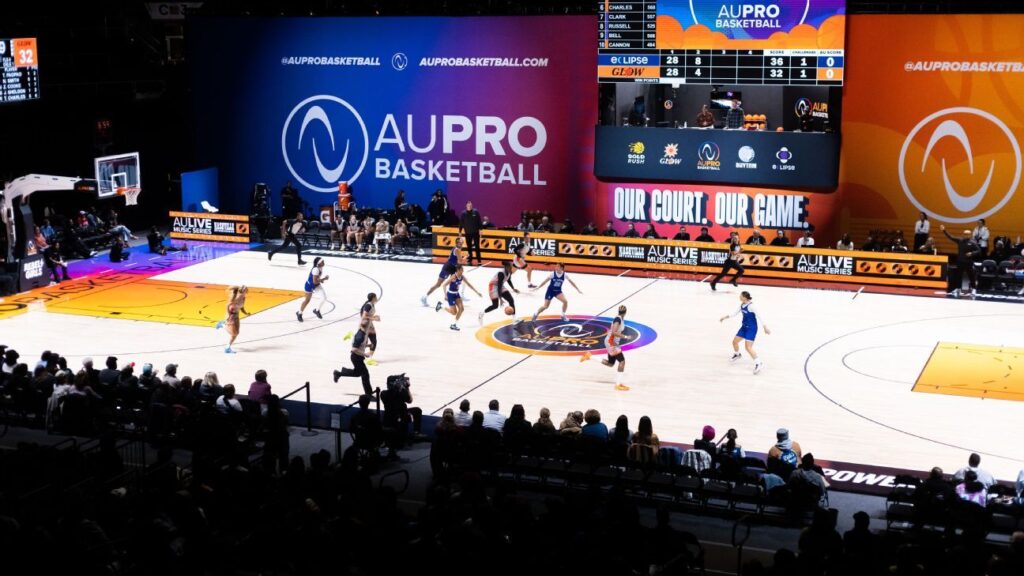
NASHVILLE, Tenn. — Athletes Unlimited players sprint across a basketball court in a repurposed concert venue as they gear up for their inaugural full weekend of games. Nneka Ogwumike relaxes in a chair by the baseline as basketballs swish through the net overhead.
With just under three months remaining before the WNBA season is set to begin, negotiations on the collective bargaining agreement (CBA) are at an impasse regarding salary structure and revenue sharing. Ogwumike, president of the Women’s National Basketball Players Association, has come to Nashville alongside union executive director Terri Jackson. Their purpose is to update the players, many of whom operate outside the limelight of the WNBA, about the latest developments in their pursuit of a “transformational” CBA.
The threat of a work stoppage looms large. On December 18, the union voted to authorize a strike “when necessary,” and speculation has arisen among certain voices in the league about whether that moment is approaching.
“At this point, I don’t think it’s imminent,” executive committee treasurer Brianna Turner told ESPN. “It’s still early February, and we are continuing to move forward. So right now, I would say we’re still in a waiting game.”
The league submitted a revised proposal on February 6, which reportedly included some concessions on housing and facility standards but fell short of making meaningful changes to revenue sharing.
As the WNBA’s future remains uncertain, Athletes Unlimited kicked off its fifth season on February 4 at the Municipal Auditorium in Nashville. Unlike Unrivaled — the 3-on-3 league based in Miami — Athletes Unlimited does not primarily feature WNBA superstars. Among the 40 athletes competing in AU, 26 had some affiliation with WNBA rosters last season. These players include seasoned veterans, newcomers, those on hardship contracts, and others who are still aspiring for their WNBA debut.
This particular cohort of players arguably has the most at stake in the ongoing negotiations. Issues on the table include the number of guaranteed contracts, parental leave policies, and housing.
ESPN engaged a dozen AU players with ties to the WNBA, on the condition of anonymity, to gather their perspectives on the state of the league and the CBA negotiations.
On a scale of 1-10, how confident are you that there will be a full WNBA season?
The players provided a range of responses to this question, landing mostly on a note of cautious optimism that the season could commence on schedule on May 8. The average score registered at 6.1. One more pessimistic response fell to a 2, while the most common answer was a 5, reflecting a general ambivalence as negotiations linger.
“I think we’re going to have a season. I just don’t know if it will be the full season.”
“I feel like we’re asking for a lot. I recognize we deserve it, but at the same time, it kind of feels like we’re being greedy. We’re making numerous requests, and I think we need to show more action.”
“I’m going to lean more towards positivity. So I’ll rate it an 8 because I have faith in the incredible people supporting us — the women at the [negotiating] table.”
“Full W season? I feel pretty confident. Um. … Full? I’d say I’m at a 9.”
How would a lost WNBA paycheck affect you?
It turns out some of the world’s most elite basketball players are also skilled money managers. Most players indicated they would manage just fine, regardless of the absence of the WNBA salary.
“I’m not making an exorbitant amount, so it’s not a major crisis. I’m fortunate to have improved my off-court income over the years. yet, I’m still fighting for another season in the league. I wish to experience a season where I can earn more and provide for my family better.”
“I’ve planned well for this scenario. I’m pretty laid-back, so I’m fortunate to be in a stable position.”
“It would impact me greatly. It’s my career, so losing it would be significant.”
“I’m well-prepared off the court, so it wouldn’t hit me hard. If what we make now is in jeopardy, it wouldn’t trouble me. But if a bigger W paycheck were on the line, then I could definitely use it!”
“I have quite a few endorsements and NIL deals, so it wouldn’t heavily affect me. yet, the inability to play the game we love would significantly impact many players, as basketball has been our lifelong passion.”
“I’ve been very lucky that my family has equipped me with sound financial principles. I have savings. I’m okay, but I understand not everyone shares my situation.”
“Money is money. I would love to have my paycheck.”
On a scale of 1-10, how anxious are you feeling about negotiations?
even with players’ uncertainty regarding the possibility of a complete WNBA season, this didn’t translate into significant anxiety about negotiations. One individual rated her anxiety at a 10, yet most players expressed a lack of concern, or at least a resolve not to stress about matters beyond their control. The average anxiety level was 3.2.
“I think [the league and owners] assume that we’ll just sign, but we won’t. We’re prepared to sit out if they pursue that route. We deserve better.”
“I’m not worried about it. It’s either going to happen or it’s not. I refuse to stress myself over something I can’t control.”
“I have high confidence and understanding of the negotiation tactics from our [executive committee]. They know what they’re doing, and we are aligned.”
Do you feel represented in these negotiations as someone who is not among the top tier of WNBA earners?
For each maximum salary player, there’s also someone earning the league minimum. Their CBA needs are distinct, and they are aware of it.
“Yes, and no. I sense that power ties to the prominence of your name, yet it’s important to consider everyone. The top earners need to recognize that we’re essential as well, or the league would not exist.”
“Currently, yes, I feel represented, especially being [in Athletes Unlimited], having engaged with people on the executive committee and discussions with Nneka. The representation now is markedly different from past CBA negotiations. We’re making our voices heard. In previous negotiations, concerns were often overshadowed by the top earners, but this time, we are standing firm.”
“I feel good about the sentiments shared. even with the executive committee’s varying experiences, I believe there is some level of representation. Others are also recognizing where the last CBA failed in addressing the needs of mid-level players. Hopefully, we won’t see a repeat of that.”
“I think so. During the call on [February 2], there were players in similar positions to mine. I felt that what they expressed resonated with me. We are hearing from superstars, but also those on veteran minimum salaries and role players. This league encompasses 144 players or more; it’s not solely about the top 20, right? The broader roster needs to be considered as well, and I believe my voice was acknowledged.”
On a scale of 1-10, how informed do you feel about the CBA negotiations?
The union leadership receives high marks for communication. Players consistently feel well-informed about the ongoing negotiations, with many rating it a 9 or 10. The lowest score given was a 5, and the average was 9.
“I feel very informed at this moment. I’m always eager to learn and expand my knowledge on the subject.”
“I can’t speak to the league’s perspective, but I know [the players], and we are absolutely confident in our stance.”
“I feel like they could assist us with a bit more guidance. They should aim for clarity without oversimplifying it. The attention span of the younger generation is pretty limited.”
After salary, what are your top issues?
From top to bottom, left to right, salary and revenue sharing are prioritized. yet, players emphasize that housing and retirement benefits are also key concerns worth fighting for.
“Retirement benefits. At some point, the game will end. Similar to other existing leagues, there’s an expectation that, after investing time and effort long-term, support will be provided when it’s over. It would be beneficial to have assistance in this matter.”
“Housing. Our season isn’t lengthy enough. There aren’t sufficient provisions in many markets to justify year-round living. also, due to the sparse guaranteed contracts, we have constant turnover of players, as seen with the Fever [in 2025]. It’s baffling to me that housing would be removed when players are frequently relocated.”
“Housing. Those on lower salaries are often the ones facing trades, making this situation particularly unfair.
“Pension. Many individuals have contributed to building this league’s standing. Expecting players to serve for 10 years before qualifying for a pension is absurd. There’s much more to discuss.”