








Director James Cameron and The Walt Disney Company have been sued for unauthorized use of an Indigenous actress’ likeness without her knowledge and consent.
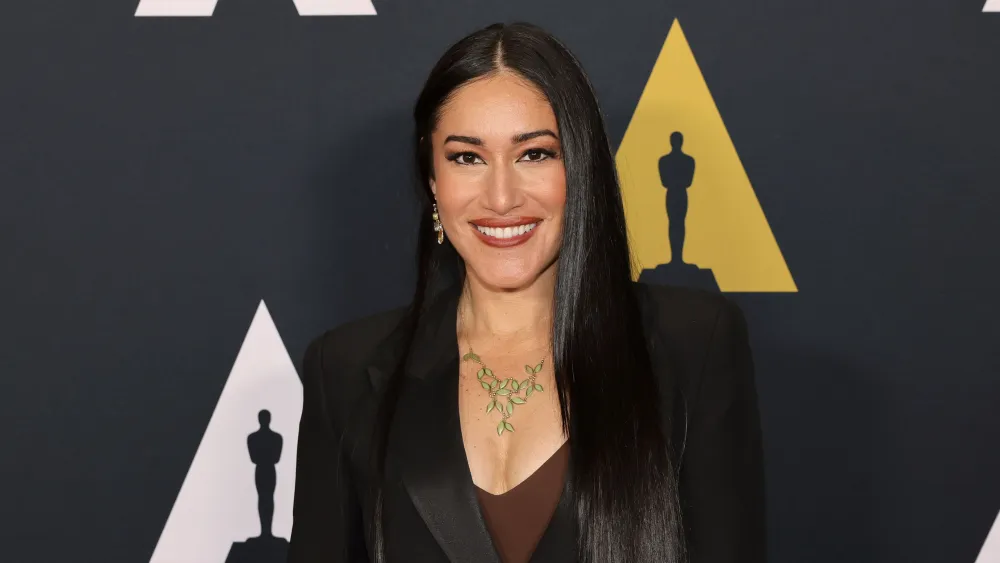
In the complaint, obtained by Variety, actress Q’orianka Kilcher alleges that when she was 14 and had recently appeared as Pocahontas in Terrence Malick’s film “The New World,” Cameron extracted her facial features from a published photograph and directed his design team to use it as the foundation for the character of Neytiri in “Avatar.” The filing states, “Plaintiff never consented to Defendants’ use of her likeness, either in Avatar or in any related product or promotion.”
Kilcher also names Lightstorm Entertainment and multiple visual effects companies in the lawsuit.
According to the complaint, which was filed in the U.S. District Court for the Central District of California, Kilcher’s likeness was replicated in production sketches, sculpted into three-dimensional maquettes, laser-scanned into high-resolution digital models, and distributed across multiple visual effects vendors to form the character’s image. The image was later seen in theaters, on posters, in merchandise, across sequels and re‑releases without her knowledge or consent.
“What Cameron did was not inspiration, it was extraction,” said Arnold P. Peter of Peter Law Group, lead counsel for Kilcher. “He took the unique biometric facial features of a 14-year-old Indigenous girl, ran them through an industrial production process, and generated billions of dollars in profit without ever once asking her permission. That is not filmmaking. That is theft.”
According to the filing, Kilcher and Cameron first met briefly at a charity event just months after the 2009 release of “Avatar.” At that event, Cameron personally invited Kilcher to visit his office. When she arrived approximately one week later, Cameron was out and a member of his staff presented Kilcher with a framed print of a sketch Cameron had made. Attached to the print was a handwritten note from Cameron reading: “Your beauty was my early inspiration for Neytiri. Too bad you were shooting another movie. Next time.”
“When I received Cameron’s sketch, I believed it was a personal gesture, at most a loose inspiration tied to casting and my activism,” Kilcher said. “Millions of people opened their hearts to ‘Avatar’ because they believed in its message and I was one of them. I never imagined that someone I trusted would systematically use my face as part of an elaborate design process and integrate it into a production pipeline without my knowledge or consent. That crosses a major line. This act is deeply wrong.”
According to the filing, Kilcher learned the truth late last year when a broadcast video interview with Cameron began circulating on social media. In the interview, Cameron stands in front of the Neytiri sketch and specifically identifies Kilcher: “The actual source for this was a photo in the L.A. Times, a young actress named Q’orianka Kilcher. This is actually her…her lower face. She had a very interesting face.”
The complaint also claims the defendants violated California’s recently enacted deepfake pornography statute.
“It is deeply disturbing to learn that my face, as a 14-year-old girl, was taken and used without my knowledge or consent to help create a commercial asset that has generated enormous value for Disney and Cameron,” said Kilcher.
The first “Avatar” film earned more than $2.92 billion worldwide and the series is among the highest-grossing film franchises of all time.
“The complaint describes a deliberate analog-to-digital creative process that misappropriated Ms. Kilcher’s identity,” said Asher Hoffman, co-counsel for Kilcher.
The complaint seeks compensatory and punitive damages, disgorgement of profits attributable to the use of Kilcher’s likeness, injunctive relief, and corrective public disclosure.
Variety has reached out to Disney and Cameron for comment.
Source: variety.com