








“ITV Studios is not for sale,” Carolyn McCall, boss of U.K. media conglomerate ITV, firmly told Variety three years ago.
even with persistent rumors the global production powerhouse was going to be snapped up – including potentially by Banijay or RedBird IMI – McCall has stayed true to her word.
What few could have imagined back then was that ITV itself was for sale. On Monday, after months of negotiations McCall confirmed the 71-year-old public service broadcaster is set to be acquired by Comcast-owned Sky in a deal worth up to $2.1 billion. What’s more, McCall admits it was ITV who approached Sky; she told investors it was “the company at the top of the list” to partner with.
Of course there is every chance ITV Studios will still be sold, despite McCall’s plans for it to stand alone as a listed company on the London Stock Exchange, with buyers already said to be circling. And the Sky/ITV deal will need to get past regulators, a process McCall admitted could take up to two years.
But for now, it seems yet another U.K. broadcaster has slipped out of British hands, following in the footsteps of fellow PSB Channel 5, which was acquired by Viacom in 2014 and Sky itself, which was acquired by Comcast in 2018.
Somewhat surprisingly, those at the coalface are pragmatic, if not actively upbeat, about the proposition of Sky taking over ITV. “I may be in a small minority here, but I’m actually quite positive about the merger,” said one executive, the CEO of an independent production company, who spoke on condition of anonymity. One reason for the optimism, the exec admitted, was because ITV commissions so much from its own stable of production companies at the expense of others that “not many indies bother pitching to ITV anymore.” Sky, said the exec, is “more approachable.”
With ITV Studios being spun off and Sky potentially taking over commissioning (although nothing has been decided in that regard), there might be more opportunity for independent production companies in the long-term. In the short-term it’s less promising, given one of the deal terms includes a commitment from Sky to spend £2.1 billion on ITV Studios content over the next five years.
Producer Patrick Spence, who made award-winning ITV series “Mr Bates vs The Post Office,” was equally positive, telling the BBC he saw the deal as a vote of confidence in linear TV. “What I take away from this deal as a producer and an audience member is that Sky must really like and believe in ITV to be only buying the network,” he said. “They think there is a business to be grown and driven that uses the audience reach and loyalty that the ITV network has.”
That sentiment was echoed by Sheldon Lazarus, head of Fulwell-owned factual production outfit Bitachon365. “I’m not worried at all,” Lazarus told Variety of the deal’s potential impact on producers. “It’s a real testimony to the creativity of this country, because otherwise, why else would you buy a platform like this?”
Lazarus recalls similar hand-wringing over what was then Viacom’s acquisition of Channel 5, noting: “I think we’ve sort of moved on from that.” Three years after that sale, analysts Enders noted Channel 5 boasted “an increased content spend, development of new titles and clarity as to its targeted audience.”
Now, more than a decade on, the channel continues to thrive, hitting a three-year high content spend in 2024 while its peers slashed budgets.
Sir Peter Bazalgette, former chair of ITV, is adamant that consolidation is now the only way for PSBs to survive as they try to compete with U.S. giants such as Google, Disney and Netflix. “Domestic broadcasters across Europe are under considerable pressure from not just the streamers, but also from YouTube,” he told Variety.
The figures bear that out. According to U.K. ratings body BARB, Sky and ITV’s combined share of U.K. TV and streaming viewing was 17.7% in May (the most recent figures available) compared to YouTube’s 18.6%.
Bazalgette said it was a situation that U.K. regulators, led by the government, are beginning to accept, which is why the Sky/ITV deal will almost certainly get through. While Bazalgette acknowledged that together Sky and ITV may dominate the market for television advertising, with a combined share of around 70%, “the reality of how the market operates is nothing to do with that,” he said, with video advertising now fragmented across YouTube, Meta, TikTok and other platforms. In that context, Sky and ITV’s joint share represents only a 20 to 30% market share.
Bazalgette thinks the deal may prove to be equally beneficial for audiences, given that Sky is one of the U.K.’s most dominant pay TV sports broadcasters. “You’re putting free-to-air sport together with pay sport,” he explained. “You could get much more advantageous windowing for viewers.”
For Sky, sharing its sports content with ITV could be win-win, benefiting from the advertising revenue while potentially funnelling viewers towards its pay-TV packages. During a press call this morning, Sky CEO Dana Strong already confirmed “We want to put more sport into free [to-air].”
The indie CEO speculated there would also likely be a cross-over of content at some point, with Sky potentially using ITV as a “shop window” for its pay-TV offering (“SNL U.K.” would certainly be a viable candidate, given its limited ratings opportunities on Sky One, where it currently airs).
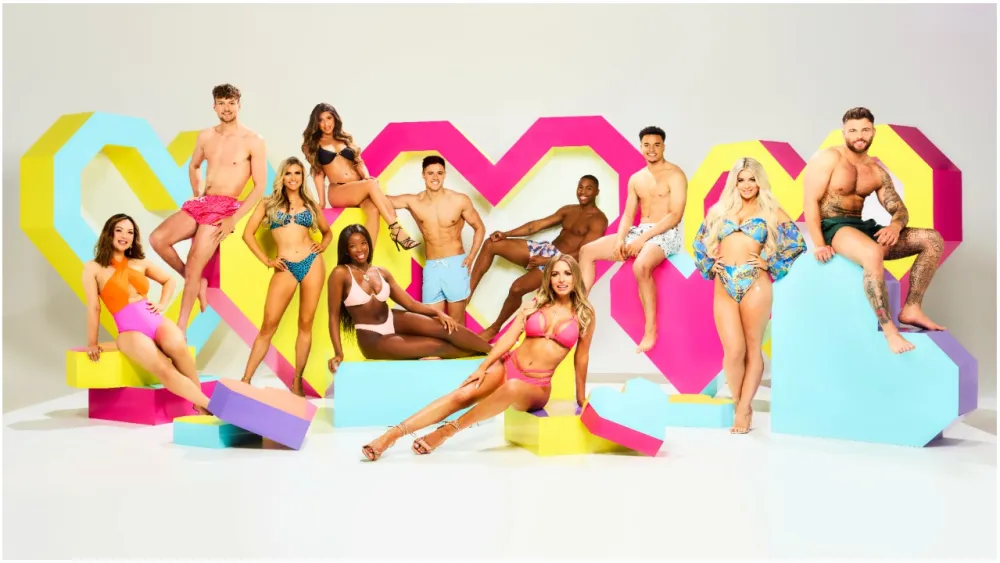
Conversely, some viewers expressed concern they might see their favorite ITV shows such as soap opera “Coronation Street” and dating show “Love Island” end up behind a paywall. yet, Bazalgette said he doesn’t think “there’s going to be huge change for viewers” partly because ITV has a PSB broadcast licence, which runs through to 2034, meaning it has explicit obligations about domestic and regional commissioning. Combined with the ITV Studios output deal (both “Coronation Street” and “Love Island” are produced under Studios), it means they are guaranteed to be free-to-air, at least in the near future, a fact Strong restated publicly. But again, the question is what happens when those deals expire.
It’s a question troubling Stewart Purvis, former CEO of ITV’s contracted news producer ITN and Ofcom partner for Content and Standards. Unsurprisingly, given Purvis’ background, he is particularly interested in the future of Sky and ITV’s news output. While Strong has committed to keeping the newsrooms separate at least until 2030, when ITV’s contract with ITN runs out, Purvis remains circumspect. “It’s all very well to say these contracts exist, but do they necessarily stop a merger [of the newsrooms]?”
To complicate matters further, ITV owns a 40% stake in ITN, which it says will be split between Sky and ITV Studios, a factor that also concerns Purvis. “I’m going to be pushing the competition authorities to understand what safeguards can be done,” he said.
Purvis was keen to clarify he is not “anti-American” but maintained it would be far from ideal to have the majority of the U.K.’s PSBs owned by U.S. companies, particularly given the U.S. media landscape is itself so volatile. “We simply have no idea who’s going to own each of these networks tomorrow,” he said. Given Comcast itself is set to spin-out NBCUniversal as a separate company – one ripe for acquisition – it’s not an unreasonable consideration.
even if two U.S.-owned PSBs may not seem like a lot, that number represents 50% of U.K.-wide PSBs. The remaining two – Channel 4 and the BBC — are both publicly owned and facing uncertain futures. Channel 4 narrowly escaped privatization under a previous government while the BBC, whose top job has just been filled by a longtime Google exec (Matt Brittin), is desperately slashing jobs and budgets as it tries to shore up funding.
It’s perhaps why shortly after unveiling the deal, McCall was given a grilling by financial and trade journalists during a media call, who demanded her thoughts on everything from the “Americanization” of British TV to why companies are leaving the London Stock Exchange (last week low-cost airline EasyJet, which coincidentally McCall also used to manage, agreed to a takeover by a U.S. investment firm).
In the U.K. media, the initial reaction the Sky/ITV deal was certainly on the gloomy side: more consolidation and more U.S. imperialism (in a quirk of fate, news of the Sky/ITV deal came less than 48 hours after the States celebrated its 250th Independence Day) alongside potentially fewer companies trading on the London Stock Exchange and fewer jobs, which Philippa Childs, head of crew union Bectu, addressed in a statement demanding “assurances that there will not be cuts to jobs or terms and conditions as a result of this takeover.”
Both Strong and McCall acknowledged there likely will be some loss of jobs in both Sky and ITV, although they said these would likely be concentrated in marketing and technology.
More concerningly for North American distributors, both also said cuts would likely be made to “non-U.K. content,” in which ITV invests around £100 million a year.
With a closed-shop pipeline of U.S. content via NBCUniversal, there would be little need to look elsewhere (although interestingly, a look at ITV’s schedules across its four networks this week showed its U.S. content was already predominantly represented by re-runs of NBCUniversal franchise “Real Housewives”).
In the U.K. at least, producers are trying to look on the bright side. “Is it going to reduce commissioning? Well, commissioning is reducing anyway,” the indie CEO said. “I personally would rather have a healthy ITV and healthy Sky who are commissioning something rather than both of them going out of business.”
It was almost 20 years ago that Sky, then still owned by Rupert Murdoch’s News Corp, first tried to take over ITV, triggering a punitive response from regulators. Today — a testament to the almost unrecognizable media landscape — it’s almost certain they will wave it through.
“This transaction is a pragmatic response to a changing market rather than a transformational bet,” explained Giao Pacey, partner at leading media and entertainment law firm Simkins LLP. “The key question now is whether regulators are prepared to accept that creating a stronger U.K. media champion can be achieved without compromising competition, consumer choice or media plurality.”
Source: variety.com