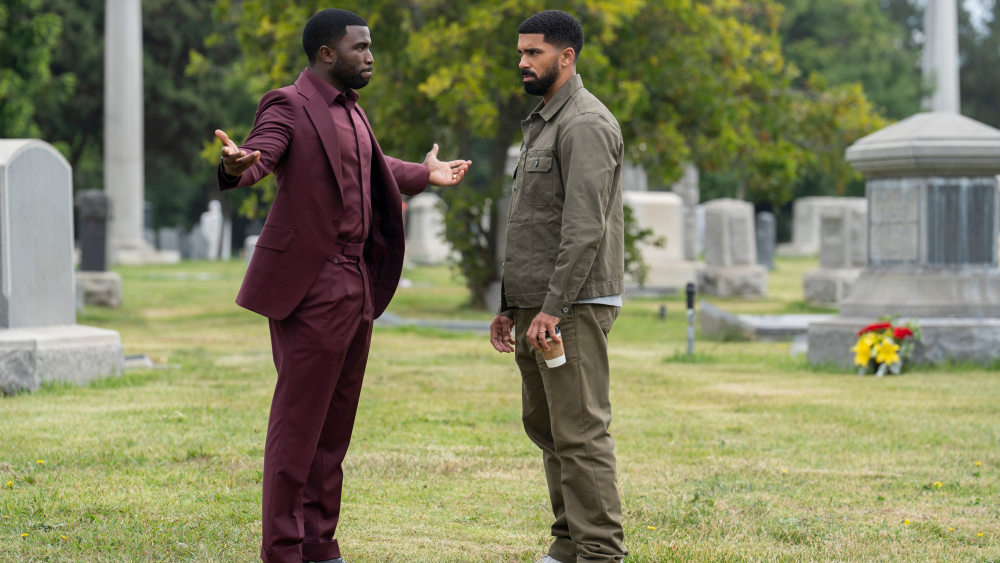









You can’t evaluate a movie year — not really — when you’re only halfway through it. But you can take its temperature. And at the midway point, what we can say is that the patient looks healthier than it has in a long time. If the box office were up (which it is), but only because of processed franchise hits, that would be a mixed blessing. But the box office is up thanks to a great many commercial films that audiences experienced as unabashed and organic pleasures, from the bantery, media-savvy “The Devil Wears Prada 2” to the tricky, exbullient “Toy Story 5.” Then there were the megahit horror films, like “Obsession” and “Backrooms,” that came from outside the box, not to mention the pop performance spectacles (“EPiC: Elvis Presley in Concert,” “Billie Eilish: Hit Me Hard and Soft”), the crowd-pleasing behemoths with soul (“Project Hail Mary,” “Michael”), and the independent films with a bold spirit (“Is God Is,” “The Drama,” “I Love Boosters,” “The Furious,” “The Invite,” “Our Hero, Balthazar”…the list goes on). As Variety chief film critics Owen Gleiberman and Guy Lodge roll out their choices for the best movies of 2026 (so far), the news isn’t just that movies are alive but that they’re (almost) (kind of) thriving.
-
Blue Heron
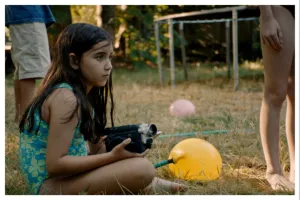
Image Credit: Courtesy of MoreThan Films In the mid-’90s, a Hungarian immigrant family attempts to settle and integrate itself into suburban Vancouver society, though their best intentions are frequently hijacked by the deteriorating mental illness of the black-sheep eldest son; through the eyes of his younger sister, caught between fear and hero worship, a formative tragedy plays out in slow motion. From a raw chapter of her own family history, Canadian filmmaker Sophy Romvari’s quite miraculous first feature extracts both devastating drama and a radically inventive formal inquiry into the boundaries between memory, memoir and imagination. That sounds like a lot, but “Blue Heron” wears its ambitions with humility, and its broken heart with a gauze of wise, measured perspective. This isn’t a film that leads with trauma, but with richly specific domestic detail and a vivid awareness of how children see and process the world around them. If the story on screen were pure fiction, it would be just as deeply affecting, though the elegance with which Romvari pivots into documentary is something to behold. — Guy Lodge
-
EPiC: Elvis Presley in Concert

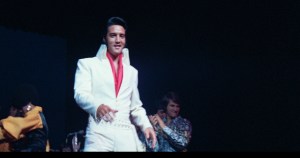
Image Credit: Courtesy of Neon You might ask: Why Elvis, why now? The simple answer is that Baz Luhrmann’s electrifying documentary, which is built around lavishly restored footage of Elvis Presley performing in Las Vegas in 1969 and the early ’70s, is one of the most thrilling concert films you’ll ever see. The slightly more complicated answer is that there’s still a mythology hanging over Elvis during this period — the Liberace-as-rock-god white suit and car-grille sunglasses, the sweat pouring off his shag-carpet sideburns, the onstage karate moves — that can add up to a vision of the king of rock ‘n’ roll presiding over a kingdom of kitsch. The reality, however, is that the early-Vegas Elvis was an ecstatic gyrating rock dynamo, more electrifying than Freddie Mercury, with that tremolo vibrato that transformed every note into a pearly gem. Diving into a treasure trove of newly discovered footage, Luhrmann turns it all into an elegant streamlined concert movie that makes you want to applaud every level of its showmanship. —Owen Gleiberman
-
The Invite
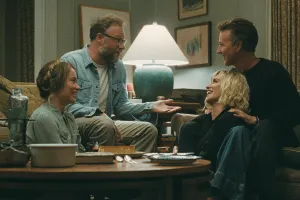
Image Credit: Courtesy of Sundance Film Festival A bravura dinner-party dramedy that’s like “Who’s Afraid of Virginia Woolf?” remade by the Woody Allen of “Husbands and Wives.” Within those familiar tropes, the movie is so original, so brimming with surprise, so fresh and up-to-the-minute in its perceptions of how relationships work (or don’t) that you watch it in a state of rapt immersion and delight. Seth Rogen and Olivia Wilde play a grousing, long-married San Francisco couple who have their upstairs neighbors (Penélope Cruz and Edward Norton) over to dinner, only to discover that these two are what used to be called swingers (they’re now presented as “enlightened” New Age addicts of group sex). Will a foursome happen? That sounds like the premise of a certain kind of indie movie (let’s call it kinky-cute), but “The Invite” is blessedly not that movie. Wilde, who directed it, invests Will McCormack and Rashida Jones’s relentlessly sharp screenplay with an astonishing feeling of lived-in experience. “The Invite” is about horniness and loneliness and love and possibility, and about how the movie is going to take this situation and run with it, neither playing it safe nor making it too easy. —OG
-
Is God Is

Image Credit: Courtesy of Amazon MGM Studios What happened here? It’s one of the year’s bigger mysteries that this auspicious directorial debut from acclaimed playwright Aleshea Harris didn’t show up anywhere on the festival circuit before being released with little fanfare in May. In another year, you could imagine this furiously visceral and caustically funny female revenge drama being the toast of Sundance or SXSW; as it is, even many critics don’t know it exists. But time should secure “Is God Is” a following, especially if stars Kara Young (a two-time Tony winner) and Mallori Johnson blow up the way they should. More than holding their own against a supporting cast that includes Sterling K. Brown, Janelle Monae and Vivica A. Fox, they’re the year’s most electric double act so far as twin sisters, physically and psychologically scarred by childhood abuse, seeking to even the score with the father who wronged them. A marvellous writer, Harris is conversant in the languages of both ruthless exploitation cinema and radical feminist theatre, with filmmaking brio to match. Whatever she makes next, here’s hoping more attention is paid. —GL
-
Obsession
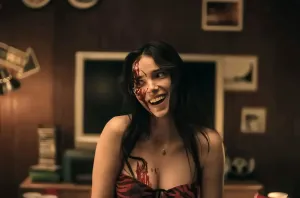
Image Credit: ©Focus Features/Courtesy Everett Collection Curry Barker’s breakout feature is the hero in Hollywood’s biggest David-and-Goliath narrative of the last few years: a simple chiller budgeted at under a million dollars, it has made over $200 million to date, outgrossing a new “Star Wars” movie in the spring box office race. This would be heartening even if the film weren’t up to much; even more happily, it is. In a multiplex wasteland of infinite sequels and rehashes, Barker proves that well-turned original scripts don’t even have to be radically new to stand out. His reworking of the age-old monkey’s-paw trope is classically structured and executed, but intelligently rooted in the present: Its tale of a lovelorn young man wishing for his crush to reciprocate his feelings — only to find that devotion on demand doesn’t feel good at all — engages with the politics of codependent relationships, the toxic narcissism of the manosphere and even the dehumanizing dangers of AI. But it’s also just a frighteningly effective straight-up horror movie, with a jaw-dropping, star-making performance by Inde Navarrette as a woman trapped in one man’s will. —GL
-
Our Hero, Balthazar
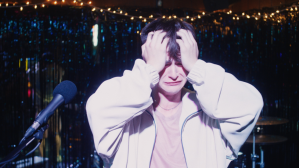
Image Credit: Courtesy of Tribeca Festival The title character is no one’s idea of a hero, but he’s certainly a creature for our time. Balthazar, played in a hipster fade and with a puppy-dog scowl by Jaeden Martell, is a New York rich kid who acts out his boredom by posting videos of himself crying in the most tormented and “sincere” way. Playing off an online world where everything is now performative (I act out my supremely empathic vulnerability, therefore I am), Oscar Boyson’s cutting, audacious, at times astonishing first feature captures a new lost middle-class youth culture that has turned exhibitionism into its own reality. When Balthazar posts a video in sympathy with the victims of a school shooting, he starts to get messages from someone who claims to be the shooter. Has he found his grisly soulmate? Playing this other phantom lost boy, Asa Butterfield acts with a socio-bro attitude and a raw sorrow that seems to slice open the dark heart of what now drives so many lonely young men. “Our Hero, Balthazar” turns into a screw-loose buddy movie (“The Edgelord and the Incel”), but what it’s really about is a virtual youth culture gone nuts. —OG
-
Power Ballad
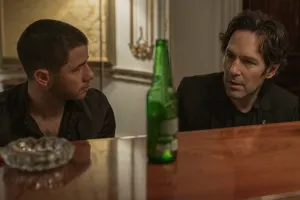
Image Credit: David Cleary/Lionsgate I believe in the marketplace enough not to say this too often, but John Carney’s enthralling music drama really should have been a bigger hit. It’s got everything his earlier films have — the melodic rapture, the touching melancholy of those who truly believe a song can save your life — but it’s also got a brashly unfolding drama that smolders with anger and loss. Paul Rudd hits the true note as Rick Power, a gifted late-’80s/’90s rocker who didn’t quite make it and is now a more-or-less contented husband and father who works as a wedding singer in Ireland. One night, he finds himself noodling around a guitar and piano with Danny (Nick Jonas), a former boy-band singer who hasn’t been able to thread the needle of solo stardom. Months later, Danny has a catchy slow-rock hit — with a song he stole from Rick. Rudd doesn’t soft-pedal the darkness of playing someone whose dream has been taken. “Power Ballad” is the rare authentic drama about the music industry, but is also taps into themes of identity and ownership that touch on the mysteries of pop. —OG
-
Rosa Nevada
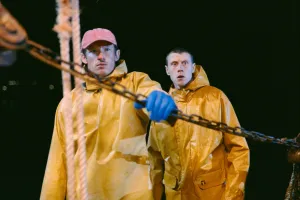
Image Credit: Courtesy of Bosena Back in 2019, Mark Jenkin’s microbudget breakout feature “Bait” was the unlikeliest of crossover hits in Britain, snaring both arthouse cinephiles who thrilled to his handcrafted evocation of grainy ’60s realism and regional audiences who felt seen by his proudly working-class, Cornish-set riposte to middle-class gentrification. Two films later, his time-travel puzzle “Rose of Nevada” feels like a veritable blockbuster by comparison — it even has stars, in the form of a never-better George MacKay and rumored 007 contender Callum Turner — but stays remarkably true to those gritty, grounded principles. Gorgeously shot on tactile 16mm film that lends the whole movie the look of a forgotten, sun-faded family photo album, it’s lo-fi sci-fi with a killer high concept, following two hard-up contemporary fishermen as they take a job on a rusty old trawler bound for the past. The less you know going in, the better, but Jenkin is as interested in the poignant human fallout of his big idea as he is in its brain-melting logistics. —GL
-
Silent Friend
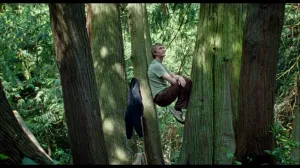
Image Credit: Courtesy of Films Boutique How did “tree-hugger” become a pejorative? Shouldn’t we all love trees a little more? Rallying brilliantly after the disappointment of her 2021 Europudding “The Story of My Wife,” Hungarian director Ildikó Enyedi certainly thinks so: Her strange, sensual and unexpectedly sweet new film does much to dignify that hippie-baiting term, with a century-spanning triptych of stories — linked by one weirdly sexy ginkgo tree — that collectively probe the connection between human and plant life in ways you might not have considered before, much less seen on screen. Tony Leung, bringing reliable gravitas to a wild idea, plays a scientist locked down in a Hamburg university during COVID, who in his isolation discovers a way to communicate with trees; in different strata of the past, appealing young stars Luna Wedler and Johannes Hegemann are the students whose botanic discoveries mesh with his. Like Enyedi’s beguiling, Oscar-nominated “On Body and heart,” it’s a hard film to encapsulate on paper; on screen, it sprawls and spreads and winds itself around you with something close to magic. —GL
-
Toy Story 5
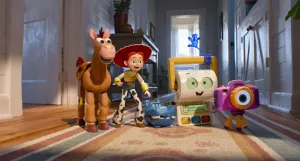
Image Credit: ©Walt Disney Co./Courtesy Everett Collection I christened it the “Abbey Road” of “Toy Story” movies because it’s a sublime summing up, a film that reflects the entire series in its magic mirror. Yet just when you think the “Toy Story” series has reached its perfect ending, something else will happen in the culture that demands the “Toy Story” take. So who knows if and where this series will go next? For our moment, director Andrew Stanton and company have crafted a nimble, moving, irresistible fairy tale that uses the rise of tech toys — smart tablets for kids — to pose a more profound question than just, “Are Woody and Jessie and their analog colleagues now really obsolete?” The true question is: Who are we going to be, as children who grow into adult humans, if we lose the capacity for imaginative play? “Toy Story 5” escalates in delight (the climactic wedding ceremony must be seen to be believed), but it also has moments that hit you like a gut punch. The message is: Slow down, be real and play. The fun you take is equal to the fun you make. —OG
Source: variety.com